Frank Lloyd Wright's "Oasis" could have been Arizona capitol

Add Axios as your preferred source to
see more of our stories on Google.
As a politics nerd, I felt obliged to visit the Minnesota Capitol in St. Paul last month during our Axios Local retreat, and the building's majesty left me feeling a bit … let's say underwhelmed by the Arizona Capitol.
Yes, but: It didn't have to be this way. We could've had one of the most interesting, beautiful and unique capitol buildings in the U.S., courtesy of the famed Frank Lloyd Wright, whose winter home was in the Valley for 25 years.
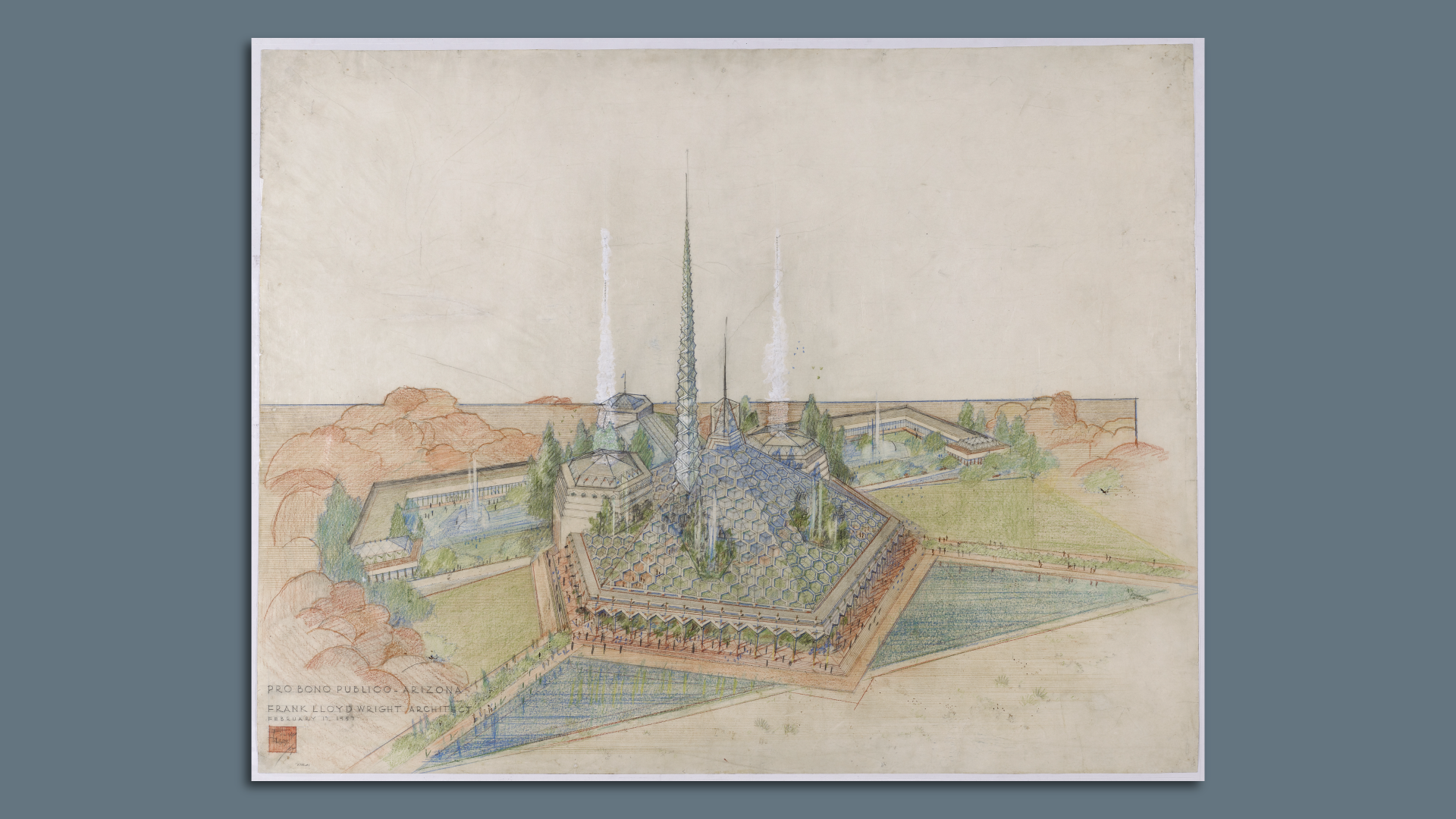
The big picture: In 1957, Wright offered an unsolicited proposal for a new capitol complex he titled "Oasis."
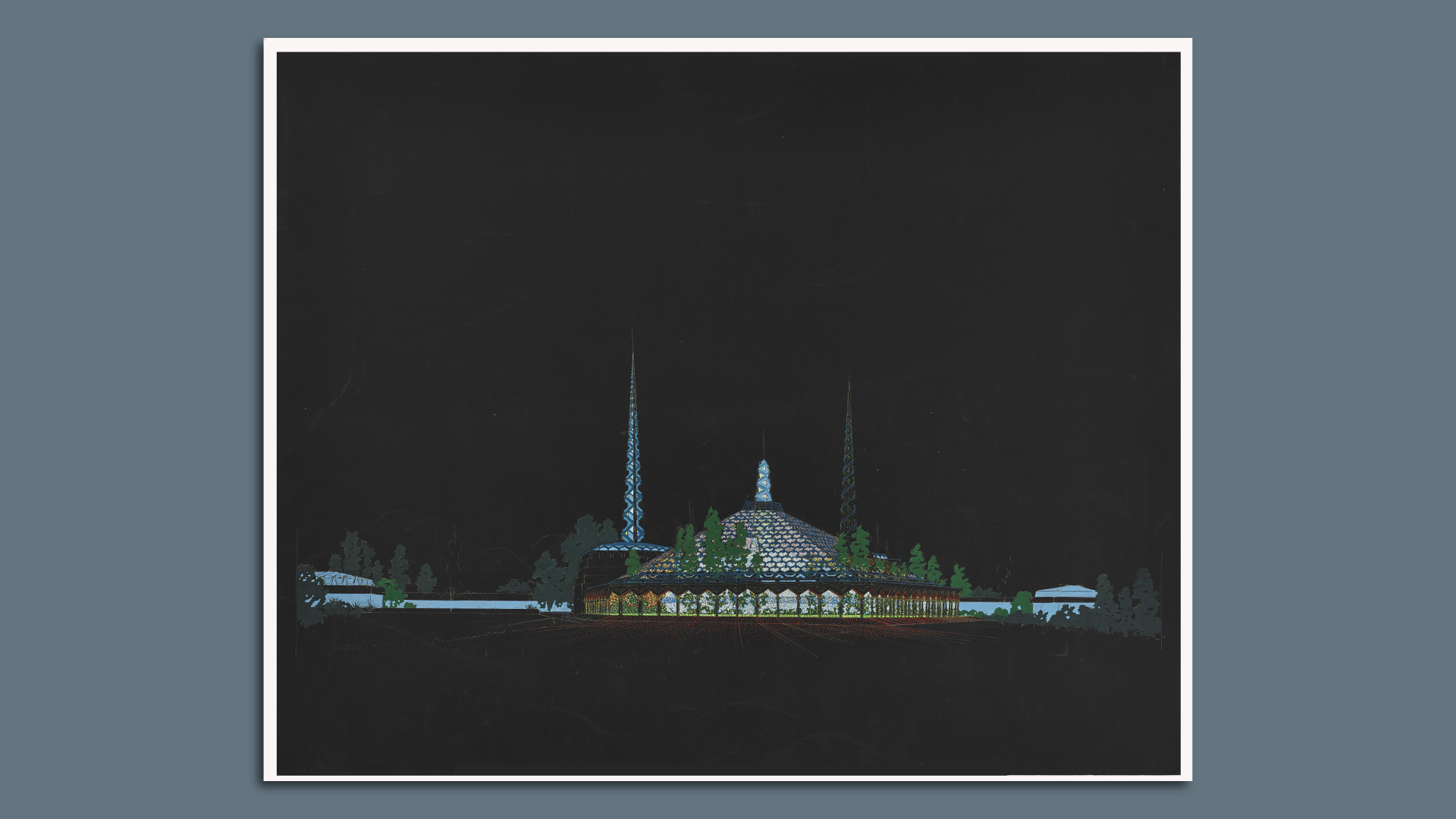
- The ornate proposal would have featured a distinctive, laced canopy with a hexagonal, honeycombed pattern plated in blue, oxidized copper, with a botanical garden and fountains underneath, plus a spire protruding through.
- The canopy separated hexagonal House and Senate chambers across from each other. The building would've also housed the governor's office and Arizona Supreme Court.
- Wright's plans called for Oasis to be at Papago Park, with the reddish mountains as its backdrop.
Context: As the historic Capitol showed its age, state officials planned to build a new one adjacent to the original, copper-domed building.
- The winning entry from Associated State Capitol Architects was a 20-story, United Nations-style tower.
- As an homage to classical architecture, then-Arizona Gov. Ernest McFarland insisted a dome be added to the top of the building, per the Frank Lloyd Wright Foundation.
Zoom in: Wright submitted his plan as an alternative to the proposed tower, which he dismissed as an "already dated, New York monstrosity."
- He felt Oasis personified the "character and beauty" of the state and its landscape.
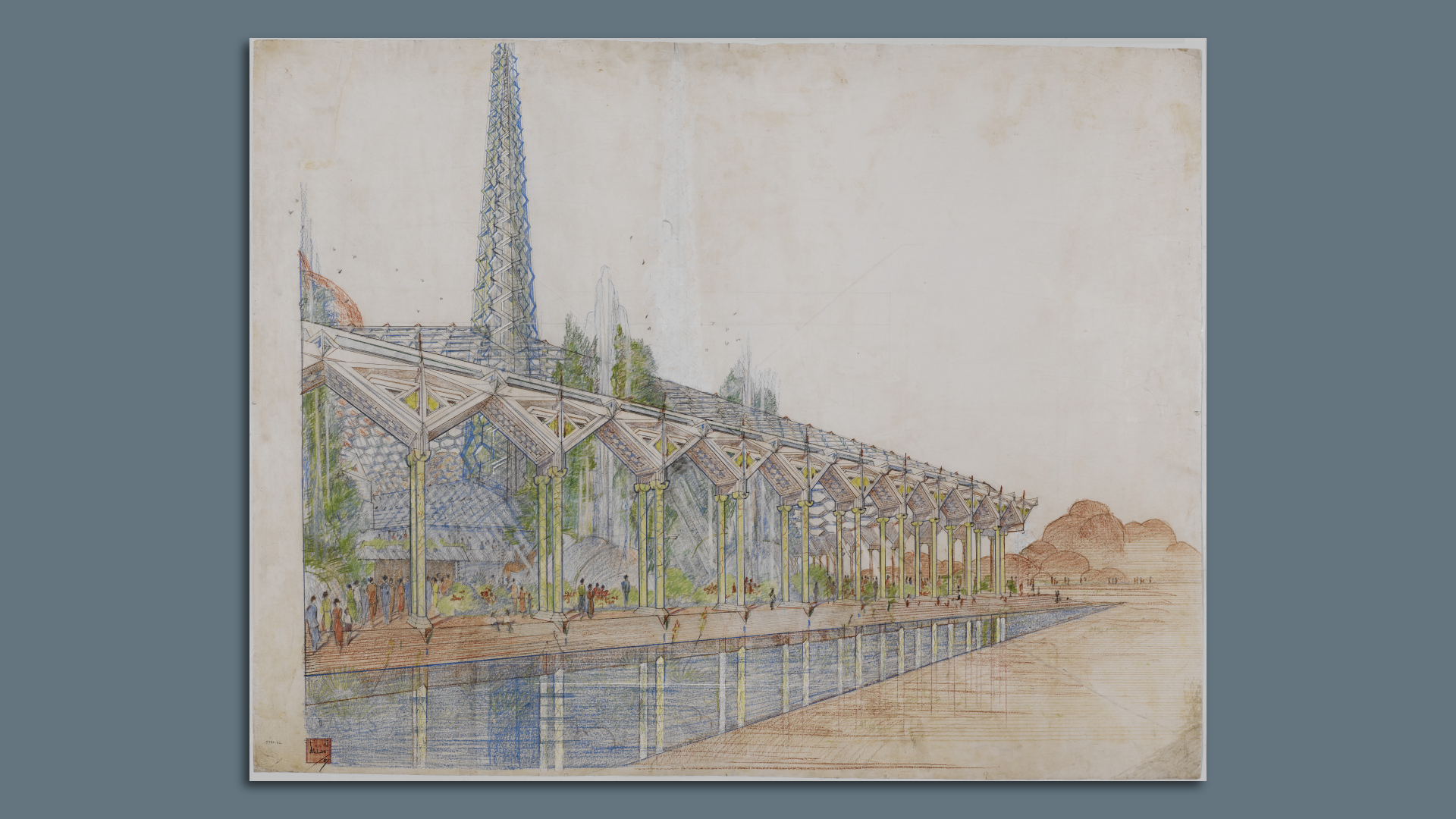
The intrigue: Wright acknowledged his plan had "a mighty slim chance of ever being executed."
- Amidst debates over the design, cost and location, and facing a planned petition drive to refer Wright's proposal to the ballot in 1958, the commission tasked with overseeing the construction of a new capitol settled on a compromise, which became the two-wing legislative complex we have today.
- The State Capitol Executive Tower, where the governor, secretary of state and treasurer have their offices, was constructed in 1974.