How Maricopa County plans to keep ballots, election workers and voters safe

Add Axios as your preferred source to
see more of our stories on Google.
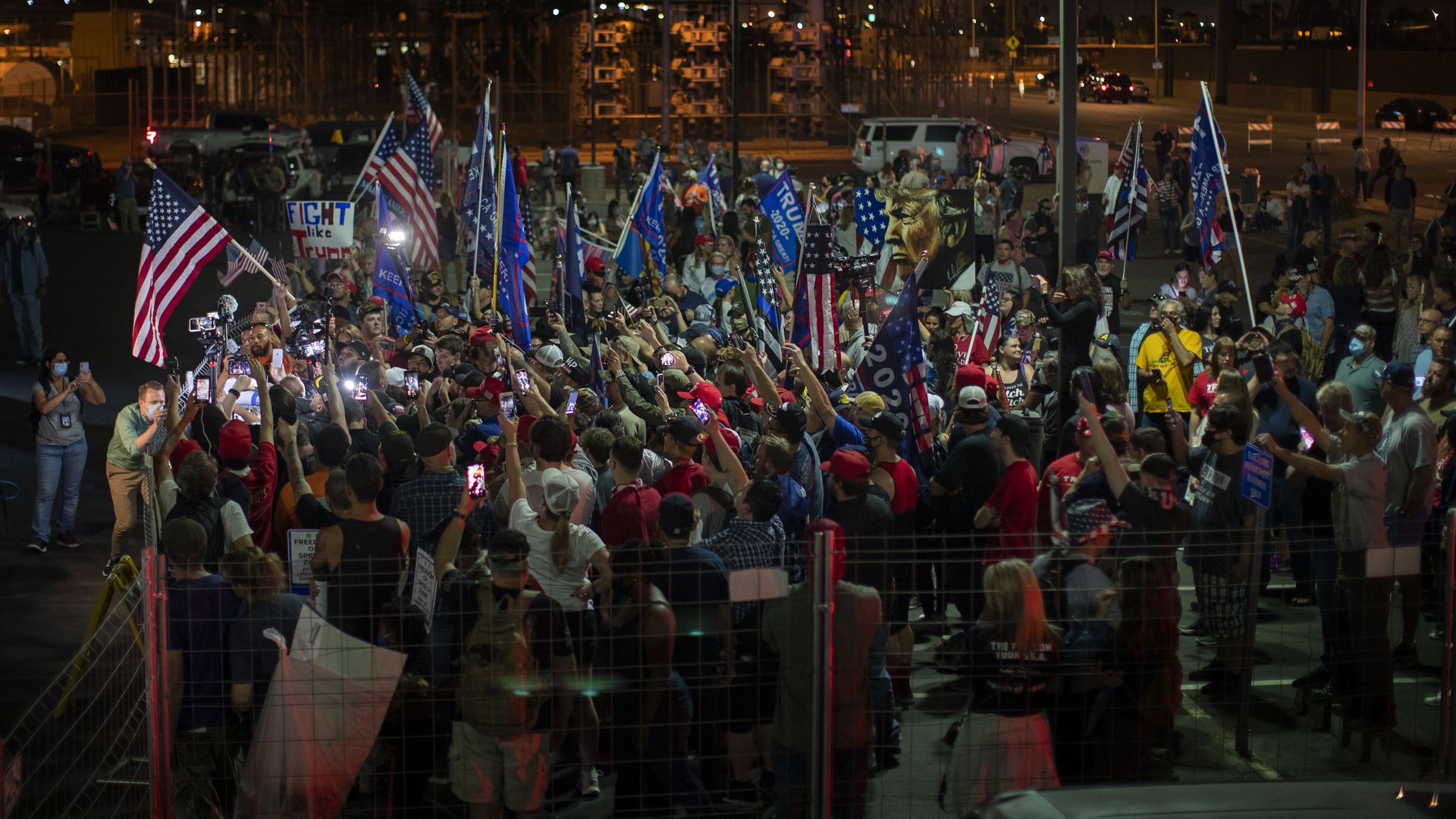
Pro-Trump supporters outside the Maricopa County Tabulation and Election Center on Nov. 6, 2020. Photo: Gina Ferazzi/Los Angeles Times via Getty Images
Safety — of ballots, election workers and voters — is now a fundamental part of election planning in Maricopa County, a complete shift from pre-2020 elections, officials told Axios.
Why it matters: Unsubstantiated claims of voter fraud in Arizona's 2020 and 2022 elections, which inspired violent threats and armed demonstrations, have forced elections officials to coordinate with law enforcement and spend millions of dollars on security equipment and personnel.
The big picture: People now pay significant attention to — and sometimes consume misinformation about — how votes are tabulated, who certifies them and where ballots are stored.
- Law enforcement support is necessary to ensure workers can securely process ballots without being threatened or intimidated, Maricopa County deputy elections director Jennifer Liewer and Supervisor Bill Gates told us.
Flashback: The Maricopa County Tabulation and Election Center (MCTEC), a nondescript building where election workers process ballots, became a gathering place in 2020 for people who believed the county was stealing the election from former President Trump.
- Hundreds of protesters (many from out of state and some armed) gathered in the parking lot chanting "Stop the steal!" and the Maricopa County Sheriff's Office had to quickly install crude barriers to ensure people didn't get into the facility.
- Some election workers felt intimidated by protesters who took pictures of their license plates as they arrived at work, Liewer said.
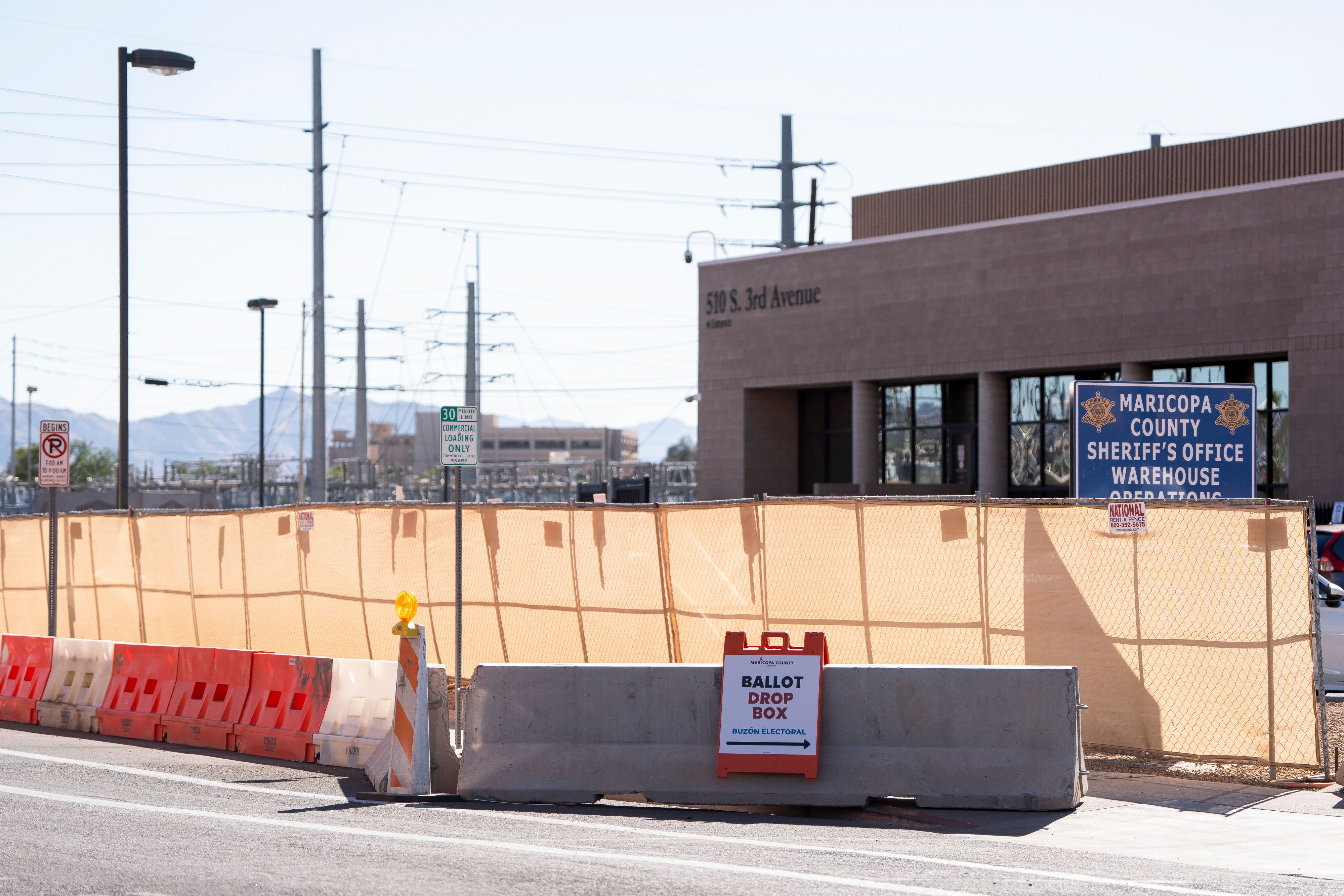
Zoom in: In the lead-up to the 2022 election, the county added permanent fencing around MCTEC and installed additional badging areas to ensure only permitted people could access it.
- When the facility begins receiving early ballots for processing, the county installs a secondary fence with a vinyl cover so license plates can't be photographed, places metal detectors at entrances and increases law enforcement presence.
- This year, there will be a First Amendment zone outside the fenced area where protesters can legally gather and express themselves, Liewer said.
Zoom out: In addition to MCTEC, there will be 246 vote centers open across the county that must be protected on and before Election Day, Gates said.
- Local and federal law enforcement will be onsite at these locations in plain clothes, he said.
- "We've got to keep people safe there without making it look like an armed encampment," Gates said. "We don't want people going to a vote center that looks like it's a military installation."
- Liewer said there will also be unmarked law enforcement vehicles escorting poll workers back to MCTEC after polls close to ensure the safe arrival of tabulated votes and equipment.
Between the lines: Since 2020, the county has updated its poll worker education to include de-escalation training, Liewer said.
- "Our poll workers are the face of [elections], and they're the ones that are having to interact with [frustrated] folks. And often times, you find somebody just wants to be heard," she said.
What's next: There could once again be credible threats against elected officials responsible for certifying the presidential election, including the Maricopa County Board of Supervisors.
- Gates said the Sheriff's Office is already monitoring social media and other entities to ensure threats to election officials are addressed before violence arises.
Nurit Canetti, a senior Israeli journalist participating in the Humphrey Fellowship at ASU, contributed reporting to this story.