How St. Joseph's Hospital is keeping donated organs viable longer

Add Axios as your preferred source to
see more of our stories on Google.
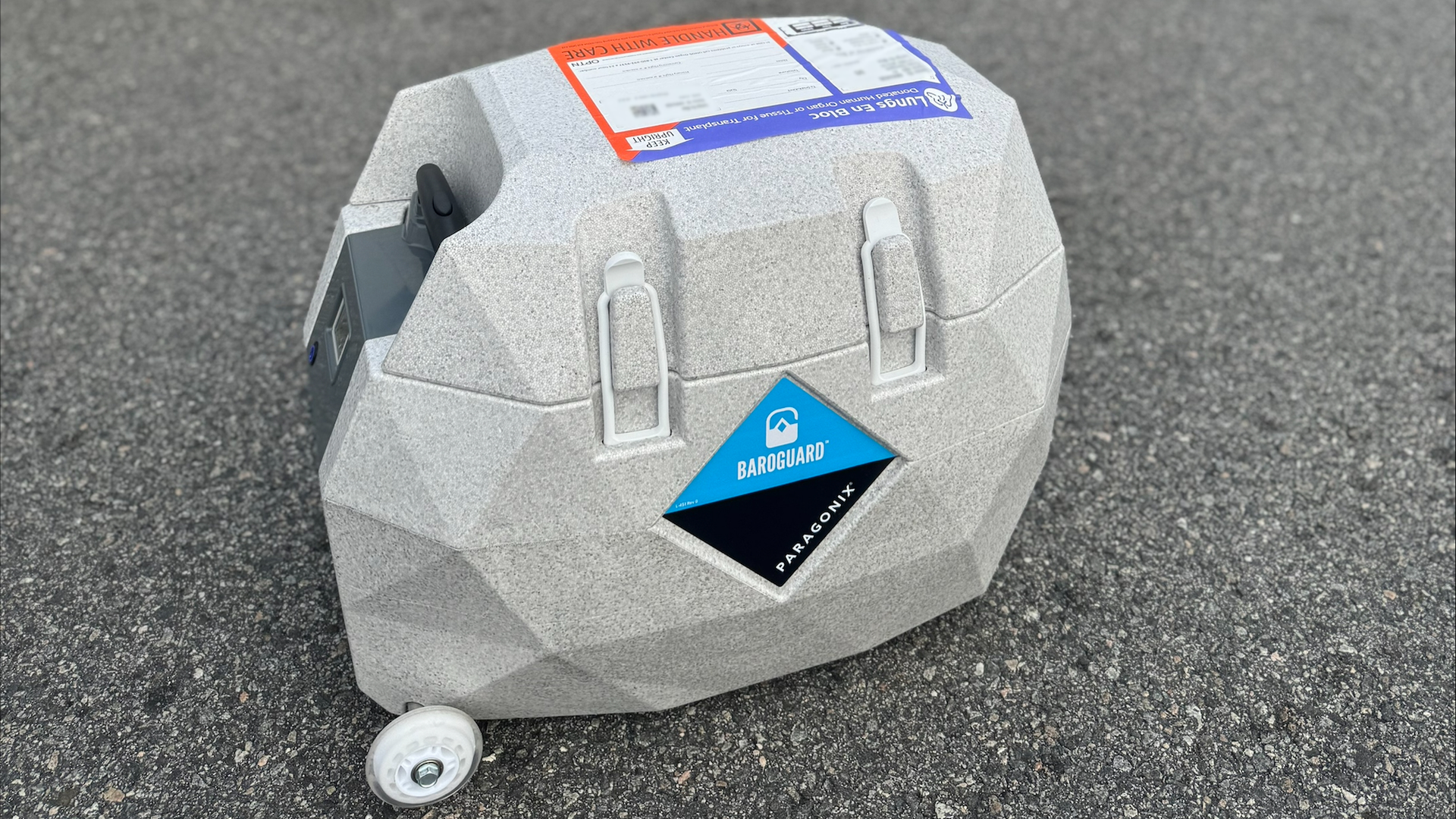
The BAROguard hypothermic preservation system has kept organs viable for more than 15 hours. Photo: Courtesy of Paragonix
New devices that keep donated organs viable for longer could make transplants cheaper and more accessible, and St. Joseph's Hospital and Medical Center is at the forefront of deploying the technology.
The big picture: The Norton Thoracic Institute at St. Joe's has started using a handful of new devices that can keep lungs viable for three times as long as the ice cooler method.
- For example, BAROguard, a hypothermic preservation system, can maintain the temperature and internal pressure of donor lungs for more than 15 hours.
Why it matters: When a patient needs a transplant, they often don't have months to wait for a donor, according to Rajat Walia, medical director of lung transplantation at Norton Thoracic Institute.
- The new tools are expanding the donor pool and ensuring the organs arrive in healthy condition.
Catch up quick: For decades, organ recovery has worked like this:
- A surgeon removes an organ from a donor and bags it with a preservation solution.
- The organ is placed in what is essentially an "Igloo cooler you could get at Walmart," per Walia.
- The organ is flown via a chartered private flight to the hospital, where the recipient is located and the transplant surgery is performed immediately. Hearts and lungs only have a four- to six-hour survival window, per the United Network for Organ Sharing.
Between the lines: The extra time opens up many possibilities, Walia told Axios.
- Doctors can now pursue donors who are further away.
- They can explore less expensive travel options, like commercial flights.
- And they can ensure they're well-rested instead of rushing into surgery as soon as organs arrive.
The latest: Earlier this year, St. Joe's was the first hospital in the U.S. to receive lungs transported on a commercial flight via a partnership with BAROguard's manufacturer Paragonix and the Nationwide Organ Recovery Transport Alliance. The flight was more than six hours, according to a press release.
- The patient is doing "remarkably well," Walia said.
The bottom line: These technologies remain very new but are showing promising signs, Walie said.
- "It's an exciting time to be in organ transplant. There's more hope for our patients," he said.