New Times founder Lacey sentenced to five years in Backpage case

Add Axios as your preferred source to
see more of our stories on Google.
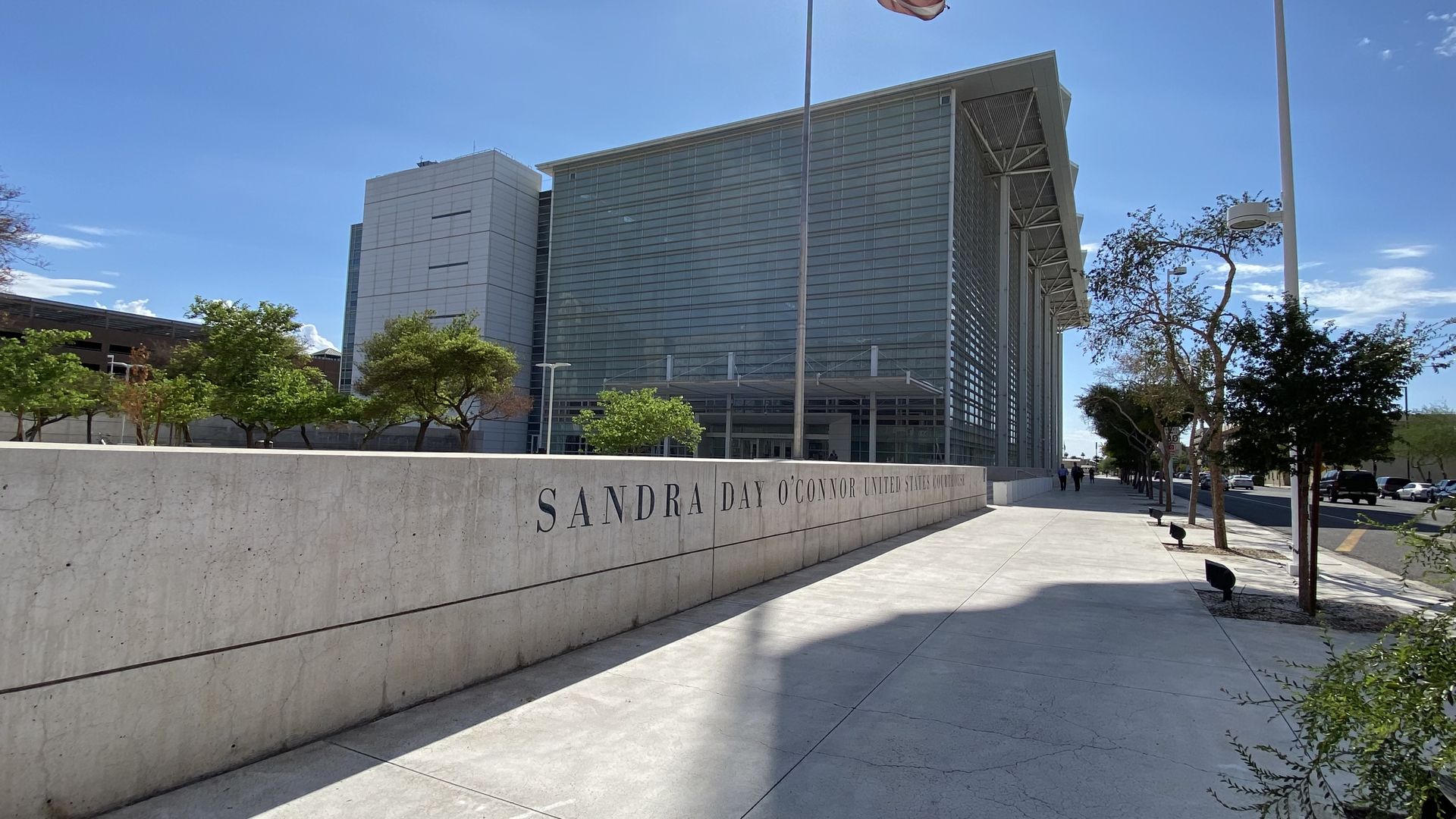
The Sandra Day O'Connor United States Courthouse in downtown Phoenix. Photo: Jeremy Duda/Axios
Michael Lacey, the founder and former head editor of the Phoenix New Times, was sentenced on Wednesday to five years in prison and fined $3 million on a money laundering charge in a case over prostitution and a classified advertising website.
The big picture: The case stemmed from allegations that Backpage.com knowingly facilitated prostitution through its online ads.
- Lacey, 76, was convicted last November on one count of international concealment money laundering for transferring $16.5 million into a trust in Hungary to shield it from government seizure.
- The jury deadlocked on other charges against Lacey related to money laundering and facilitation of prostitution.
- John "Jed" Brunst, the company's former chief financial officer, and Scott Spear, a former executive vice president, were each sentenced to 10 years for money laundering and facilitation of prostitution.
Catch up quick: Prosecutors accused Brunst, Lacey and Spear of using the classified advertising website to intentionally facilitate prostitution with ads said to have generated $500 million in revenue.
- They sold Backpage to CEO Carl Ferrer for $600 million in 2015 but Lacey and co-founder James Larkin remained involved in the business.
- Federal authorities shut down Backpage in 2018 and indicted Brunst, Ferrer, Lacey, Larkin, Spear and others.
- Ferrer pleaded guilty in 2018 to a conspiracy charge involving money laundering and facilitation of prostitution and became a government witness in the case.
- A mistrial was declared in 2021. Larkin died by suicide in 2023 shortly before he was scheduled to face trial.
Flashback: Lacey founded the New Times in 1970, and he and former business partner Larkin grew their chain of alternative weeklies throughout the U.S., later buying New York's Village Voice tabloid.
- Lacey, Larkin and Ferrer launched Backpage in 2004.
What they're saying: U.S. District Court Judge Diane Humetewa told Lacey he'd been put "on notice" many years earlier regarding allegations that Backpage was facilitating prostitution.
- But, she said, "you did nothing in the face of all of this."
- "No one can take away your legacy of journalism in the early days with Village Voice, New Times," said Humetewa, who cited letters of support highlighting Lacey's work that made it harder for people in positions of power to "afflict the powerless."
- "The powerless are those many, many individuals who were posted on Backpage.com," she said.
The other side: In a written statement provided to reporters before Humetewa issued her sentence, Lacey called the concealment conviction a "mistake" and said he hid nothing.
- Lacey said he set up the trust in Hungary for his children at the advice of his attorneys after the FBI "intimidated American bankers from doing business with me."
- He also said he oversaw reporters and editors and made no decisions regarding Backpage.
- With 30 million ads posted annually on Backpage, "there are people with stories that are difficult to hear without heartache."
What we're watching: Defense attorneys said they plan to appeal the convictions.
- Humetewa ordered Brunst, Lacey and Spear to report to U.S. marshals in two weeks to begin serving their sentences, per the Associated Press.
What's next: Humetewa dismissed many outstanding charges against Lacey in April, but federal prosecutors plan to retry him on remaining prostitution and money laundering charges.
Editor's note: This story has been updated to include the full names of the defendants.