Arizona cancer diagnoses likely to climb in 2024


Add Axios as your preferred source to
see more of our stories on Google.
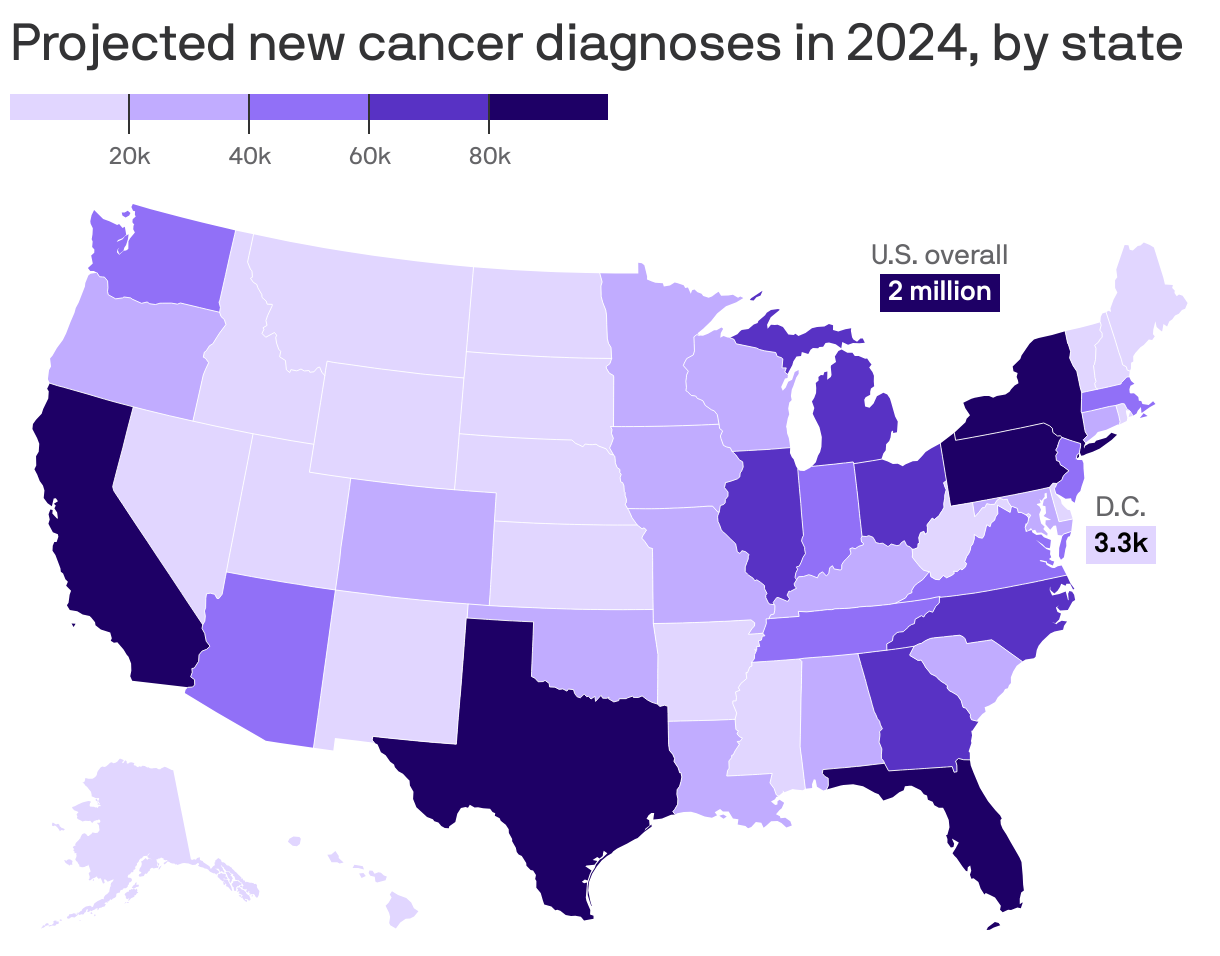
Arizonans are estimated to receive 42,670 cancer diagnoses this year, according to new American Cancer Society data.
- That's about 1,500 more cases than last year.
Why it matters: There have been major improvements in cancer survival, but there's a worrying rise in some cancers at the same time doctors are trying to figure out why they're seeing more young patients with diagnoses.
State of play: Breast, prostate and lung cancers are expected to be the most diagnosed in Arizona this year.
- Additionally, Arizona's rate of melanoma — the most serious form of skin cancer — is significantly higher than the national average.
Threat level: Cancer diagnoses do not impact all populations equally. For example, Black men are more likely to be diagnosed with — and die of — prostate cancer.
- ASU professor Dorothy Sears is part of a team working to identify and address socioeconomic factors that play into disparate cancer diagnoses in Arizona's Black, Hispanic and Native American communities.
- "We need to learn what the barriers are to prevention and screening… [to] combat the rise of cancer in particular communities," she tells Axios Phoenix.
The intrigue: Arizona is estimated to see about 200 fewer cancer deaths this year despite reporting more total cases.
- The U.S. cancer death rate has dropped a third in the last 30 years, partly due to improved screening and more effective treatments against certain cancers.
- Yes, but: Diagnoses have been increasing for others, and strong racial and ethnic disparities in cancer deaths persist.
Zoom out: New cancer diagnoses across the U.S. are expected to top 2 million for the first time this year, with people under 50 driving the increase.
- Doctors say they don't know exactly what's behind the uptick in younger patients.
Parting shot: "It's overwhelming for anybody, but especially for these younger patients who are going on with their daily lives and then suddenly get this life-altering diagnosis and really don't know where to turn," Robin Mendelsohn, co-director of the Center for Young Onset Colorectal and Gastrointestinal Cancers at Memorial Sloan Kettering, tells Axios.