Phoenix median home price drops $20k but a crash is unlikely

Add Axios as your preferred source to
see more of our stories on Google.
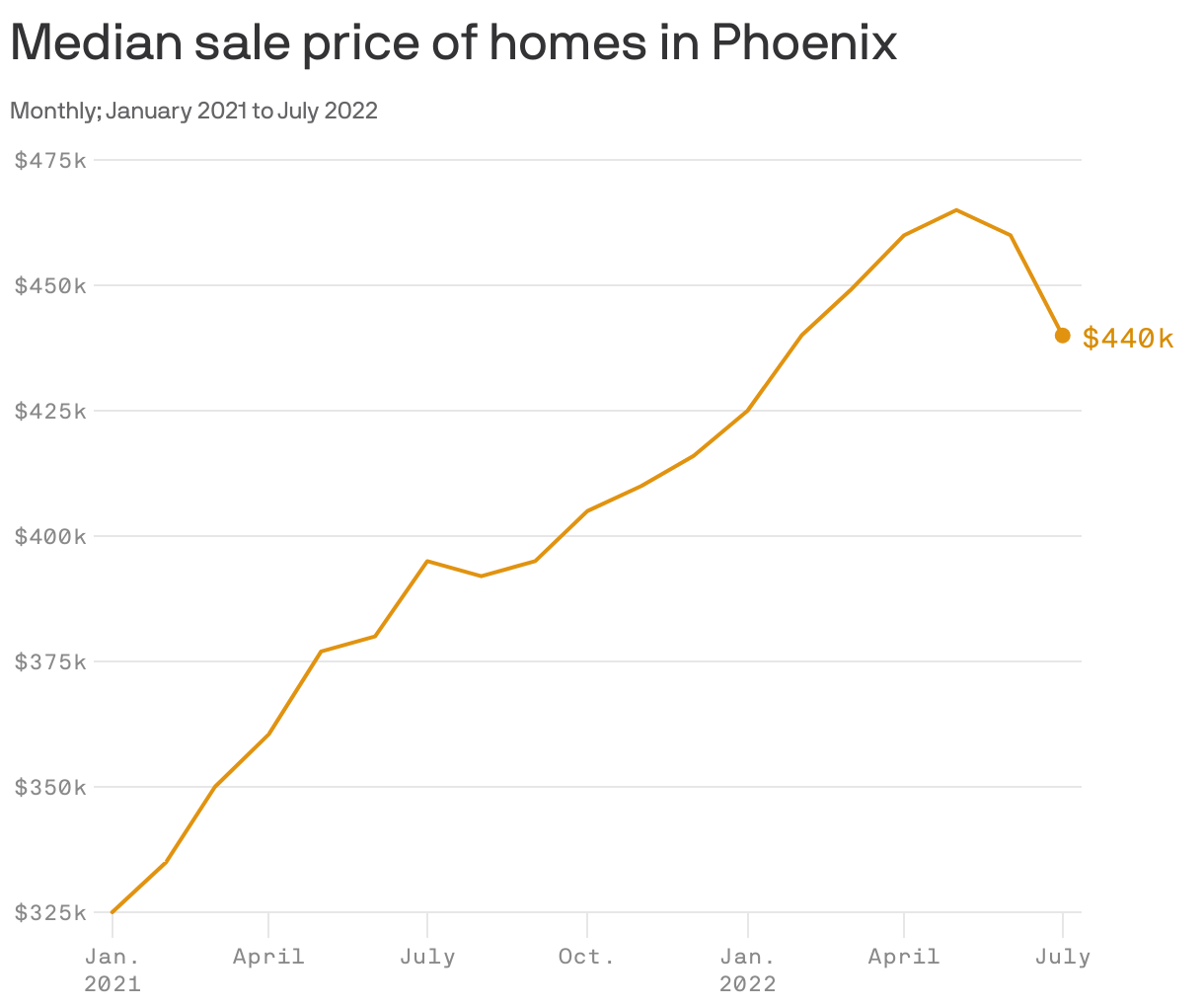
Phoenix's hot housing market is cooling — not crashing.
Why it matters: When home prices started to fall this summer, many in the Valley were reminded of the 2008 housing crash that left more than two-thirds of metro Phoenix homeowners underwater on their mortgages.
- But experts tell Axios Phoenix the market is just settling after more than two years of unsustainable growth and it is not cause for concern.
State of play: The median home sale price fell by $5,000 in June and $20,000 in July after rising by an average of almost $9,000 per month since January 2021.
Yes, but: July's median sale price was still $440,000 —$45,000 more than it was a year ago.
- This means almost all homeowners have positive equity in their homes.
Flashback: Jamison Lunnen, vice president of real estate operations at Homie, said the 2008 crash was a combination of bad lending practices and negative equity — neither of which is an issue today.
- Even if a homeowner is unable to pay their mortgage, they probably won't go into foreclosure because they can likely sell their home and walk away with a profit.
The upside: Our market shift may pay off for buyers who have been patiently waiting out the insanity of the past two years.
- Gone are the days of buyers paying $50,000 or more over asking price and waiving inspections.
- Buyers may even get sellers to come down on the offer prices and agree to concessions — a rarity this time last year.
Buy here: Local broker Rebecca Hidalgo Rains said there are actually several cities in the Valley that are officially a "buyer's market," according to the August Cromford Market Index, which measures the balance of supply and demand.
- Buckeye, Queen Creek, Maricopa, Gilbert, Tempe, Surprise, Chandler, Peoria and Glendale all had higher supply levels than demand.
- The metro Phoenix market as a whole is still a seller's market, but only moderately so, indicating a pretty balanced market, Hidalgo Rains said.
The caveat: Of course, a buyer's market only benefits people who can afford to buy. And many middle-income workers have been priced out of the market in the past two years.