😈 Sparky vs. Wilbur 😼


Add Axios as your preferred source to
see more of our stories on Google.
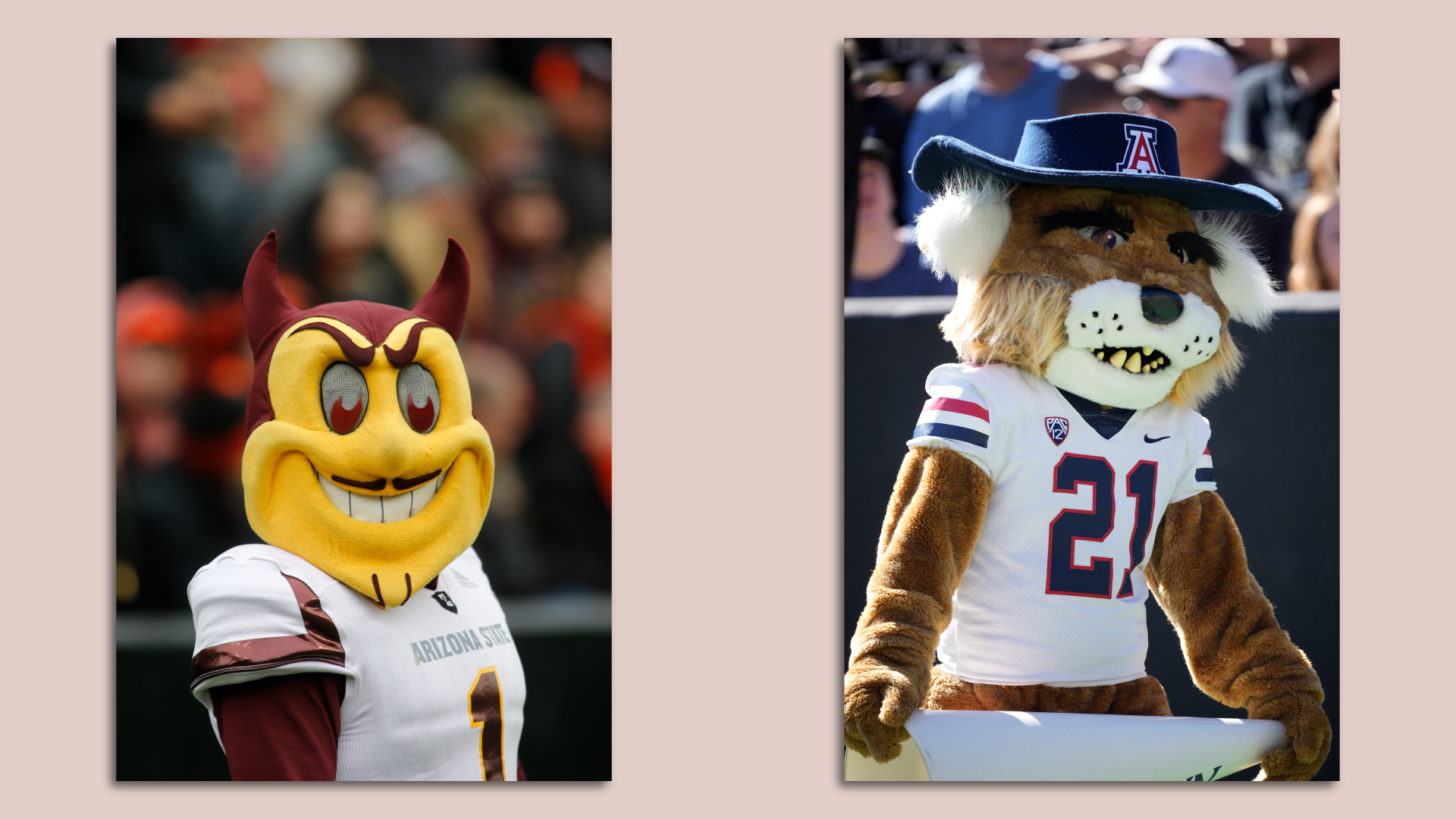
Sparky Sun Devil and Wilbur Wildcat. Photos: Timothy J. Gonzalez/AP Photos and David Zalubowski/AP Photos
Rivalry aside, we agree that both of our mascots are pretty awesome.
- Sparky the Sun Devil has been around since 1951.
- Wilbur Wildcat became UofA's mascot in 1959, and he was joined by Wilma in 1986.
Before Sparky: As noted above, ASU has had many names. It also has had many mascots.
- As Tempe Normal School, the mascot was an owl.
- As Arizona State Teachers College, the mascot was a bulldog.
- As Arizona State College, the mascot became a sun devil. That one stuck.
What they're saying: "I personally think it's an advantage because a sun devil is something that's very unique and tied to Arizona's climate and culture, whereas the school down south is a wildcat. I could probably tell you at least five to 10 schools that are also wildcats," ASU mascot manager Tony Grandlienard told ASU News last year.
One funny thing: When Pope John Paul II held mass at Sun Devil Stadium during a visit to the Valley in 1987, the Vatican required ASU to cover all images of Sparky and his pitchfork.
Before Wilbur: UofA got its team name from a Los Angeles Times columnist in 1914 who wrote that the football team "showed the fight of wildcats" in a game against the Occidental College Tigers.
- The school adopted the name and introduced its first mascot, a live bobcat named Tom Easter, in 1915, renaming it Rufus Arizona after university president Rufus Bernard Von KleinSmid.
- Wilbur and Wilma are happily married, joined in holy "catrimony" shortly after Wilma was introduced, and the school even had them renew their vows in 2006.
- For a time, Wilbur's Wild West ensemble included pistols, but the university got rid of them in logos of the mascot in 2002 amid the ongoing debate over gun violence.
One sad thing: The original Rufus Arizona was killed in an accident during a game in 1916, so it's probably for the best that they phased out live animals in favor of costumed mascots.