Phoenix school lunch prices on the rise as free-lunch program ends

Add Axios as your preferred source to
see more of our stories on Google.
A pandemic-era program that covered the cost of school lunch for most students has ended, and some parents may feel sticker shock when they see the new rates.
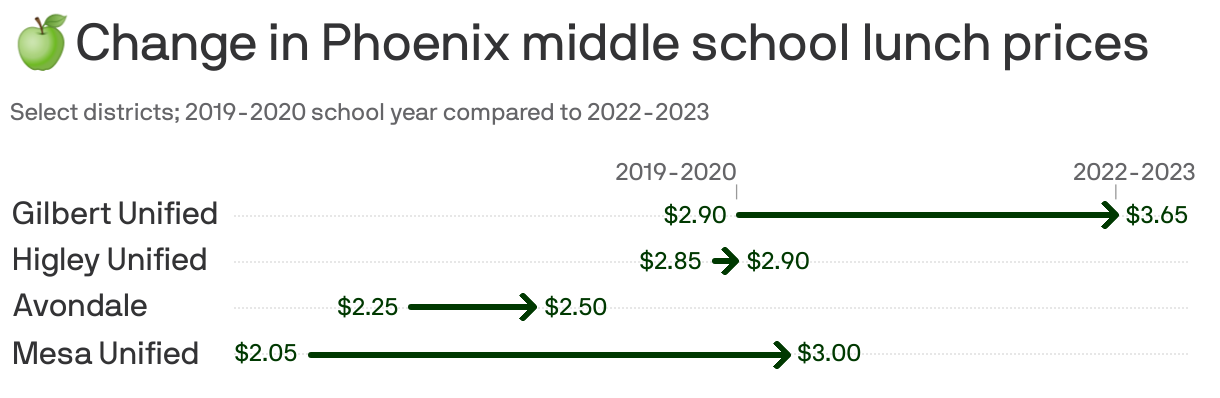
What's happening: Axios Phoenix reviewed school lunch prices for several districts across the metro area and found some have raised theirs.
Why it matters: Experts predict that the end of the federal program will lead to the return of school lunch debt — and inflated prices won't help.
What they're saying: "Before the pandemic, unpaid school lunch debt was a huge problem," Crystal FitzSimons of Food Research & Action Center told Chalkbeat. "We are very concerned about unpaid school meal fees and them returning with a vengeance."
State of play: We found the biggest price jumps in middle schools.
- Mesa Unified School District, also known as Mesa Public Schools, raised prices by 95 cents from the 2019-2020 school year.
- That's about an extra $20 per month.
Yes, but: Making your kids' lunches might not be any cheaper.
- The price of groceries is more than 12% higher in metro Phoenix than it was a year ago.
Of note: Not all districts raised prices. Many large districts, including Madison and Glendale elementaries and Peoria Unified District, kept their rates the same as before the pandemic.
What could have been: Educational leaders, including state Superintendent Kathy Hoffman, wanted Congress to extend the free lunch program for all students. Instead, federal lawmakers passed a watered-down version earlier this summer that requires low-income parents to go back to applying for free and reduced lunches.
- Hoffman also says the state legislature and governor could have provided funding to keep free lunches available to all students.
- "No kid should go hungry in a state with historic budget surpluses year over year," her spokesperson tells Axios.
Threat level: Some advocates are concerned that parents won't realize they again have to fill out applications to qualify for a lunch subsidy to avoid racking up a debt. Other families may not meet the income requirements but still struggle to pay for lunches.
By the numbers: In 2019, Arizona students accumulated an estimated $11.8 million in meal debt, according to educationdata.org.
- Schools often rely on charities to clear the debt or go after parents. Otherwise, they have to write it off as an operating loss.