Crape myrtle popularity makes this pest popular, too

Add Axios as your preferred source to
see more of our stories on Google.
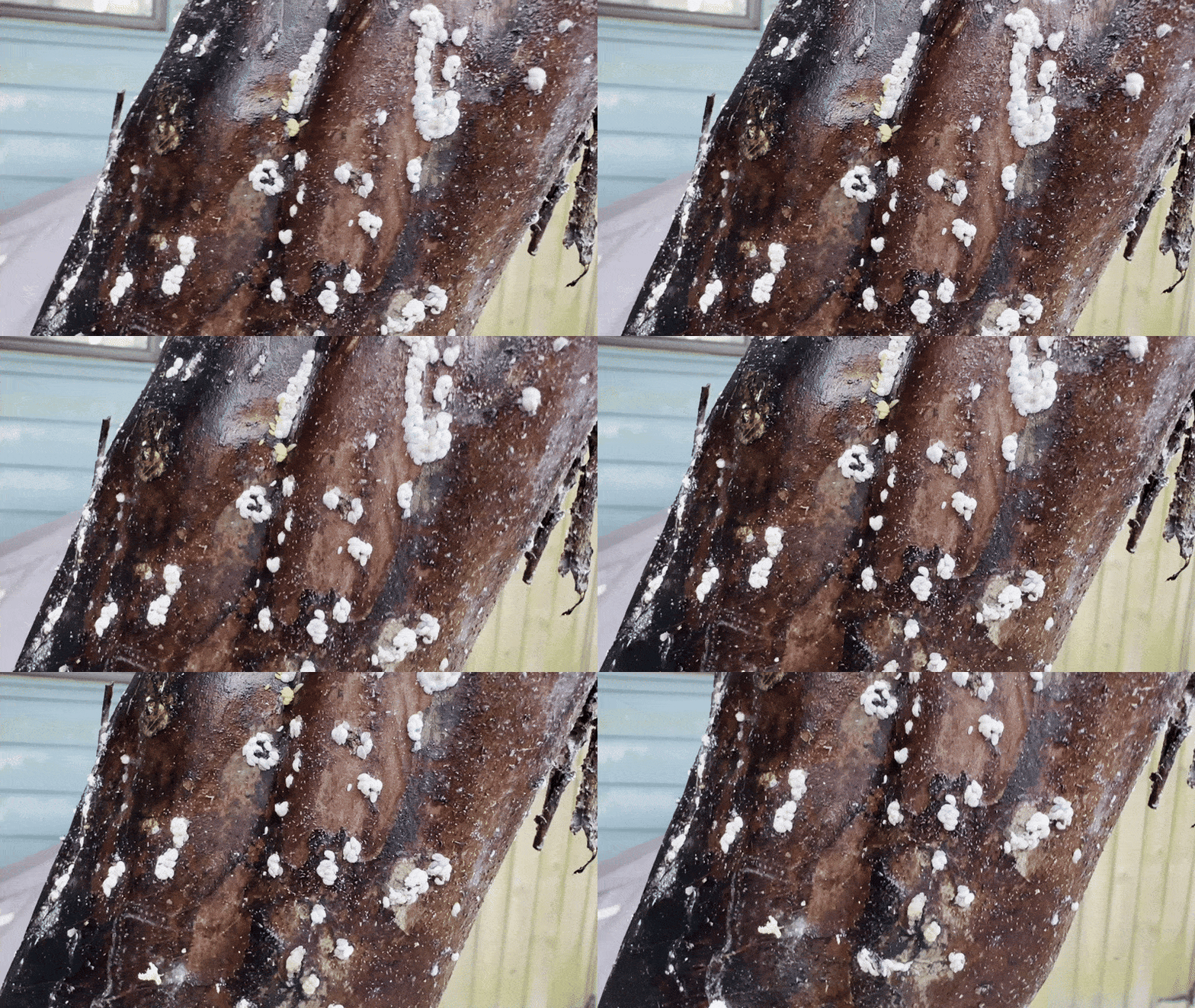
The destructive creepy-crawlies known as bark scale came for my crape myrtle seemingly overnight, filing its limbs with sticky, furry little insects that threatened to kill the tree it fed upon.
Why it matters: This was preventable, and you can learn from my mistakes.
The big picture: Crape myrtles aren't native to the U.S., but the ornamental trees are wildly popular nonetheless.
- "The total number of crape myrtles planted in cities is more like monoculture in the northern part of the state," says the LSU AgCenter's Yan Chen, who studies pest management in ornamental plants. "North of the lake, you start to see crape myrtles being used a lot."
- In whole neighborhoods, she says, there might not even be anything else.
Yes, but: That creates a problem when there are pests that like feasting on a specific kind of plant or tree.
- "It becomes a continual corridor, a pathway for them to constantly find their food," Chen says.
- And with the popularity of crape myrtles in South Louisiana, so too has there been a rise in the invasive crape myrtle bark scale.
- Chen notes one North Shore example where an Ochsner Boulevard median was filled with about 500 crape myrtles, all of which became infested with bark scale. "It looked so ugly," she says, as the trees slowly died off.
Zoom in: The tree in our front yard was there when we bought the house some years ago, and it's offered up its snowball-like flowers every spring and summer since.
- It never caused us any trouble until last fall when the bark scale crept in, finding a pathway along the half dozen or so crape myrtles along our street.
- The infestation looked like tiny, furry insects that took over the tree's limbs, which became sticky and covered with a secondary infestation of black, sooty-looking mold. Gross!
- Happily, there is a solution. Unhappily, as Chen notes, "it's impossible to get [the infestation] down to zero."
How it works: Treat your tree from root to leaves with a neonicotinoid, such as the one found in Bayer Advanced Tree & Shrub Protect and Feed, and the Monterey Once a Year Insect Control, Chen says.
- Sustainable options, Chen says, include pressure washing the pests off your tree or using ultra-fine horticultural oils or insect growth regulators, which are more accessible for professional pest managers.
The bottom line: Crape myrtle bark scale isn't going away anytime soon, especially as climate change makes our region more attractive to the pest, Chen says.
- But it can be managed "as long as you keep an eye on it," she says.