The world's largest fish collection just got a little bigger

Add Axios as your preferred source to
see more of our stories on Google.
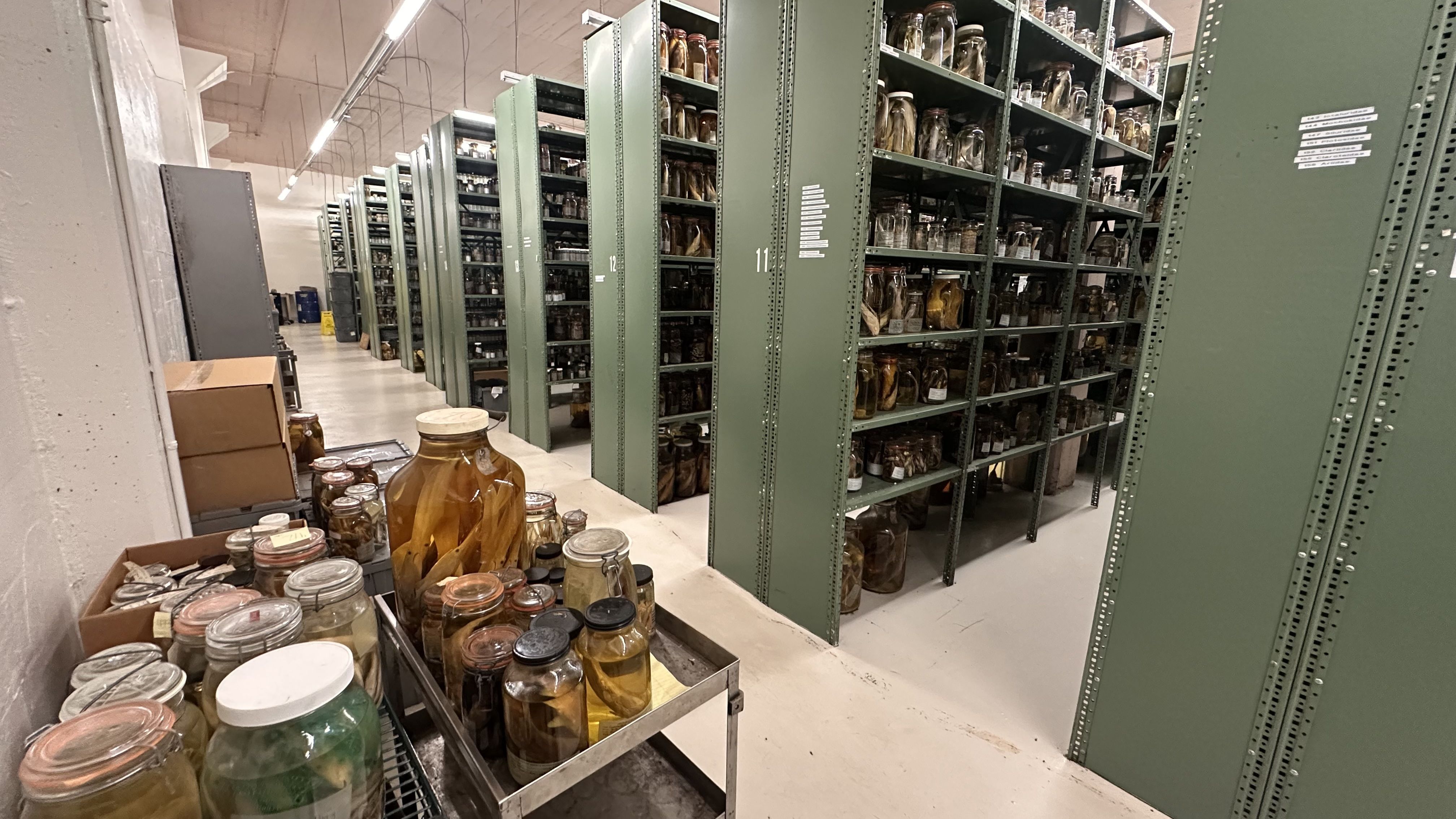
The world's largest collection of fish specimens, which is housed in World War II-era ammunition bunkers outside New Orleans, just got a little bigger.
Why it matters: The collection allows scientists to explore 75 years of biodiversity at a level of specificity its creator likely never even dreamed possible when he first started sticking fish in jars.
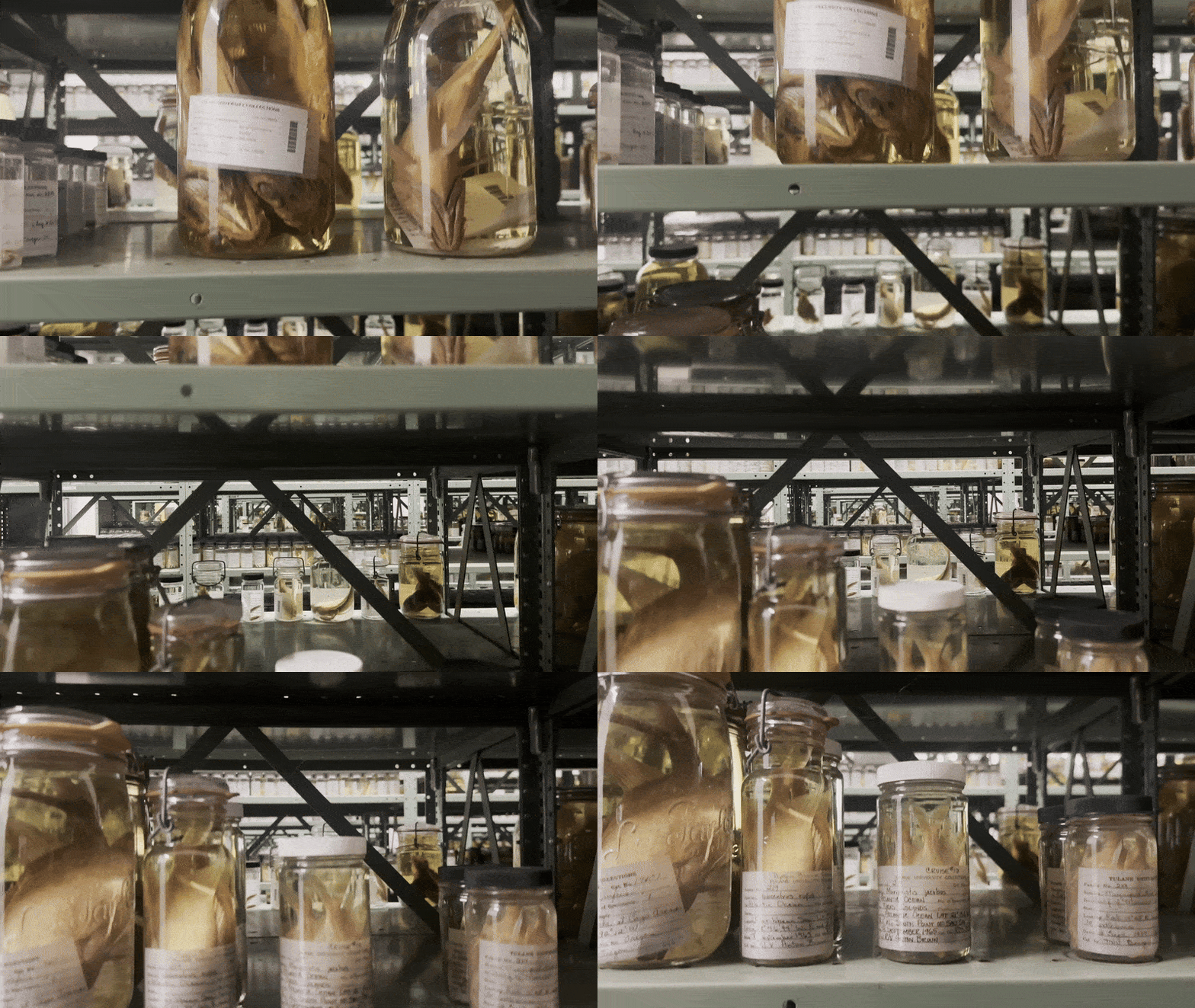
The big picture: The Royal D. Suttkus Fish Collection is managed by the Tulane University Biodiversity Research Institute, which Brian Sidlauskas directs.
- The collection includes close to 8 million catalogued specimens, he says, with 2 million to 3 million still getting worked into the system.
- That kind of library, which also contains details about where the fish were collected and when and by whom, is scientifically invaluable, Sidlauskas says.
- From comparing parasite diversity before and after the Clean Water Act to exploring aquatic population sizes and whether or not a species is new, the massive amount of preserved fish acts "like a time capsule," he says.
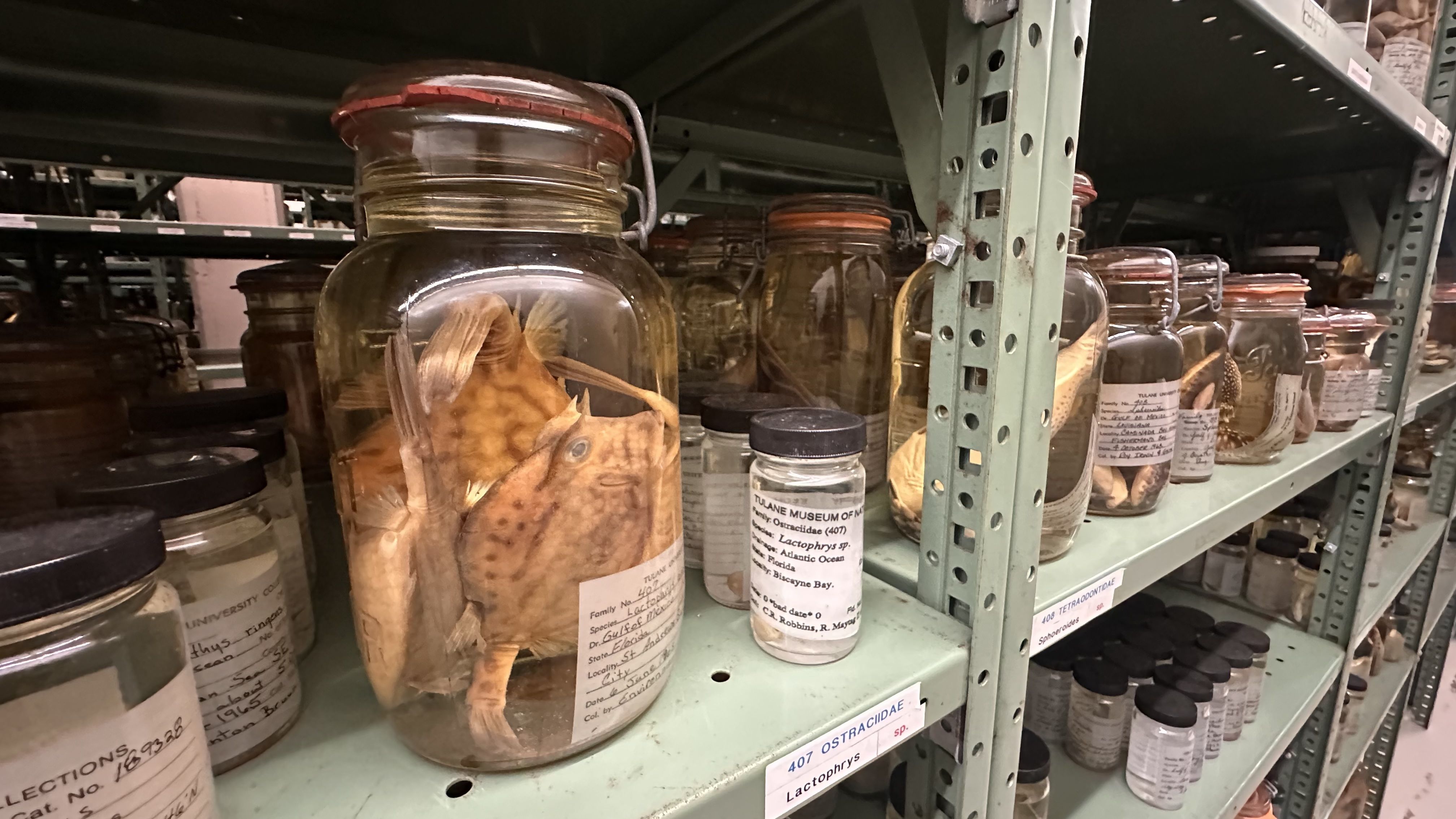
Flashback: The collection began as Tulane researcher Royal D. Suttkus' life's work.
- Soon after joining the university's staff and exploring a small, leftover fish collection from another museum, he began collecting millions of new additions.
- "He really spent his entire life documenting the diversity of the rivers" in the region, Sidlauskas says. "He threw nothing back."
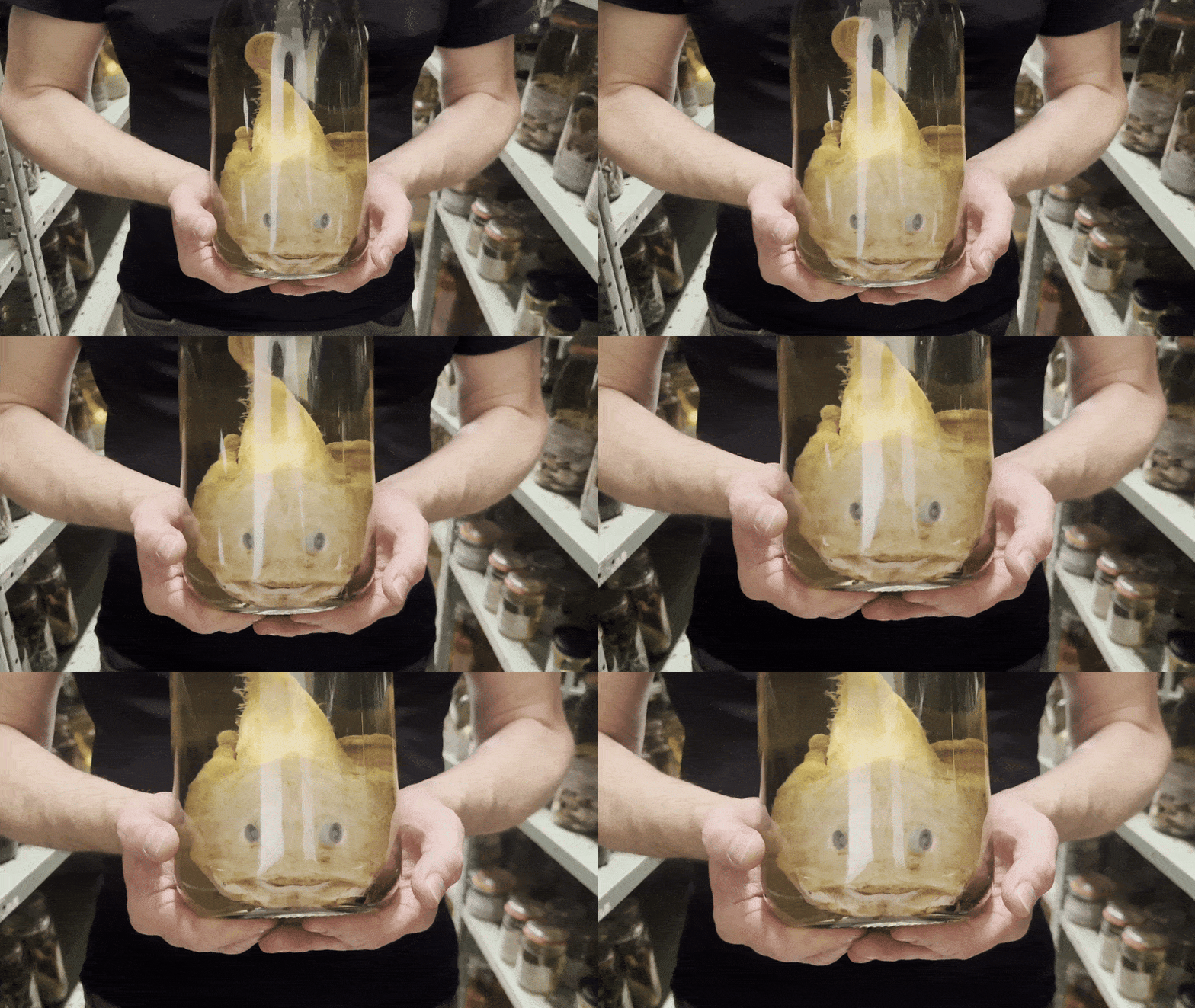
The intrigue: Scientific advancements since Suttkus first began collecting fish mean the collection's value has increased over time.
- The Tulane researchers are considering how recent developments in artificial intelligence can supercharge exploration within the data they already have, which wasn't even a consideration just a handful of years ago.
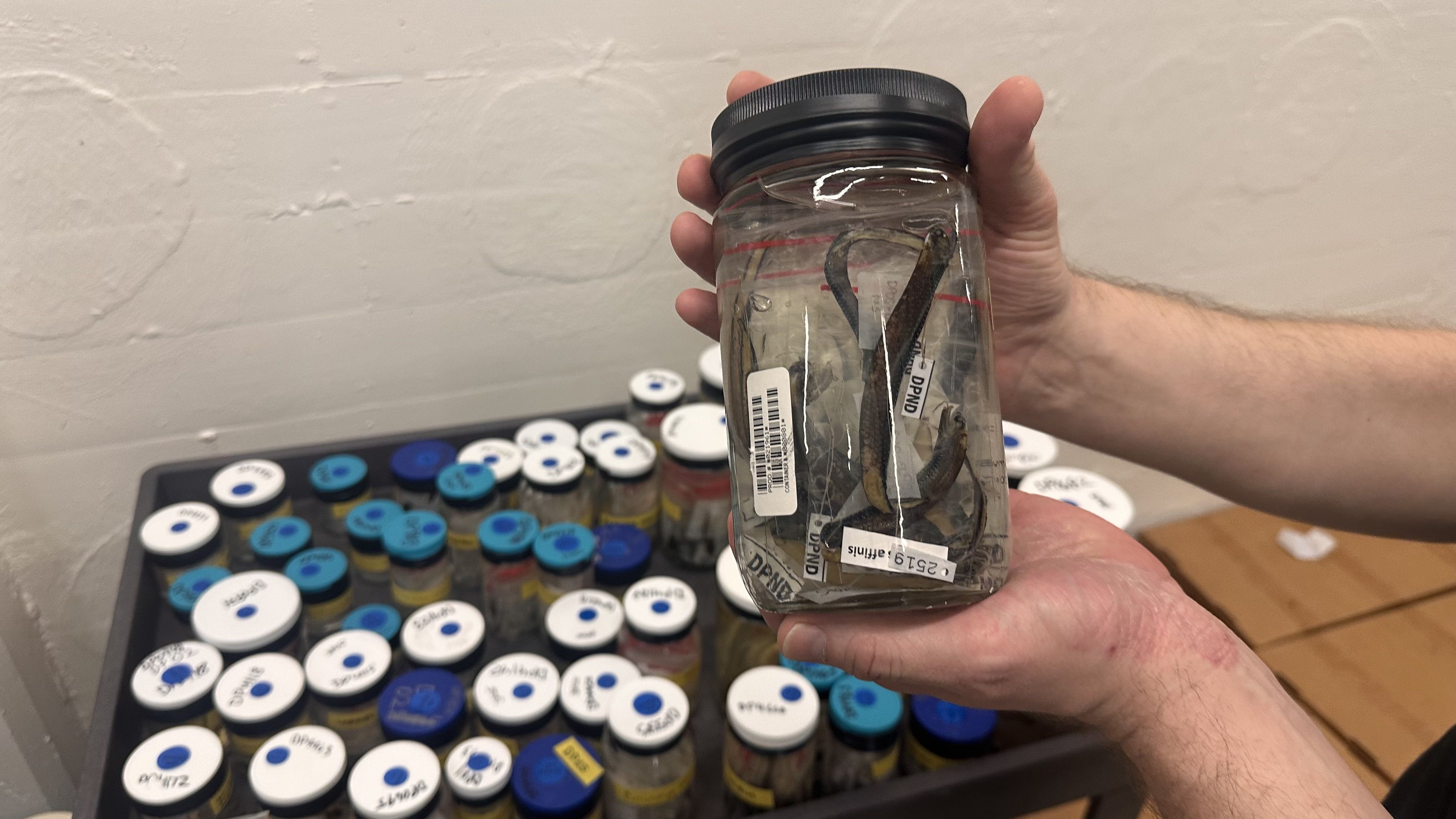
Zoom in: The collection has also grown through acquisitions, such as the 126 pallets of specimen jars Tulane received when the University of Louisiana at Monroe ended its museum program.
- The latest is around 1,000 deep-sea specimens from the DEEPEND Consortium.
- "They are exquisitely preserved ... from a place that is hard to get fish," Sidlauskas says. "We're talking 1,000 meters down, 2,000 meters down."
What we're watching: The new additions are "just the tip of the iceberg," he notes.
- "Properly preserved, these fishes will last many more lifetimes than us, and so we're saving them for generations that haven't even been conceived yet."