What's inside Angola's ICE detention contract

Add Axios as your preferred source to
see more of our stories on Google.
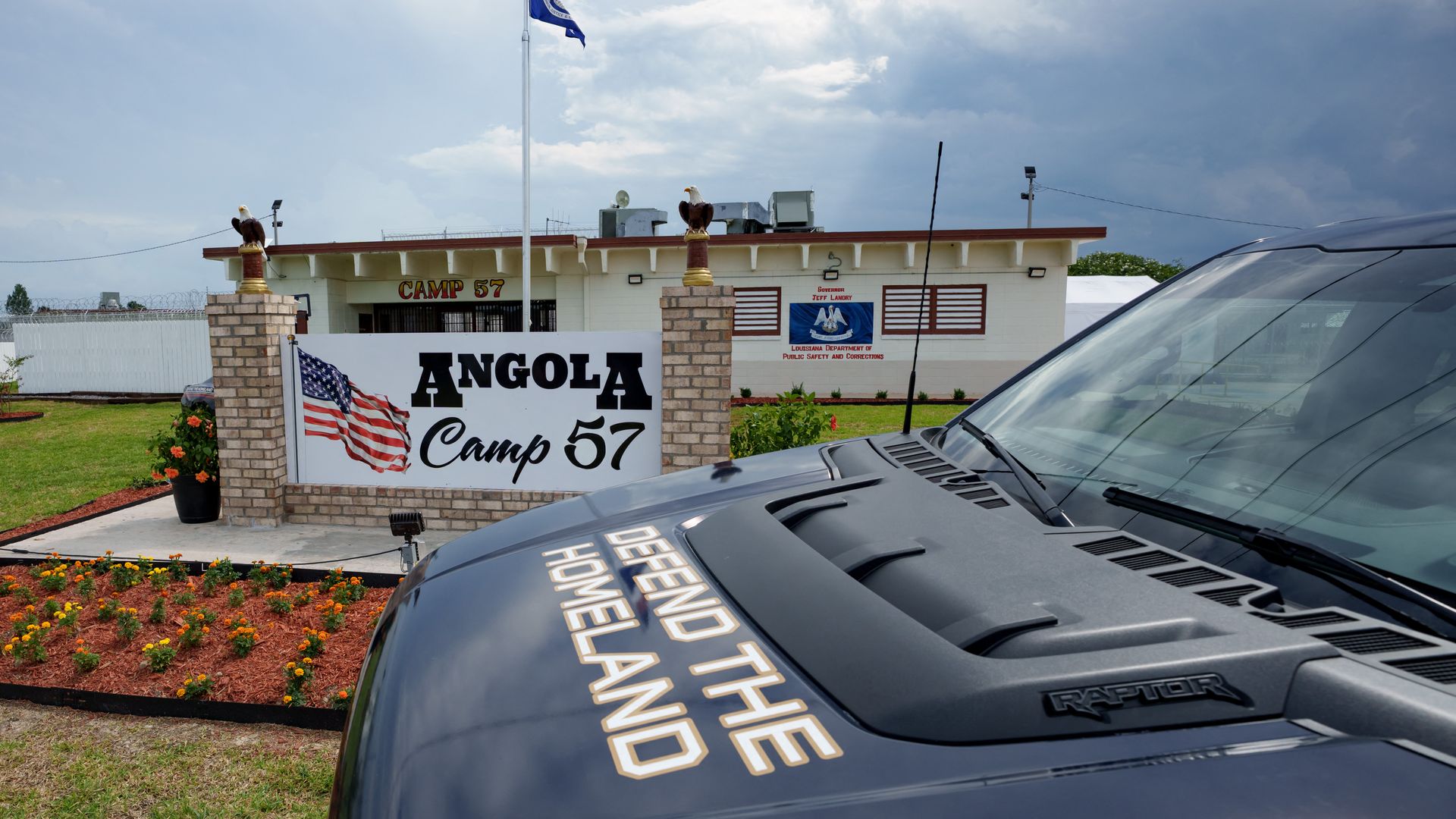
Camp 57, aka Camp J, was a previously defunct facility at the Louisiana State Penitentiary, the largest maximum-security prison in the U.S. Now, it's being used to house federal immigration detainees. Photo: Matthew Hinton/AFP via Getty Images
Louisiana is paying — and getting federal reimbursement for — a $949,000 monthly fee to house hundreds of immigration detainees at Angola prison, according to public records Axios New Orleans obtained.
Why it matters: The contract with a corrections operator from the northern part of the state offers the most extensive look yet into how Louisiana operates a federal detention facility on the grounds of the nation's largest maximum security prison.
Catch up quick: Louisiana is already one of the largest players in the Trump administration's massive immigration detention and deportation strategy.
- But its role grew larger last summer when Gov. Jeff Landry announced the state would start using a then-defunct facility within the Louisiana State Penitentiary, also known as Angola, to house Immigration and Customs Enforcement detainees.
- The strategy had already been deployed elsewhere, including in Florida's Alligator Alcatraz and Indiana's Speedway Slammer.
- State and federal officials celebrated the opening of the Angola facility, dubbed "Louisiana Lockup," in September.
State of play: The Louisiana Department of Public Safety and Corrections contracted with LaSalle Corrections on Aug. 29, 2025, to operate the facility for up to two years.
- The contract outlines an arrangement made possible by a separate agreement between the U.S. Department of Homeland Security and the state Governor's Office of Homeland Security and Emergency Preparedness empowering DPSC with facility management for immigration detention. Axios did not obtain a copy of that agreement.
- LaSalle is in turn charged with soup-to-nuts detainee operations, including everything from inmate record-keeping to commissary services, day-to-day physical needs like food, clothing, recreation and medical care, and managing facility safety.
Follow the money: For those services, the state pays a flat fee of $949,000, which it calculated by tallying $150 per day for each of 208 inmates over 365 days.
- It's not clear from the document how the agencies decided on the $150 per diem. Indiana, for example, is receiving $291 per detainee per day for housing people in a similar facility, according to the Indy Star. The current average state cost to house a typical Angola inmate is $115.87 per day, according to DPSC spokesperson Tiffany Dickerson.
- The facility can house up to 416 detainees, the contract says. For each person in custody beyond the initial 208, the state pays another $125 per day. DPSC procurement director Tammy Grant said Dec. 30 that had not yet happened. Camp J's average daily population was 177 people through Nov. 28, according to data collected by the nonpartisan Transactional Records Access Clearinghouse.
- Additional fees also apply for "outside medical professional services" and related costs.
All fees, Grant says, are reimbursed by the federal government.
- "We're not extending any money outside of what we're getting," she tells Axios New Orleans.
Yes, but: The state is responsible, according to the contract, for capital improvements, building repairs and maintenance, outside grounds upkeep and furniture, fixtures and equipment "necessary for the startup of the facility," as well as ongoing utilities and laundry services.
- Closed since 2018, Camp J had "deteriorated into a condition that creates a significant threat of injury to individuals and property who enter or are in and around its premises," according to Landry's executive order declaring a state of emergency to prompt its renovation last September.
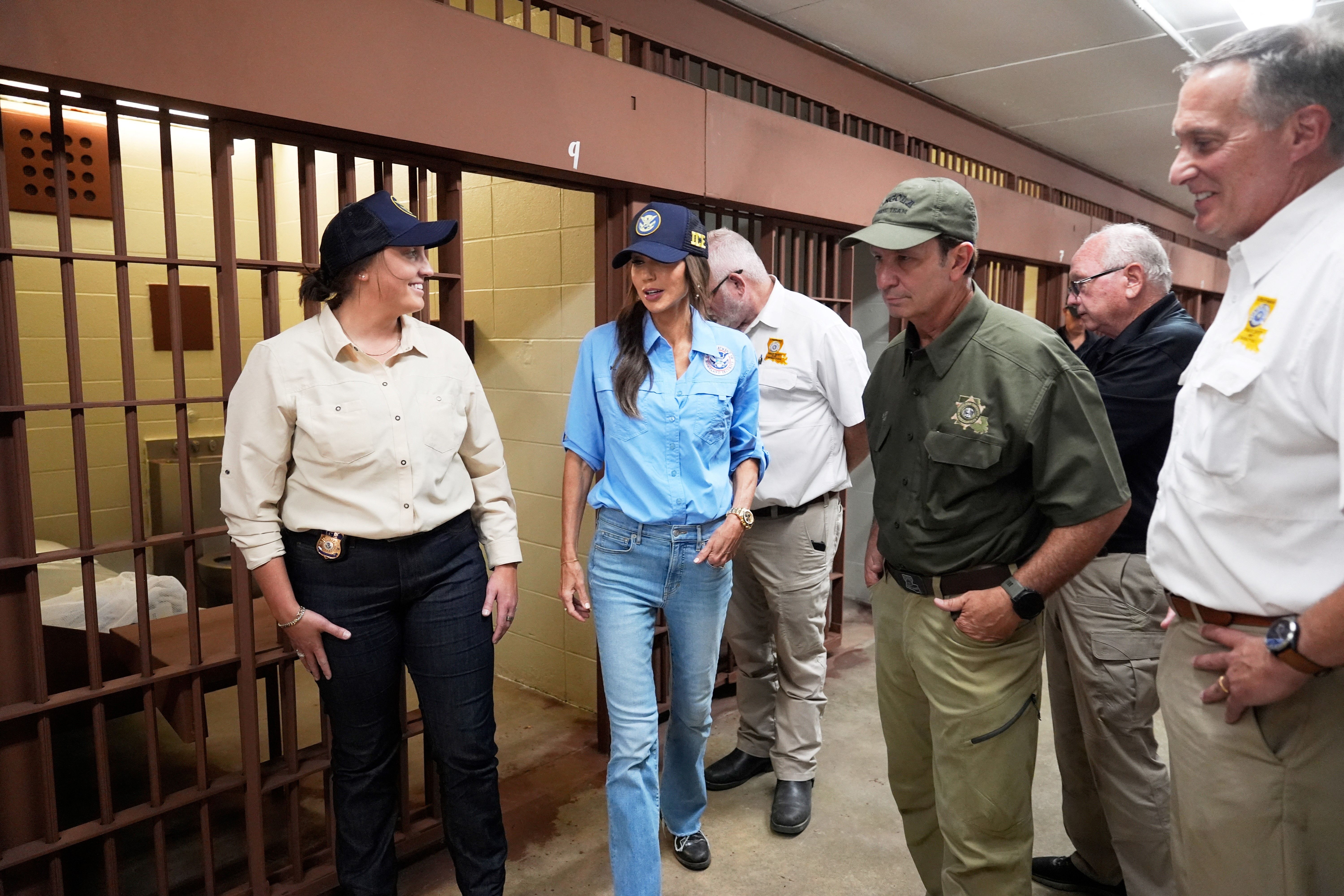
- No major repairs were done at Camp J "until LaSalle began leasing the facility last summer," Dickerson says. Among them: adding air conditioning, fixing broken locks, sand-blasting and painting cells, replacing lights and other fixtures, as well as adding outdoor exercise areas.
- Dickerson did not respond to a question about whether those costs were reimbursed by the federal government.
What they're saying: The contract, according to Loyola University law professor Andrea Armstrong, whose expertise includes public oversight of corrections facilities, feels thin.
- "There are Angola costs in this," she says. "Everyone's got to pass through the gate," and that comes with, at a minimum, additional security requirements.
- The document, which Armstrong reviewed after Axios New Orleans provided her with a copy, does not include provisions for LaSalle to pay rent back to the state, which she found unusual. The contract also does not outline specific staffing requirements beyond referencing federal guidelines. Dickerson did not clarify whether an additional rent agreement between LaSalle and the state exists.
- Armstrong is also dubious about the physical improvements made to the facility, which she toured in 2018. "If you had a piece of bubblegum, you could defeat the locks in Camp J," she recalled from that tour. Now, that space is "housing people who allegedly need the most security."
Zoom in: At least one other corrections company was up for consideration to run Camp J for DHS.
- Emails provided to Axios New Orleans through a public records request reference an early September meeting between Landry's staff, DPSC officials and representatives for the Texas-based Recana Solutions, a contractor used in Texas' Operation Lonestar, according to the Texas Observer.
- But LaSalle was chosen, Grant says, because it's a "Louisiana-based company with experience housing detainees."