Heat streaks are getting more common in Louisiana


Add Axios as your preferred source to
see more of our stories on Google.
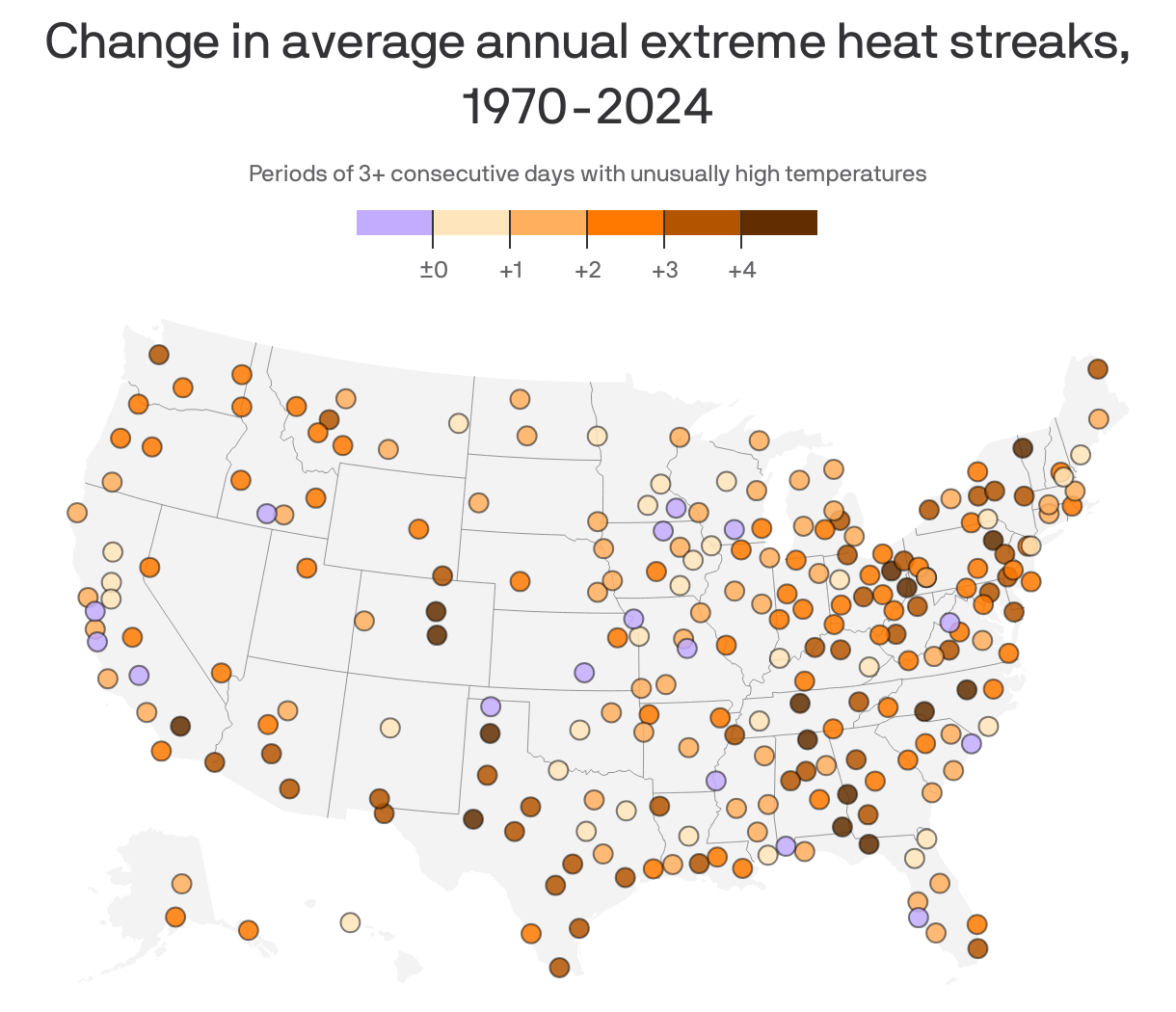
Heat streaks are becoming more common in Louisiana cities and nationwide, a new analysis finds.
Why it matters: Prolonged heat is particularly hazardous to human health.
By the numbers: New Orleans averaged two more extreme heat streaks annually between 1970 and 2024, according to a new report from Climate Central, a climate research group.
- Baton Rouge suffered the same, but Lafayette and Shreveport both averaged three more streaks during that timeframe.
- Lake Charles averaged one more, but only Alexandria showed no change in that stretch.
- Nationally, the number of extreme heat streaks rose in 80% of the 247 cities that Climate Central analyzed.
Zoom in: This summer in New Orleans, July was so hot, it's making August feel like a break.
- July's highs averaged above normal, according to the National Weather Service in Slidell.
- But so far, this month's highs have actually landed right near average, around 91 or 92, NWS says.
How it works: Climate Central defines an "extreme heat streak" as three or more days in a row with maximum temperatures over the 90th percentile of a given location's daily max temperatures during the 1991-2020 period.
- "Across the 247 cities analyzed, this temperature threshold ranged from 66°F in Juneau and Anchorage, Alaska to 100°F in Yuma, Arizona," per the report, which is based on publicly available NOAA data.
Threat level: Extreme heat's effects on the body tend to be cumulative, and warm nights offer little reprieve for those without air conditioning.
- Multi-day heat streaks are also challenging for power grid operators, given all the energy-intensive A/C use.