Louisiana loses its Independent Party

Add Axios as your preferred source to
see more of our stories on Google.
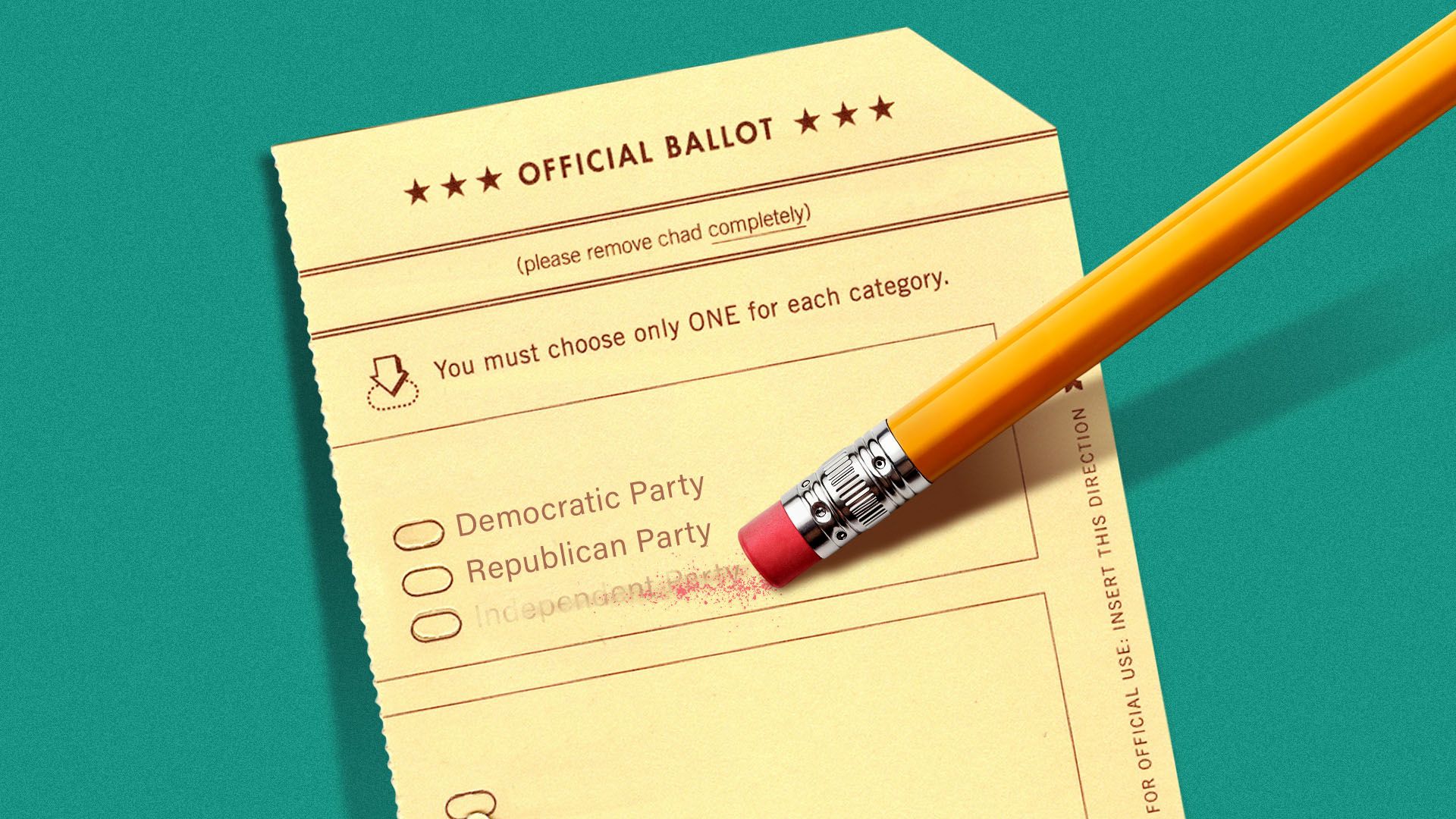
Illustration: Sarah Grillo/Axios
About 150,000 Louisiana voters lost their party affiliation last week when the state officially did away with the Independent Party.
Why it matters: It's part of the logistical and clerical shifts state officials are making as Louisiana prepares to host closed party primaries in 2026 for five elections, which affect all voters, regardless of party affiliation.
Be smart: This transition is bound to be complicated for voters, but it's worth paying attention to to make sure your vote counts the way you want it to in 2026 and beyond.
- The changes will not impact voting in this fall's municipal elections in New Orleans and Jefferson Parish.
Catch up quick: At Gov. Jeff Landry's urging, state lawmakers last year approved a shift away from Louisiana's jungle primary system for five of the state's elections.
- It means that, instead of everyone getting to vote in the same primary elections, party affiliation will determine who you get to vote for in primaries and primary run-offs. There won't be restrictions in general elections.
- Affected elections include races for the U.S. Senate, U.S. House of Representatives, Louisiana Supreme Court, Public Service Commission and the Board of Elementary and Secondary Education.
Between the lines: Though the change doesn't take effect until 2026, efforts are already underway at Secretary of State Nancy Landry's office to get things organized.
- That's why state lawmakers approved the dissolution of the Independent Party earlier this year to make way for a slightly more streamlined process for those voters to participate in primaries.
How it'll work: Former Independent Party voters are now lumped in with the more than 650,000 other voters already considered "unaffiliated," according to the Secretary of State's office.
- When those voters arrive at the polls or request to vote by mail, they'll be offered a choice to vote in the Republican or Democrat primaries, or decline to vote in them. That choice will stand for both the primary and the primary runoff, unless a voter formally changes their party between those two dates.
- Voters who are registered as Republican or Democrat will only be able to vote in the primaries for their party affiliation.
- Voters who are registered as any of the dozens of other minor parties in the state won't be able to vote in the primaries. Instead, they'll only be able to vote in their local races.
What we're watching: Louisiana has long been known for its large population of "ancestral Democrats," which makes the state look more blue than it typically votes.
- But if those voters want to actually participate in Republican primaries, this may drastically shift the state's data on registered voters as people formally affiliate with the GOP.
What's next: Check your party affiliation to make sure it accurately represents how you plan to cast ballots next year.