More "hostile architecture" pops up in metro New Orleans

Add Axios as your preferred source to
see more of our stories on Google.
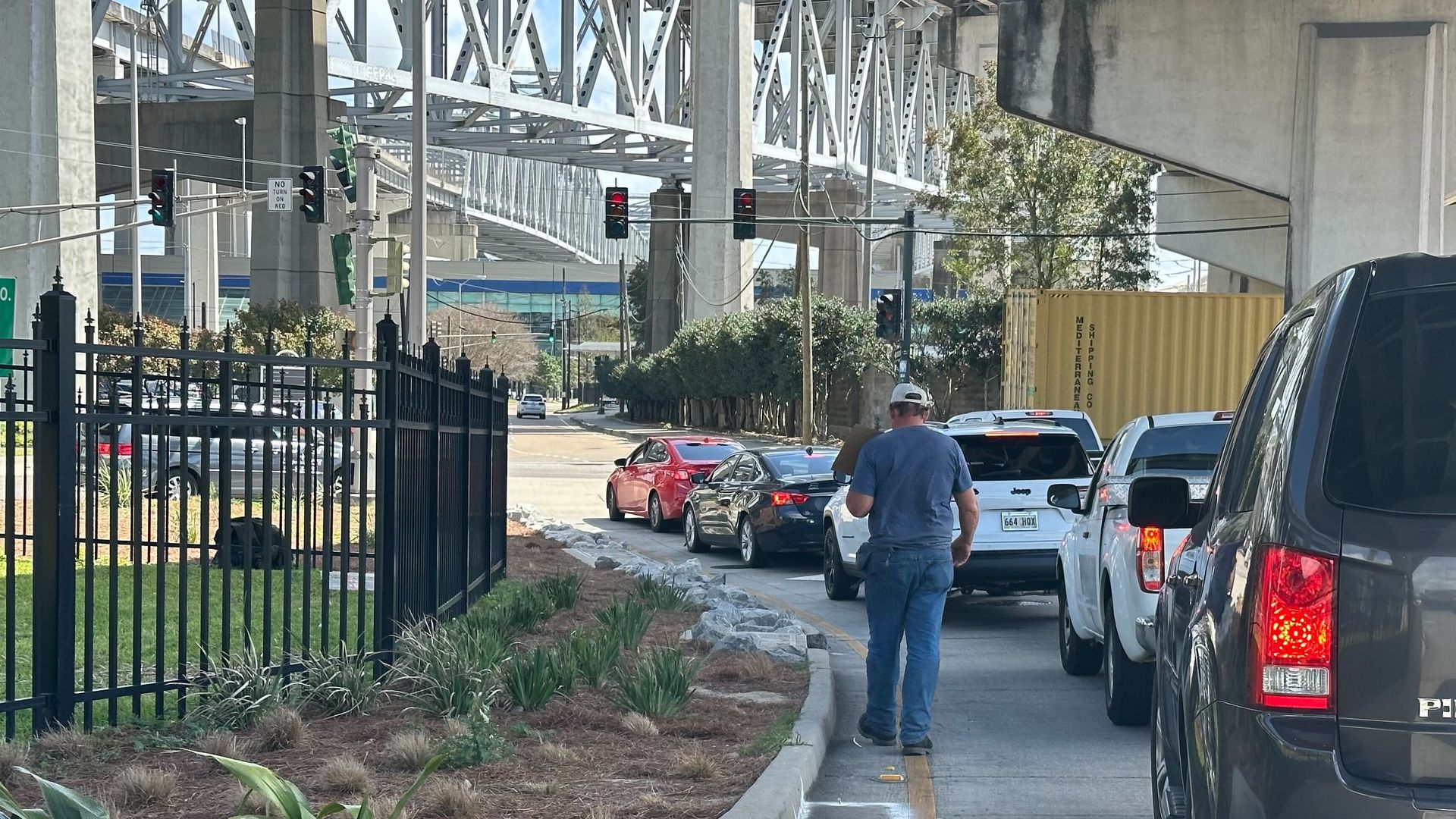
Uneven rocks are now on the ground in places that are common to panhandle near Tchoupitoulas Street and the Pontchartrain Expressway. The area is fenced off too. Photo: Chelsea Brasted / Axios
Some southeast Louisiana intersections are changing in an attempt by officials to discourage panhandling. But critics worry about the broader message being sent.
Why it matters: So-called hostile architecture is a tactic to deter homeless encampments and reshape public places.
The big picture: Hostile architecture, also called defensive architecture, uses elements to intentionally guide or restrict behavior that leaders deem undesirable, the National Coalition for the Homeless says in a report.
- The group says it is often used to "encourage people experiencing homelessness to move on to another community."
Case in point: Before New Orleans hosted Super Bowl LIX, state officials cleared out homeless encampments under the Pontchartrain Expressway near Tchoupitoulas Street.
- The grassy areas were soon fenced off and the parts of the neutral ground were spread with rocks to deter walking or sitting.
- Jefferson Parish also has replaced the grass around at least one West Bank intersection with gravel meant to deter panhandlers.
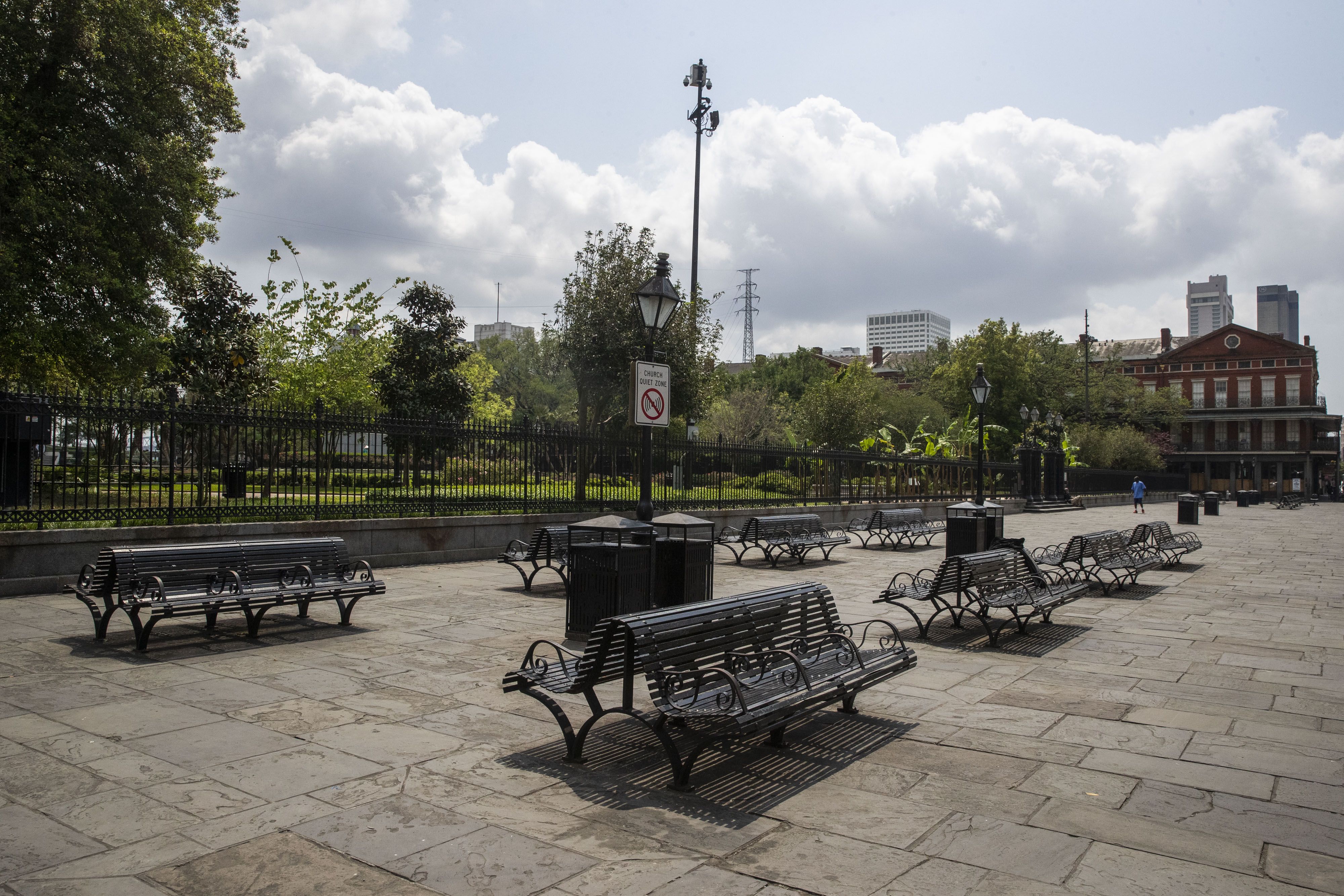
Flashback: New Orleans installed permanent fences in 2020 at the corner of South Claiborne and Cleveland avenues, preventing people from accessing the space that had once been one of the largest homeless encampments in the city, according to The Lens.
- The benches in Jackson Square have long had bars in the middle too, which are meant to prevent people from sleeping on them.
Zoom out: Major cities like Dublin, Paris and San Francisco have tried versions of hostile architecture, according to reports, with most geared at preventing people from sleeping on the streets.
- Supporters of the architecture say it's the only way to keep sidewalks open and clean, writes Axios' Shawna Chen, while opponents argue it disproportionately affects vulnerable populations.

State of play: New Orleans has been working for years on the hard-to-solve homelessness crisis.
- The effort got a $15 million federal boost in 2023 to house people experiencing homelessness in the city.
- The plans were disrupted, leaders and advocates told Verite, when Louisiana State Police started clearing out encampments before Taylor Swift's concerts last fall.
- Then, Gov. Jeff Landry created a temporary shelter in a Gentilly warehouse before the Super Bowl and relocated homeless people there, according to The Lens.
- The shelter closed after Mardi Gras. Authorities lately have been cracking down on people sleeping on the sidewalks of the French Quarter and the Marigny, according to The Times-Picayune.
What's next: The city is trying to build an $8 million shelter in the Tulane-Gravier area, with apartments and resources from social workers, writes Joni Hess of The Times-Picayune.
- Construction is expected to start next year with 2028 as the targeted opening date, according to Hess.