How Trump's "big, beautiful bill" could affect SNAP in Louisiana


Add Axios as your preferred source to
see more of our stories on Google.
President Trump signed a sweeping tax and spending bill into law Friday that could sharply cut food benefits for thousands of Americans.
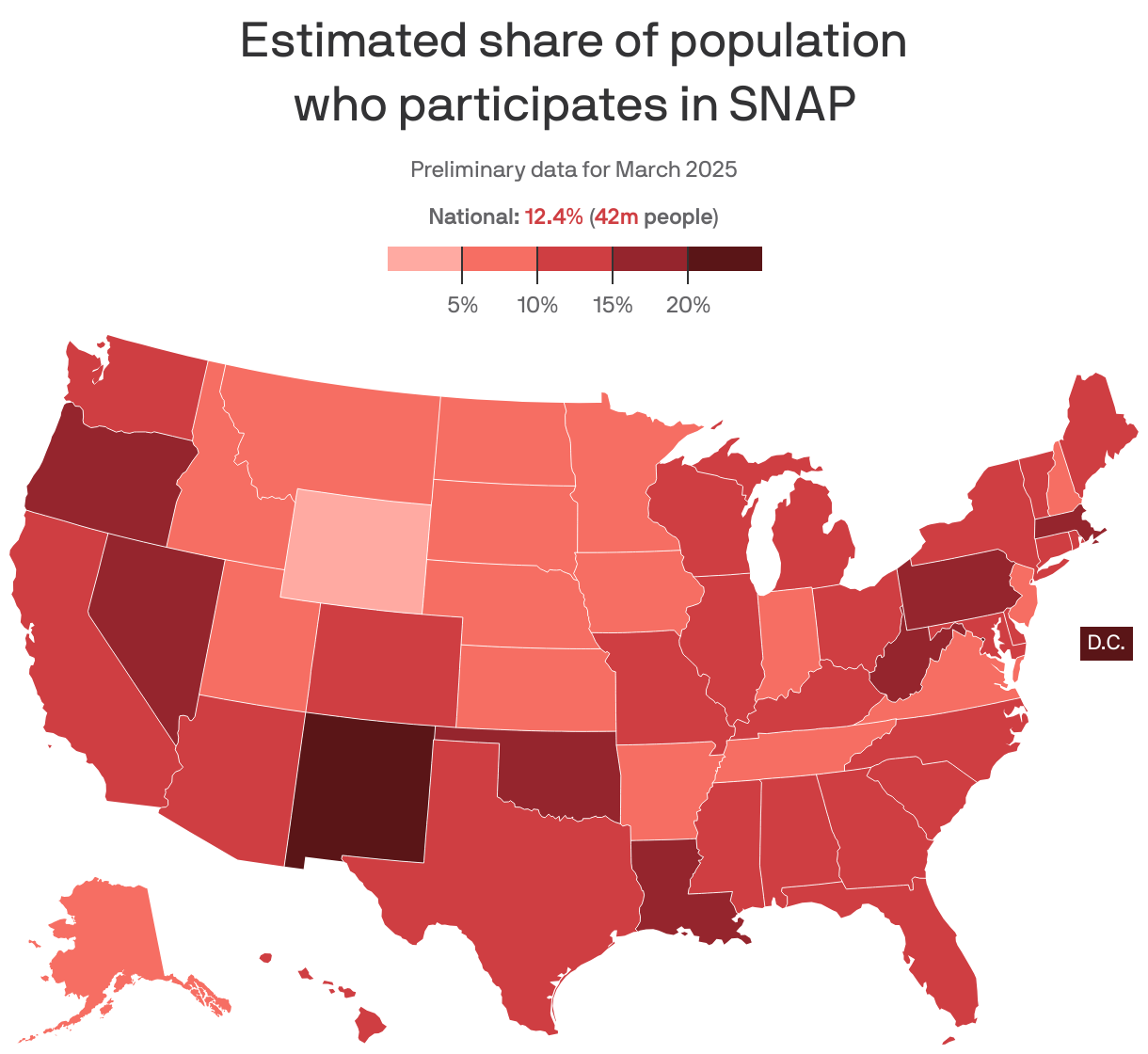
Why it matters: Nearly 18% of Louisianans rely on the Supplemental Nutrition Assistance Program, which is higher than the national average of 12%.
The big picture: The "big, beautiful bill" is a historic cut to the social safety net that Republicans say weeds out waste, fraud and abuse — but experts say the restructuring of assistance programs could leave more people hungry and uninsured.
How it works: Trump's signature policy bill adjusts work requirements for SNAP, the country's largest nutrition assistance program.
- The program provides support for families with low-paying jobs, low-income older adults, people with disabilities and others.
- In order to keep their benefits, parents of children aged 14 or older will have to meet work requirements. The bill also bumps the work requirement age up to 64.
- Previously, SNAP's requirements for able-bodied adults without dependents apply to those between 18 and 54.
- The bill could also force some states to shoulder more benefit costs, the rate of which would be set by a state's percentage of erroneous payments. Benefits have been 100% federally funded, though states share administrative costs.
By the numbers: Louisiana SNAP recipients received $1.9 billion in benefits last year, according to a Center on Budget and Policy Priorities analysis of FY 2024 USDA data.
- More than 69% of SNAP participants in the state are families with children. More than 37% are in families with members who are older adults or are disabled, the analysis found.
- In Louisiana, SNAP benefits average about $6 per day for each household member, according to the state report.
Zoom out: In March 2025, more than 42 million Americans participated in SNAP, according to initial USDA data.
- More than 2 million people could be cut from SNAP under the work requirement provision, according to estimates from CBPP.