Gov. Jeff Landry makes bid to shift Louisiana toward eliminating income tax

Add Axios as your preferred source to
see more of our stories on Google.
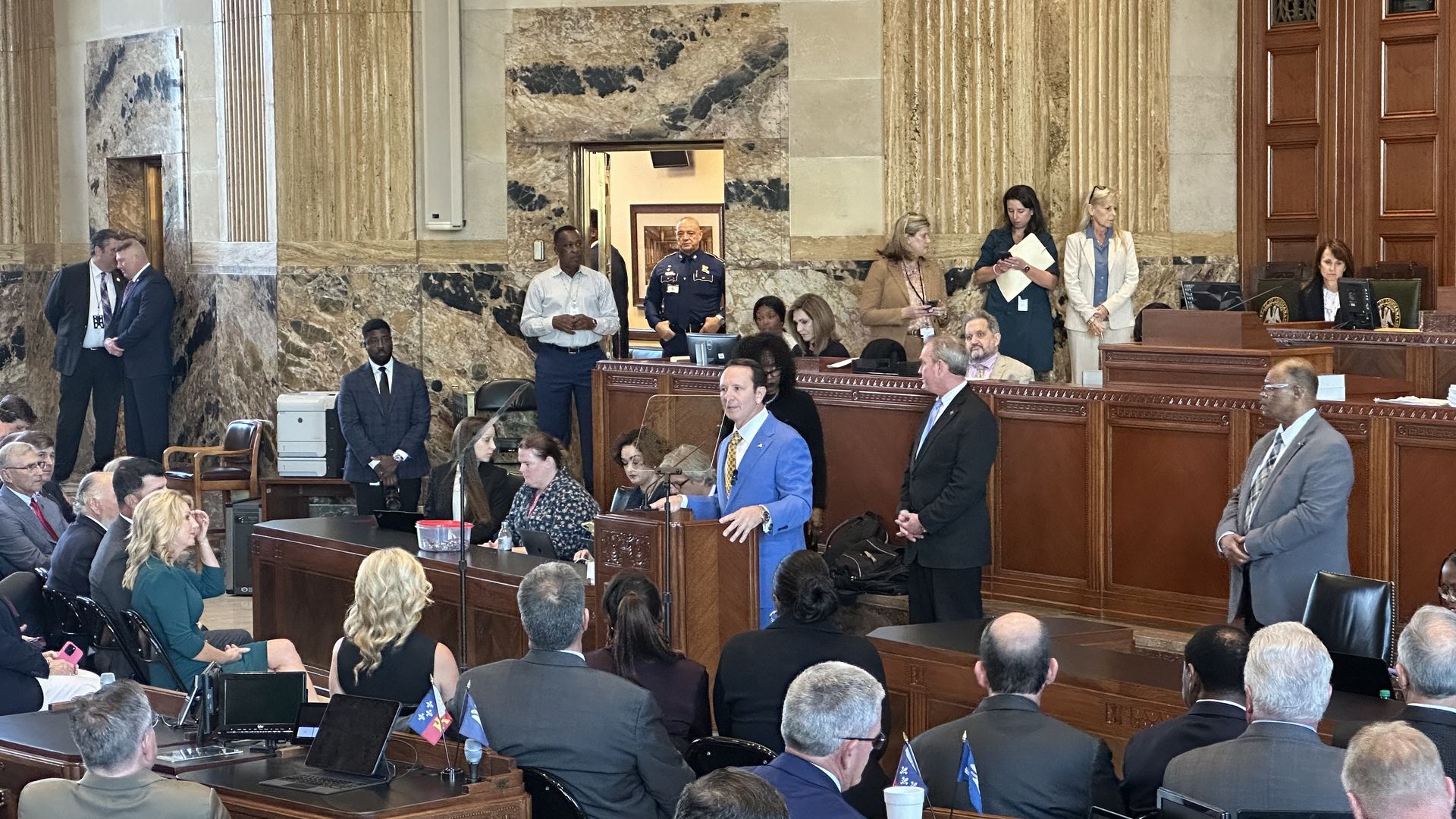
Gov. Jeff Landry spoke with state lawmakers as a special session opened Wednesday. Photo: Chelsea Brasted/Axios
Gov. Jeff Landry asked Louisiana lawmakers to update the state's tax code Wednesday as he opened the first day of the state's third special session of the year.
Why it matters: If Landry's expansive plan goes through, it'll change how everyone in the state pays their taxes.
What he said: "This tax code is holding our state back," Landry said to lawmakers, brandishing a copy of a 1,400-page book containing Louisiana's tax law. "It has been patched together with duct tape and bubblegum and moves us from one fiscal cliff to another."
The big picture: Landry's reform plan aims at simplifying Louisiana's 50-year-old tax code and eventually bring it in line with other conservative-led states that have no income tax at all, he said.
Follow the money: Louisiana's current, tiered tax rate would flatten to 3% over the next fiscal year.
- Sales taxes would expand under Landry's plan to an additional 40 or so services, including things like lobbying, digital products like online streaming services, and what he described as many "luxury" services like car washes, pet grooming and sitting, and personal fitness training.
- Services for repairs to cars, farm equipment and home appliances would also be newly taxed.
- Among other changes in Landry's plan are the elimination of taxes on prescriptions, a flat corporate tax rate at 3.5% and raising the standard deduction to $12,500.
Behind the scenes: Though it's being marketed as Landry's plan, its architect is Richard Nelson, who went from long-shot gubernatorial candidate to secretary of the Department of Revenue.
- Now, he's working with Landry to sell a package of bills the governor said would end temporary fiscal fixes and stabilize the budget long-term.
Zoom in: Among the plan's details is the permanent fixture of a 0.45-cent sales tax first billed as temporary, and which could be a tough sell with some Republican lawmakers.
- All told, the plan would result in a net loss of income for the state, largely driven by corporate tax cuts, according to a preliminary analysis from the Legislative Fiscal Office.
- That loss would primarily be absorbed by decreased deposits to the Revenue Stabilization Trust Fund, Nelson's office notes, while giving net gains to the general fund by 2025.
What we're watching: The plan is spread across nearly a dozen bills, which create new laws, edit old ones and shift some language out of constitutional amendments and into statutes.
- But "success is dependent upon its entirety," Landry said.
What's next: Lawmakers must finish their work by Nov. 26.
- Some measures, if passed, would require approval from voters next year.
Go deeper: