President Biden announces $150 million for cancer-fighting inventions

Add Axios as your preferred source to
see more of our stories on Google.
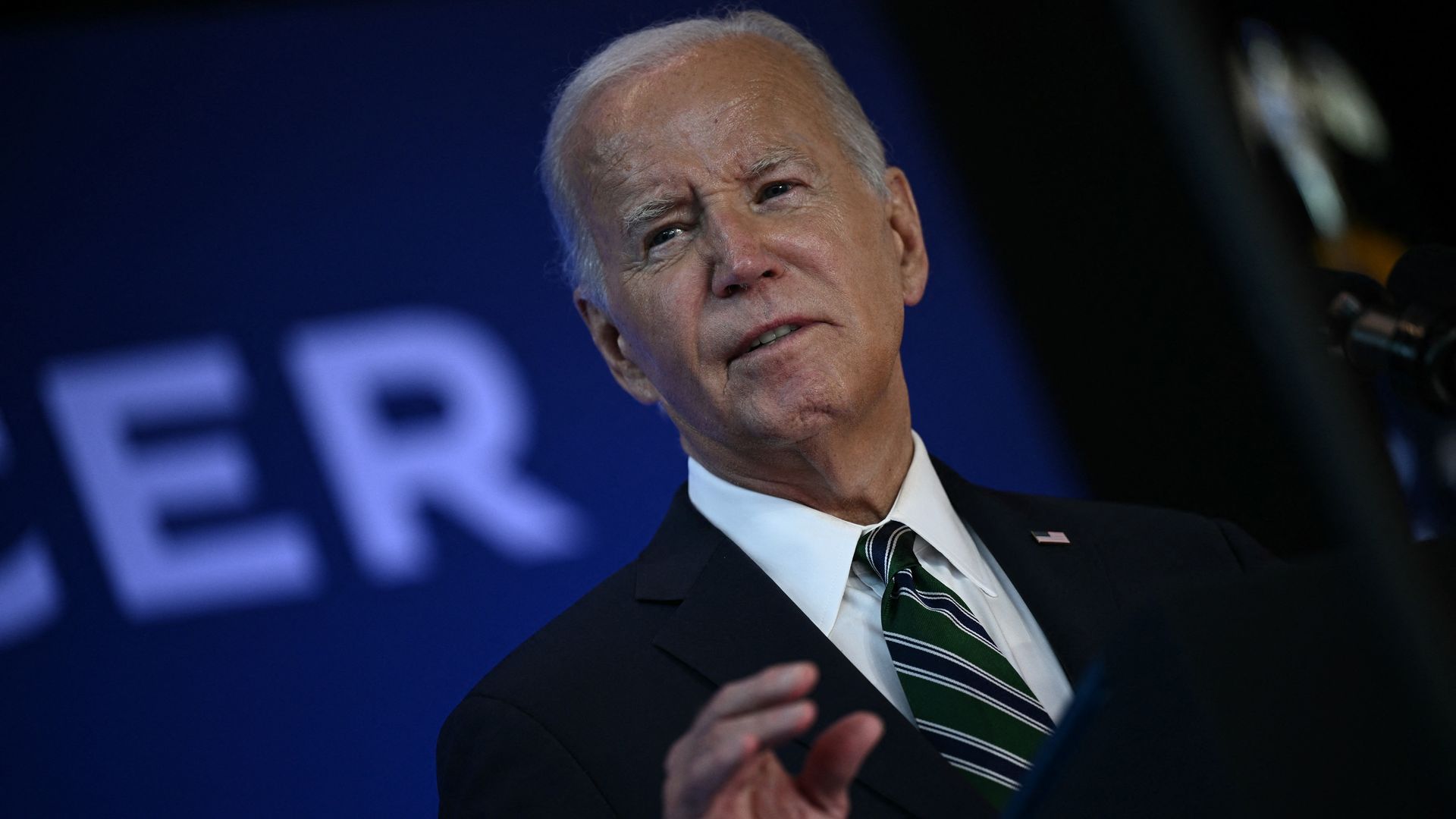
President Biden speaks in New Orleans this week. Photo: Brendan Smialowski/AFP via Getty Images
President Biden on Tuesday toured cancer research facilities at Tulane University in New Orleans and deemed the developments "incredible."
Why it matters: He announced about $150 million in federal awards during the visit as part of his cancer "moonshot" initiative that aims to cut the cancer death rate in half by 2047.
The big picture: The president and first lady Jill Biden told dignitaries and researchers in New Orleans that they know the pain of cancer after the death of their son Beau and want to change that for others.
- "We are the land of possibilities," the president said, adding that the funding will help get new tools into operating rooms.
Zoom in: Nearly 2 million Americans are diagnosed with solid tumor cancers each year, and surgical removal is often the first step in their treatment, the White House said.
- Tulane is getting $22.9 million to invent new imaging systems that will allow surgeons to see in real time if they removed all cancer cells while their patients are still under anesthesia.
- It currently can take days to weeks for doctors to know if all of a tumor has been removed, according to J. Quincy Brown, the lead researcher on Tulane's project called MAGIC-SCAN.
- The goal is to get that down to 10 minutes within the next five years, he said.
Zoom out: Seven other teams are working on additional developments geared at making tumor-removal surgeries more successful.
- The awardees are Dartmouth College, Johns Hopkins University, Rice University, University of California in San Francisco, University of Illinois Urbana-Champaign, University of Washington and Cision Vision in California.
- Their projects include inventing a new microscope and creating new imaging systems to visualize blood vessels and nerves.
By the numbers: The money is coming from the Advanced Research Projects Agency for Health federal program.
- In its first two years, ARPA-H has invested more than $400 million to fast-track progress on how Americans prevent, detect and treat cancer, the White House said.
Context: Biden now has about four months instead of four years to cement his health care legacy since he withdrew from running for a second term.
- He ran for office primarily on a health care agenda and says his top accomplishments as president were lowering prescription drug costs for seniors and expanding coverage to a record number of Americans.
- In 2022, he revived the cancer moonshot effort he spearheaded as vice president.
Go deeper: