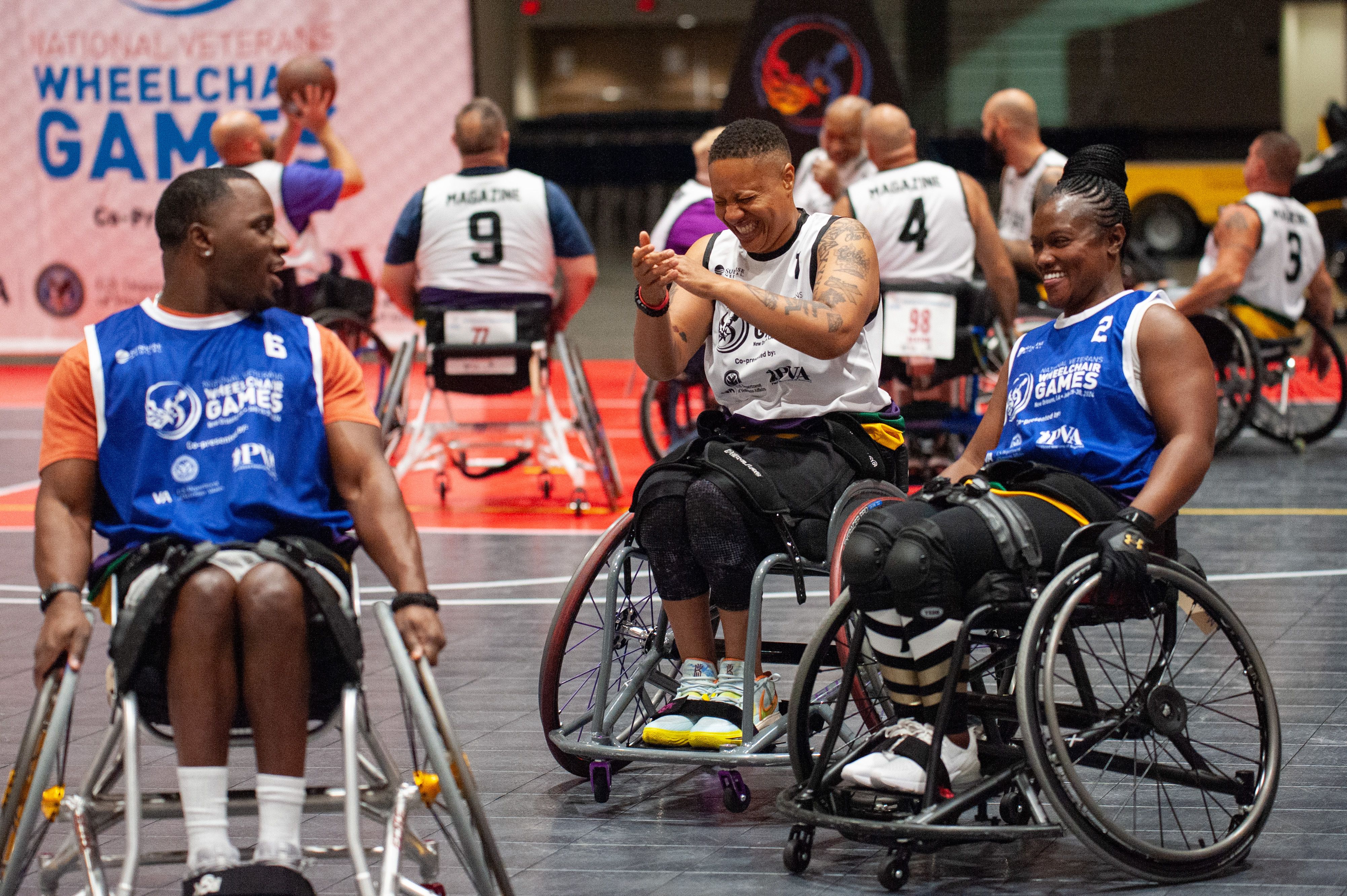
National Veterans Wheelchair Games bring more than 600 athletes to New Orleans

Add Axios as your preferred source to
see more of our stories on Google.
/2024/07/30/1722363669556.gif)
More than 600 veterans competed in more than 20 events in New Orleans this week for the National Veterans Wheelchair Games, which wrapped up Tuesday night.
Why it matters: "Nobody comes here to lose," said Ashtyn Kelley, a U.S. Navy veteran who now lives in Merritt Island, Florida. "But at the end of the day, just making those connections and getting out of the house is really what matters."
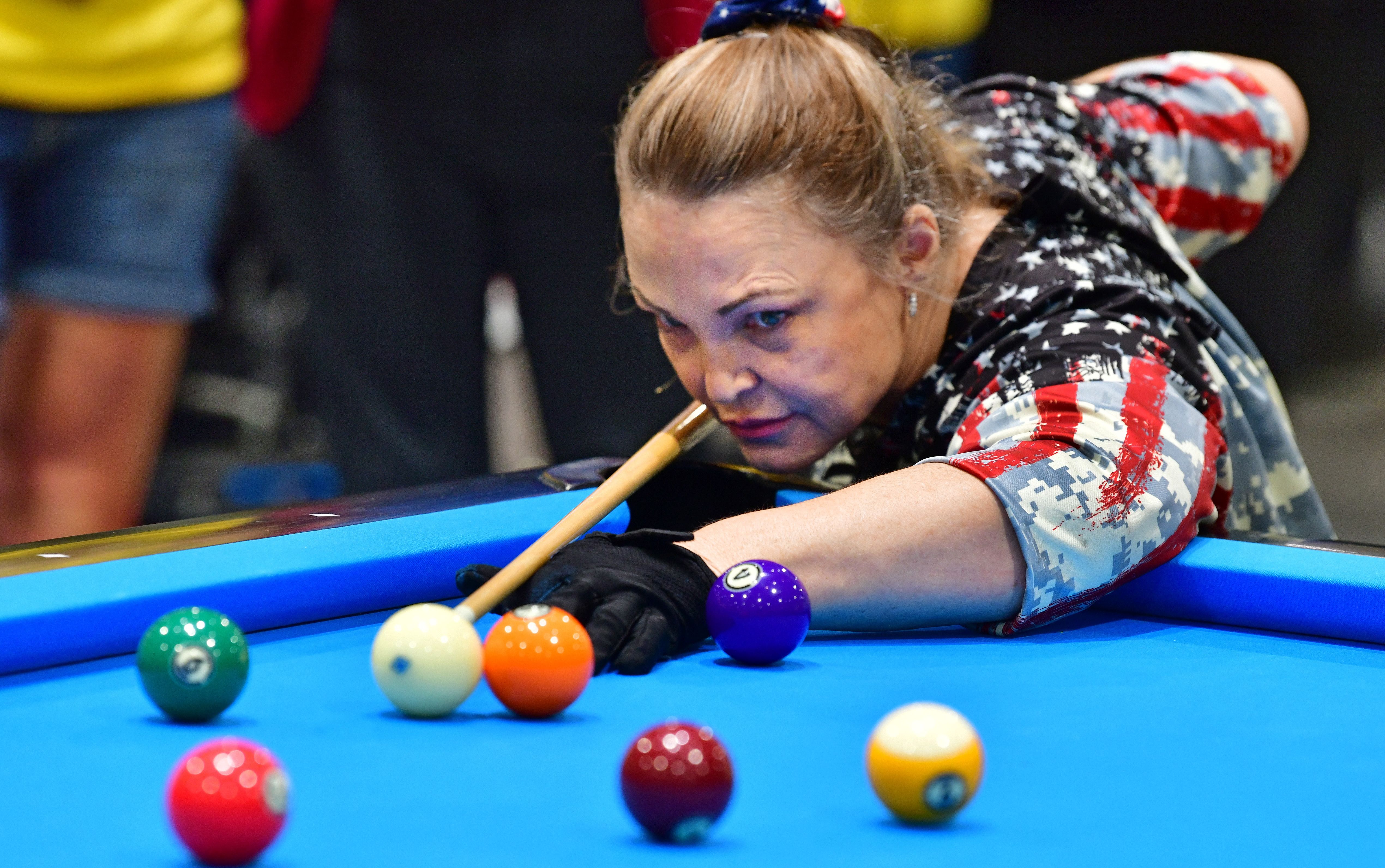
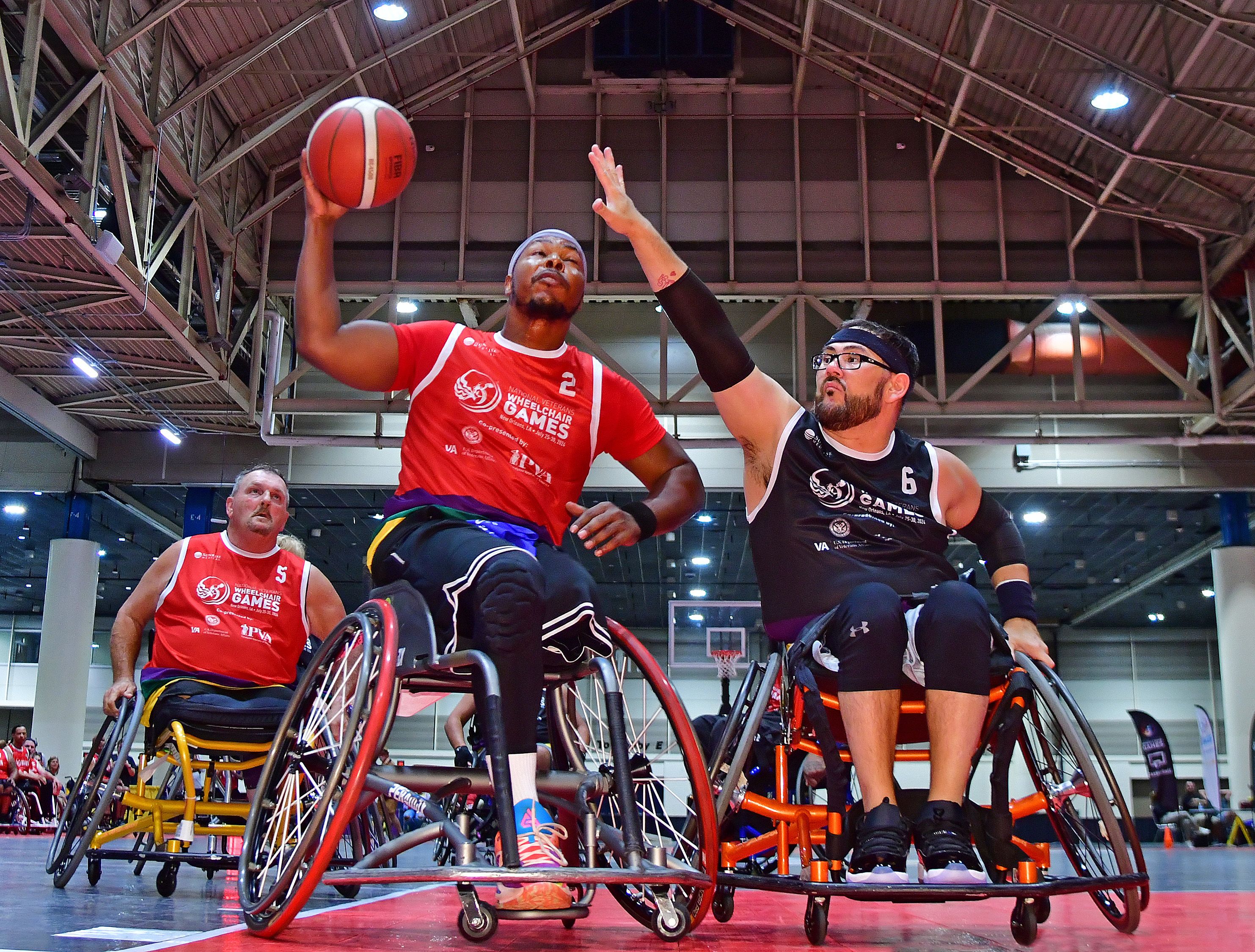
The big picture: The Wheelchair Games were played across five venues in New Orleans, from bass fishing at Bayou Segnette to cycling at City Park and events like archery, pickleball, corn hole and basketball at the Ernest N. Morial Convention Center.
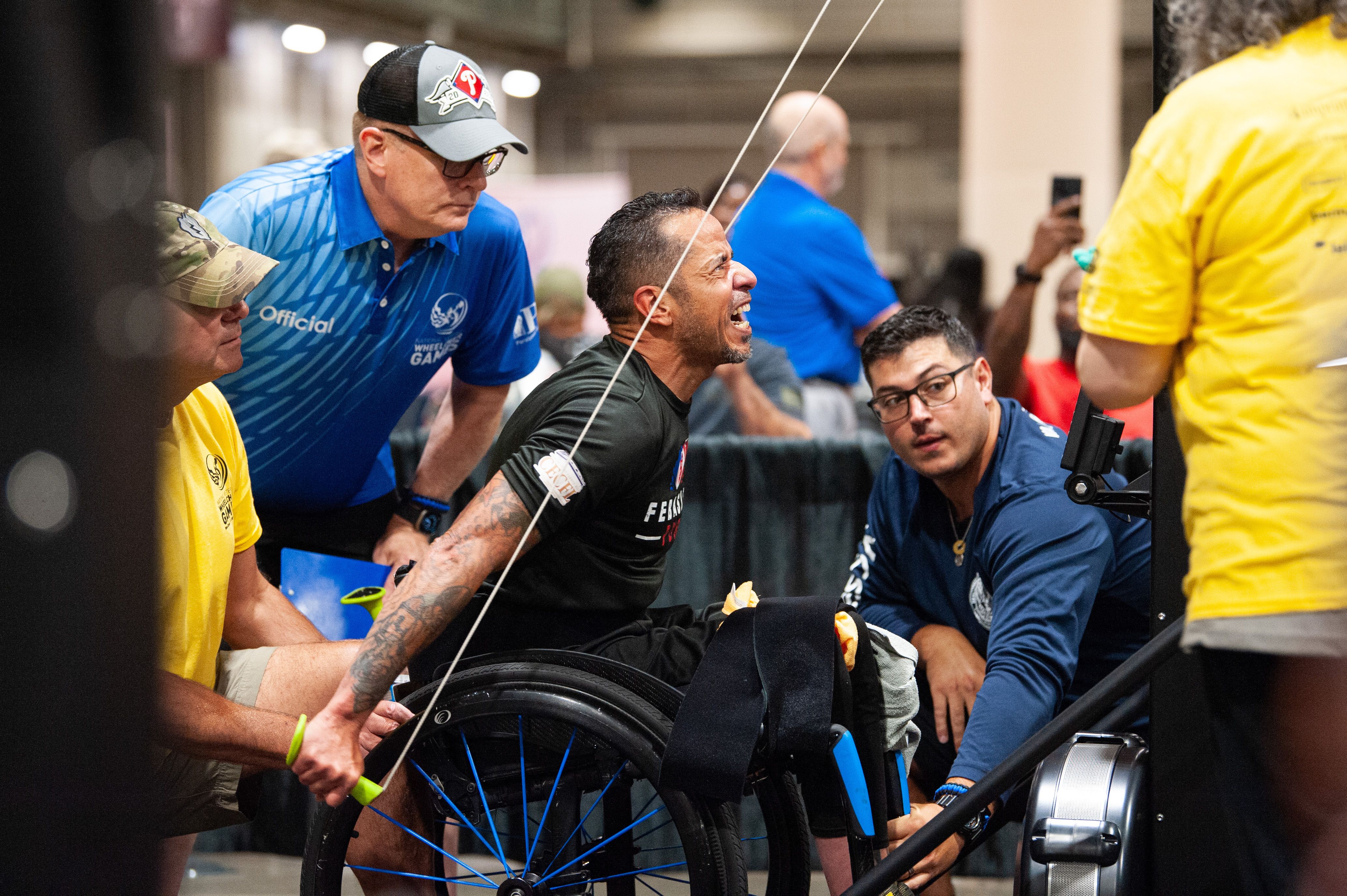
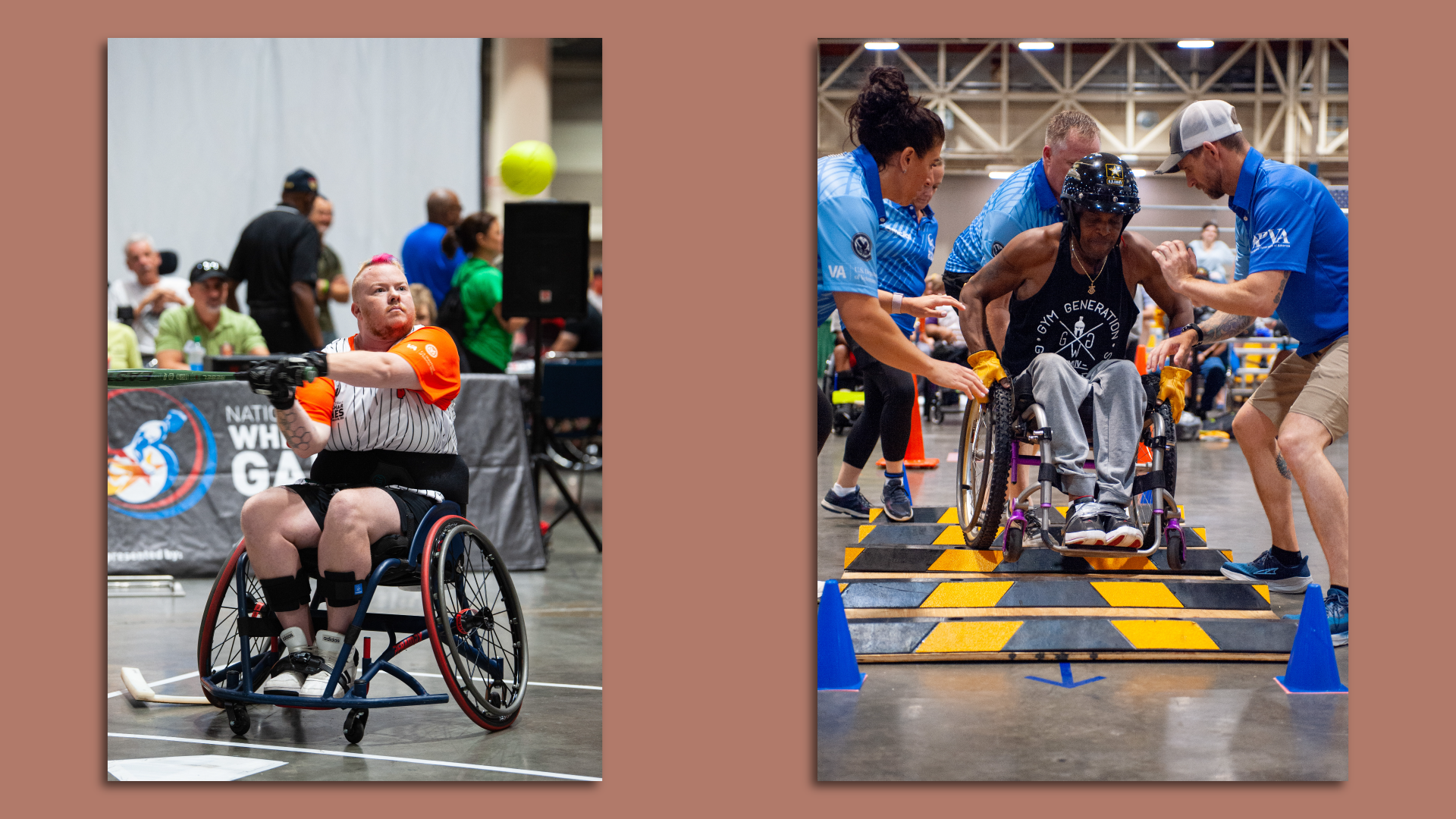
On the games' final day at the Convention Center, competitors navigated their way through the slalom, an obstacle course filled with turnarounds, ramps and ropes.
- The air was filled with whoops and hollers, punctuated by the sounds of balls plinking off the nearby table tennis and pickleball courts.
- From the audience, shouts of "You can do it. You can do it. You can do it!" amplified anytime an athlete struggled across the slalom obstacles.
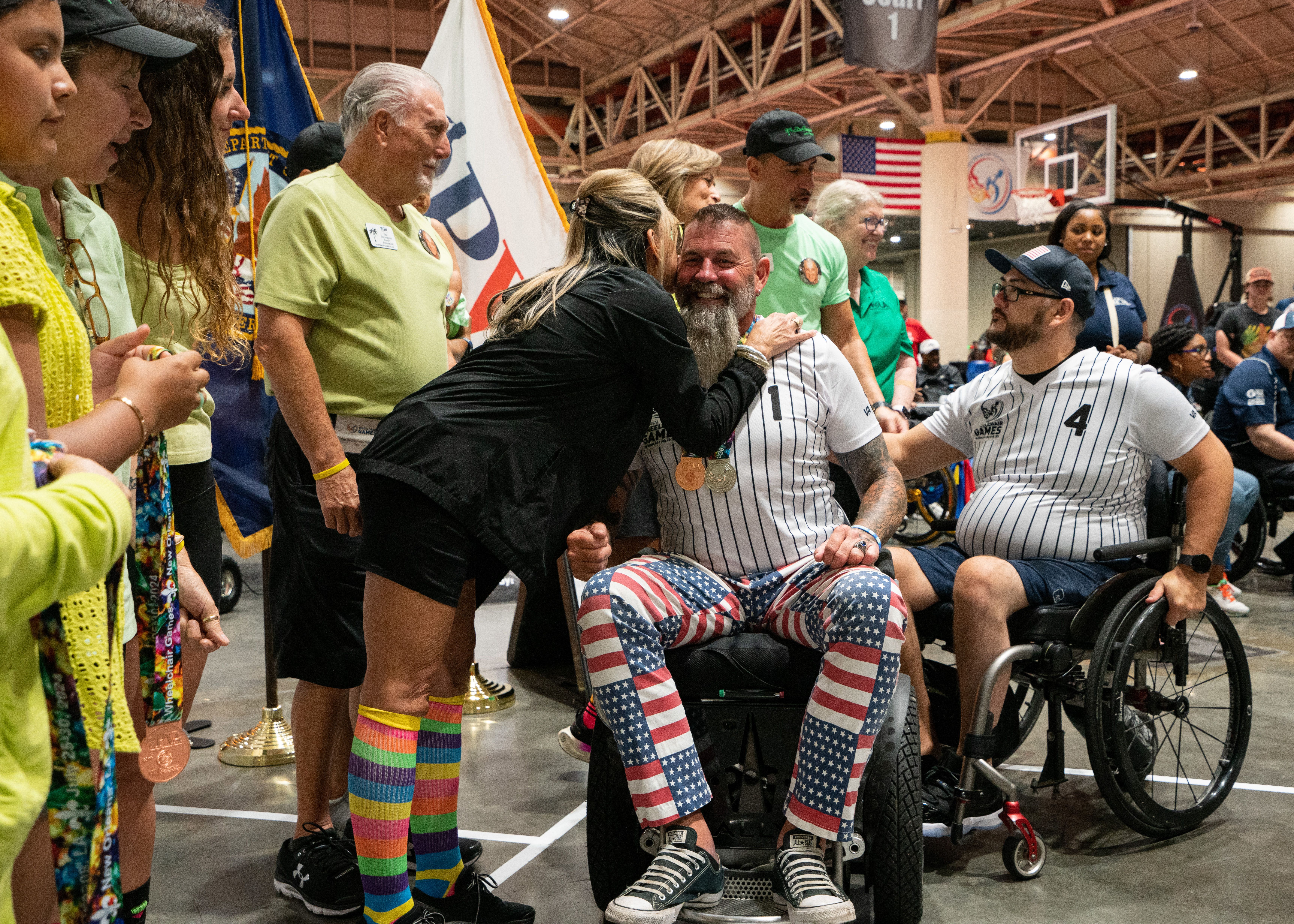
- Meanwhile, veterans rolled past in manual and power wheelchairs, tattoos bearing the name of their branch of service peeking out of shirtsleeves, many with stacks of medals clanging against their chests.
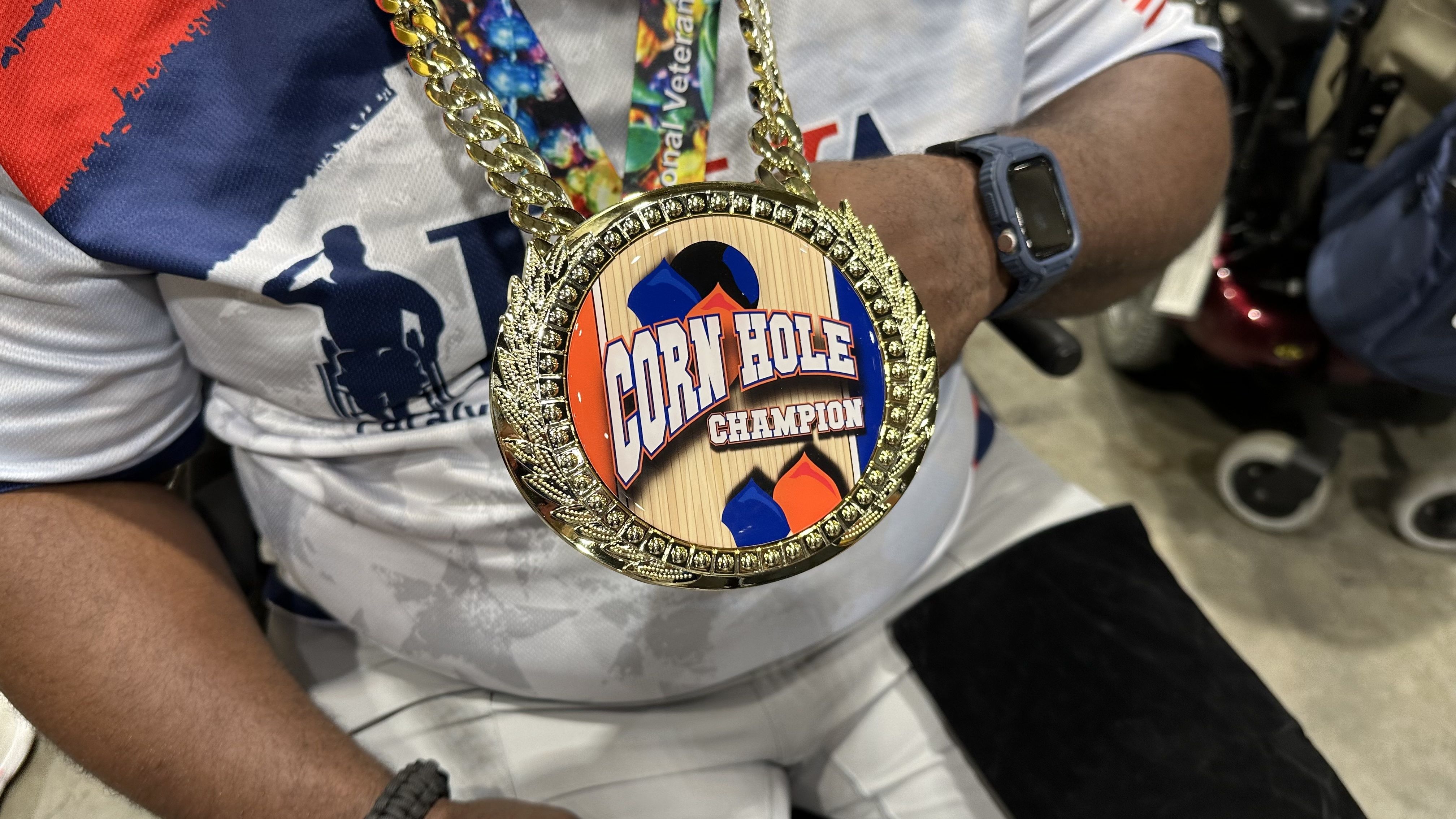
One of them was Clinton Adger, who showed off his oversized medal declaring him a "Corn Hole Champion."
- Adger scored his gold victory, he said, despite never having played the game in a wheelchair before.
- "You can see that thing from across the hall," laughed Anna Martin, one of his coaches and a recreation therapist from Dallas' Lone Star chapter of the Paralyzed Veterans of America.
- The group sent the largest contingent of competitors to the annual event, Martin told Axios New Orleans. "It's great for fellowship, because this is the one time everyone can see their friends."
Zoom in: That's crucial, Kelley said, for mental and physical health.
- "[Anybody] will tell you that just having this environment where we can come back and take a holistic approach to our rehabilitation and our mental health is unmatched," he said, noting that he faced depression in the immediate aftermath of a service-related spinal cord injury. "I credit adaptive sports to saving my life."
- Plus, Kelley works with the Boys and Girls Club of Central Florida, and he's pumped to return home to show off his new medals to the kids.
- "They'll be so excited to see them," he said, "and I can show them that even if somebody does something a little bit different than you do, their life isn't worth anything less."