5 years ago, Turning Tables aimed to diversify the bar industry. It's working

Add Axios as your preferred source to
see more of our stories on Google.
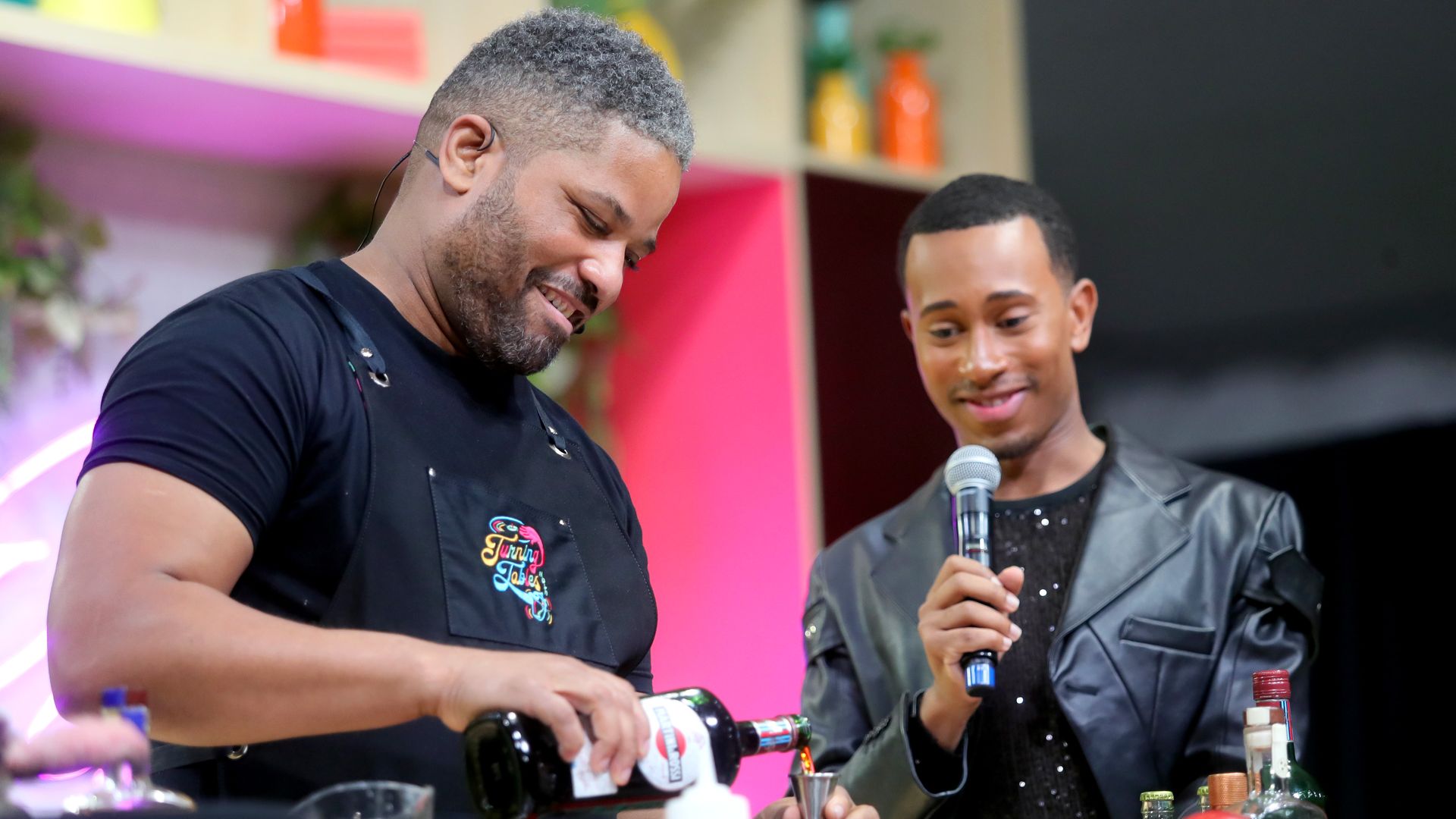
Turning Tables founder Touré Folkes chats with Kalen Allen during a cocktail demo during Honeyland Festival 2023. Photo: Bob Levey/Getty Images for Honeyland Festival
When Touré Folkes started Turning Tables, he aimed to make it easier for Black and brown people who wanted to enter the bar industry to access the connections it runs on. Five years later, it's obvious that the program is working.
Why it matters: The bar industry has a diversity problem, with Black and Hispanic people only making up about one-fifth of U.S. bartenders, according to census data from 2022 compiled by the National Restaurant Association.
Working in New York bars, Folkes tells Axios New Orleans, "one of the common denominators was that I oftentimes was the only person of color in the room."
- "I would often watch my white counterparts be elevated into other positions or be given other opportunities that I wasn't."
- And when he moved to New Orleans and stepped into a role as a top bartender himself, he saw more of the same.
- "When you go into a space, and you see that there's all the top bartenders from around the country, and not us represented within that space," Folkes says, "I felt like that was a problem."
The latest: This week, the New Orleans-born nonprofit Folkes founded will celebrate some big wins during Tales of the Cocktail's Spirited Awards, which the industry conference hosts on Thursday.
- Folkes was named as a top 10 finalist in Tales of the Cocktail's Spirited Awards for best bar mentor in the U.S.
- Turning Tables alumna Erika Flowers, who leads the bar at Compére Lapin, was named a top 10 finalist for U.S. bartender of the year.
- Another alumna, Shaun Williams, is a bartender at Jewel of the South. Earlier this year, the French Quarter tavern won a James Beard Award for the country's best bar, and it's up for the best U.S. bar team at Tales of the Cocktail.
- And other graduates are in top bars across the city, like Bar Tonique, the Chandelier Bar, the Elysian Bar and Mosquito Supper Club.
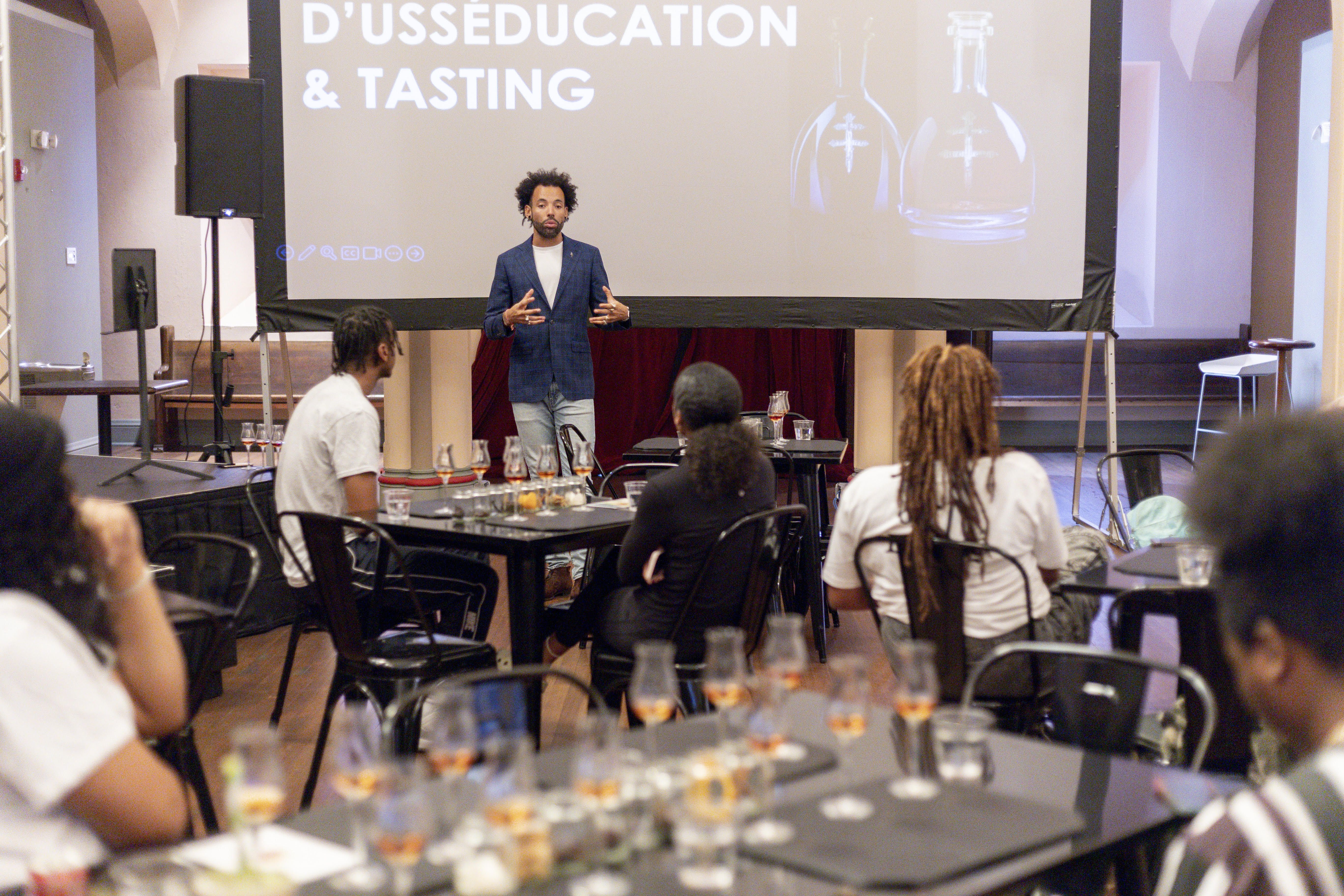
Between the lines: Turning Tables is about much more than teaching someone to be a bartender.
- "In the first two weeks, [no one] even touches alcohol," Folkes tells Axios New Orleans. In those weeks, the focus is on mental health and history.
- "More importantly," Folkes says, "they're learning about history from the perspective of where we have left our imprint as Black and brown people within hospitality. That thread sits throughout as they're introduced to ambassadors from across the country and locally, they're always conscious of where Black Americans have had their imprint within hospitality, wine, food, everything."
- And, Folkes says, the industry is viewed through a broad enough lens that a graduate can explore job opportunities beyond the bar. That means production, distribution, brand identity and menu consultation.
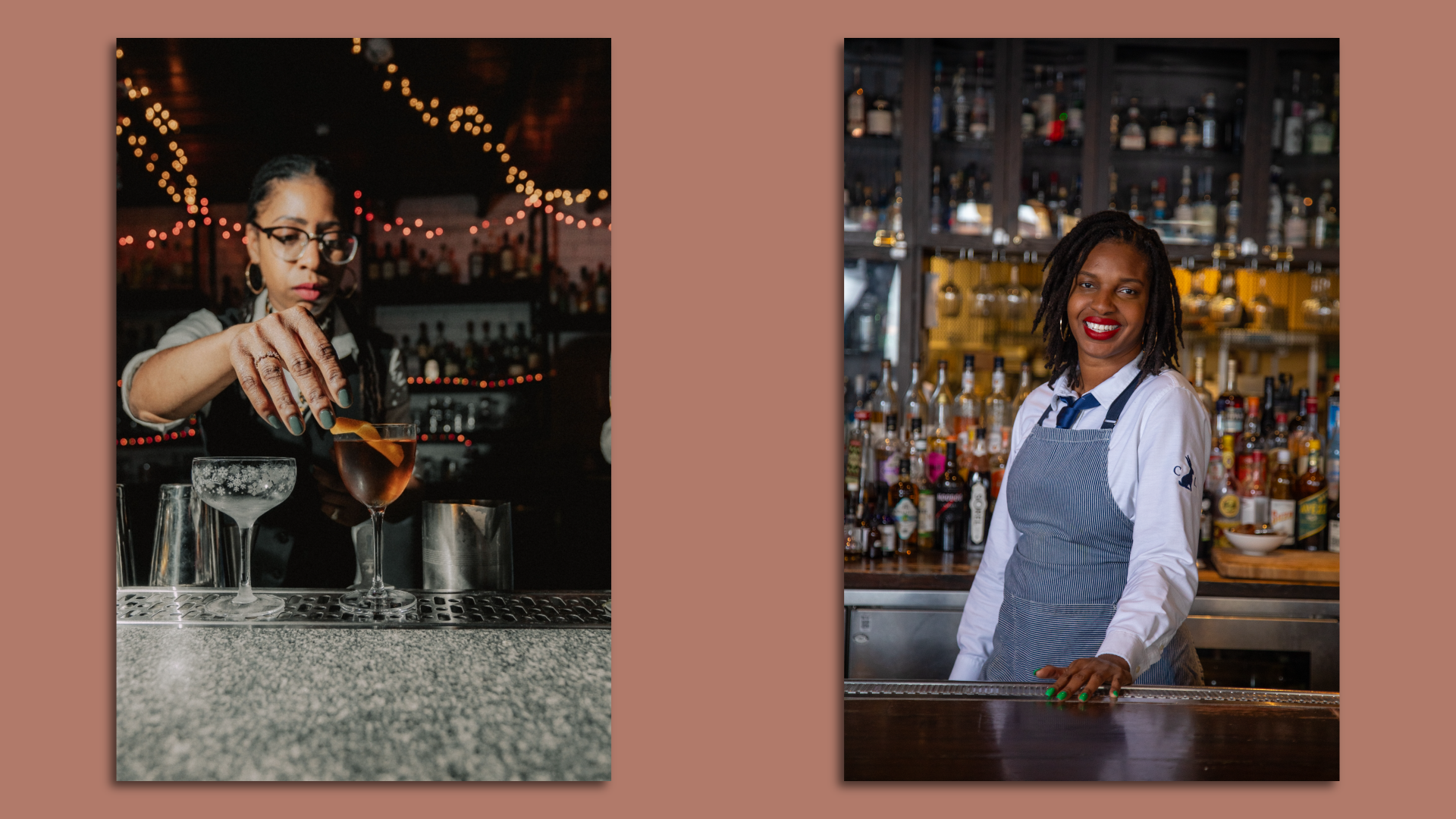
"Turning Tables helped me to water the seeds I planted and empowered me to continue to learn as I grow as an entrepreneur in the hospitality industry," Flowers says.
- "It truly changed the trajectory of my career and provided me with a solid foundation of knowledge, experience, and resources," she adds.
By the numbers: In the five years since Turning Tables won its first grant from Tales of the Cocktail, the organization has had about 70 people graduate.
- And they've maintained a 100% job placement record, Folkes says.
What they're saying: "The empowerment aspect of it — I can't stress how important that part was," Williams tells Axios New Orleans.
- Williams was reluctant to go through Turning Tables' program, not seeing bartending as her career plan, but once she did, the payoff went far beyond job training.
- "Turning Tables made me a better person, better able to communicate myself, my needs, my wants," she says. "I've been in the process of making a cocktail and a white male is bar-backing, and people would walk up to him and shake his hand and say, 'Thanks for the cocktail.'"
- "It can be pretty hard and frustrating back there for us."
What's next: Turning Tables partnered with the New Orleans-based Sazerac Company to put together a vinyl record. The organizations will co-promote the project, titled "In Our Lifetime," which will be available in exchange for a donation to the nonprofit.
If you go: RSVP for the vinyl release at the Sazerac House on Thursday.