How 30A became the Hamptons of the South

Add Axios as your preferred source to
see more of our stories on Google.
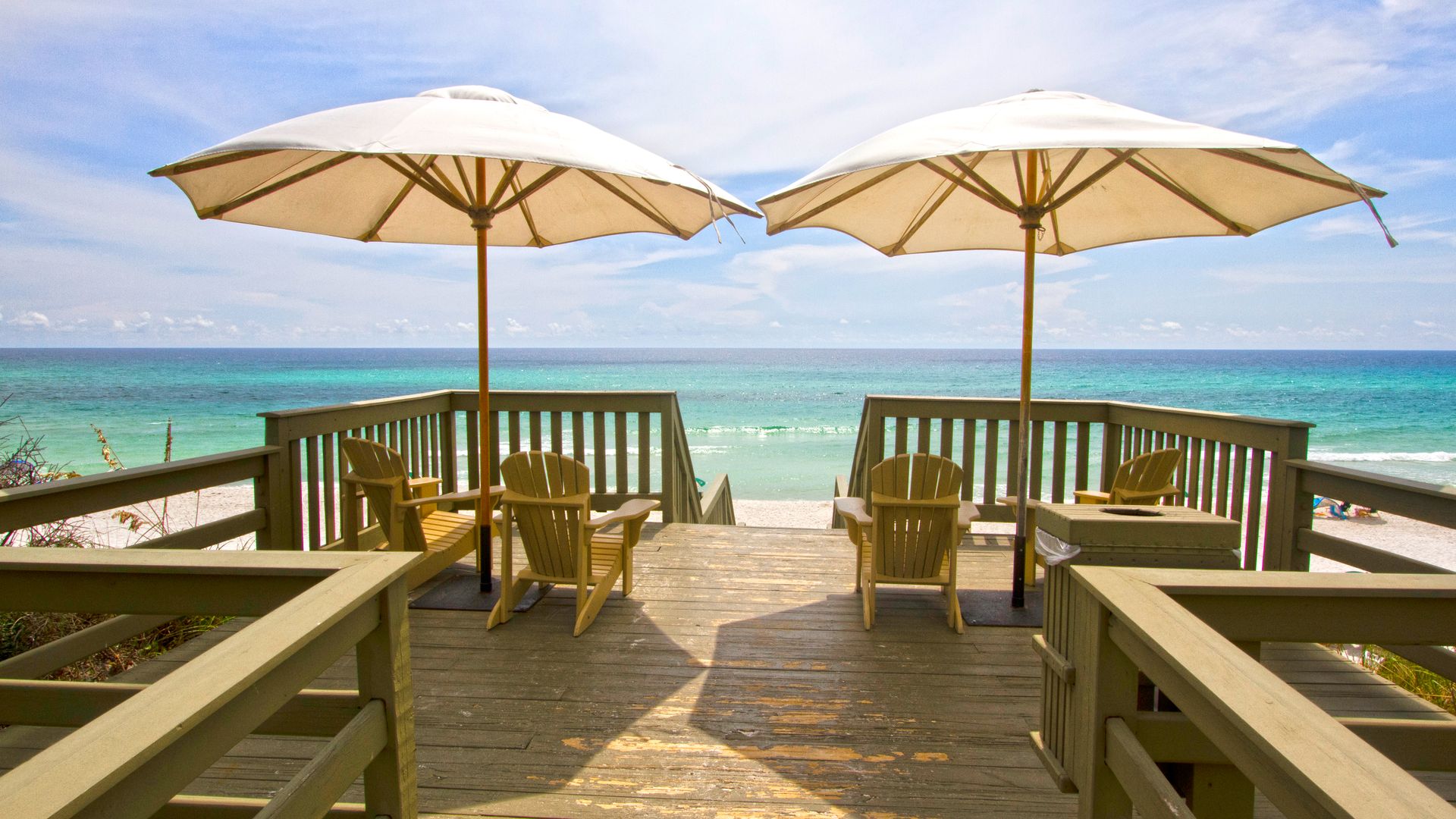
More than 5 million people visited the stretch of South Walton, Florida, beaches known as 30A in 2022. Photo: Visit South Walton Florida
Smart branding has turned the once-sleepy stretch of sandy white beaches on the Florida panhandle known as 30A into the Hamptons of the South, an exclusive, high-end vacation destination dotted with celebrity homes.
Why it matters: Even if you don't visit, you surely know (or, more accurately, know of) someone who has, and New Orleanians are definitely among that number.
Zoom in: The 26-mile string of Florida borrows its name from the scenic highway that winds through 16 beachfront neighborhoods.
- Over the past two decades, it's become increasingly popular as a family travel destination, transforming from a place where restaurants didn't even stay open year-round to, in its most recent years, a magnet for social media influencers, athletes and celebrities.
- If you visited even 10 years ago, "you wouldn't even recognize it," said New Orleans property developer Leigh Adams Deutcsh, who grew up visiting. "And in five more years, you won't recognize it."
State of play: Those towns, like the vibrant white Grecian vibe of Alys Beach or the Dutch-inspired aesthetic at Rosemary Beach, and the gorgeous natural beauty they straddle make for incredible photo backdrops.
- It was a match in social media heaven.
- "It's a living, breathing Instagram story," 30A Company CEO Gary John tells Axios New Orleans. "The 30A market and energy is like a fashion accessory."
- Just scroll social media to see that come to life. Visitors or vacation home-owners include former "Bachelor" contestant Tia Booth, Sadie Robertson, Drew Brees, Tim and Demi Tebow, Chris Stapleton, Jason Aldean, Rhett Akins, Eric Decker and more bachelorette parties and Instagram influencers than you can count.
By the numbers: Tourism provided an economic impact of $7.2 billion last year, according to the visitors bureau for South Walton County, which includes 30A. That includes spending by 5.3 million visitors.
- And 67% of them came from Southeastern states, the data says, stretching from Texas across the Gulf Coast and up to North Carolina.
- Louisiana sent more than 200,000 visitors in 2020, the most recent year the agency has state-by-state data in its annual reports.


That kind of growth doesn't happen by accident.
- About 17 years ago, Mike Ragsdale spent $300 on a logo and $1,000 on a web domain for 30A.com.
- ""I don't think it made sense to most people," John says, "but it made sense to [him]."
- Slowly but surely, the individual towns along 30A began developing each of their own unique "brand identities," John says, on top of the walkable, urbanist design standards that informed their infrastructure, and Ragsdale pumped them up online.
Yes, but: With so much demand comes big price points.
- This area attracts a very affluent demographic," John says. "At a minimum, upper-upper middle class. You're not touching a home in Alys Beach for under $10 million now."
- John knows that experience firsthand. He moved to the area during the COVID-era boom, buying a house in February 2021 that doubled in value by the end of the year.
- Plus, "there's no more land," says Deutcsh, the New Orleans property developer. She and her family moved there temporarily in the post-COVID years and saw the market shift drastically beneath their feet. "There's only so much space to build on."
What's next: 30A's spot at the top of Southern destination lists isn't likely to change anytime soon, though it's starting to attract even more visitors from beyond the South as its reputation grows, says Nicole Barefield Everett with Visit South Walton.
- "It's easy for people to [come here and] feel like a community, but they're visiting," she tells Axios New Orleans. "It's like they're leaving home to come home for the summer."