Contraflow is dying as a New Orleans hurricane evacuation option

Add Axios as your preferred source to
see more of our stories on Google.
Illustration: Brendan Lynch/Axios
Contraflow may be a thing of the past for hurricane season in New Orleans metro, leaders say, as rapidly intensifying storms make it harder to implement.
Why it matters: Residents will need to make evacuation decisions themselves.
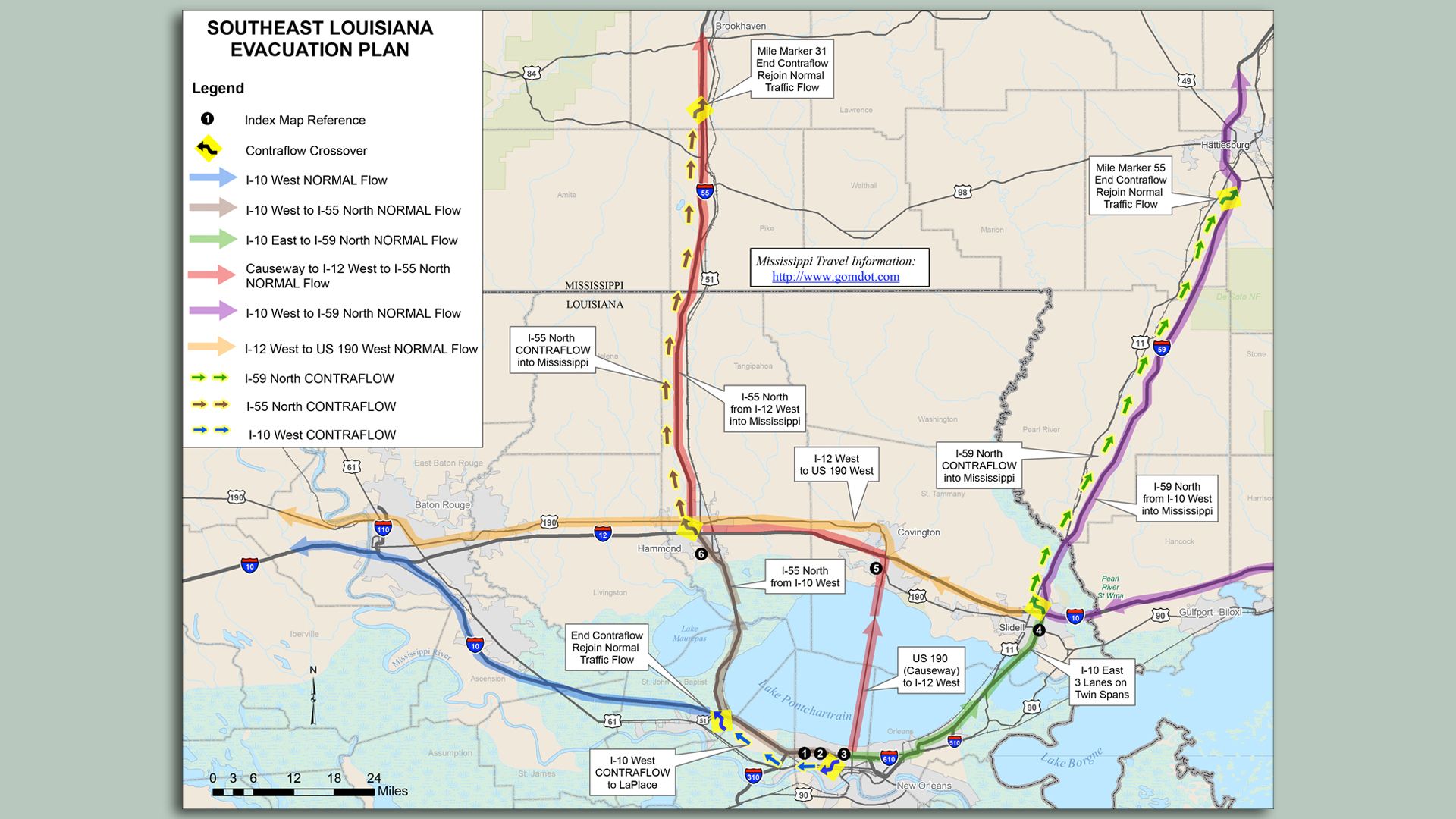
The big picture: Contraflow is when all lanes on major thoroughfares, such as I-10 and I-55, head in the same direction to get residents out of the danger zone.
- State officials need a minimum of 72 hours to implement contraflow, DOTD spokesman Rodney Mallett tells Axios. It requires at least a Category 3 hurricane and a mandatory evacuation of New Orleans.
- Louisiana's contraflow plan has only been used twice in the past 20 years, Verite reports, for Hurricane Katrina and Hurricane Gustav.
Context: Mandatory evacuations for New Orleans, Metairie and other places inside the levee network are rare.
- They were issued for Katrina and Gustav, but not for Ida, Zeta and other powerful storms.
- The designation triggers government-assisted evacuation help, like buses at Evacuteer spots, and often makes a difference for how much insurance companies pay out to residents who leave.
- It's more common for leaders to issue a voluntary evacuation or advise residents to shelter in place. That's when you stay and ride out the storm with your own supplies.
State of play: Contraflow is "off the table" as an evacuation option for Jefferson Parish, president Cynthia Lee Sheng said, according to NOLA.com | The Times-Picayune.
- New Orleans leaders are looking at a hybrid plan that includes evacuating people ahead of a storm along with providing refuge until the storm passes and then evacuating residents, WDSU reports.
Meanwhile, Collin Arnold, the director of the New Orleans Office of Homeland Security, is working with state officials to see if they can shorten the 72-hour timeframe, WWL reports.
Leave early: Leaders are encouraging residents who can evacuate to leave early if a storm is expected to hit southeast Louisiana.
- Mallett said I-10 West has been the most congested route for recent storms and encouraged drivers to consider evacuating north to Shreveport, Ruston and Monroe.
Threats facing Louisiana during 2024 hurricane season
The biggest concern this hurricane season, leaders say, is storm-related power outages during extreme heat.
- After Hurricane Ida, at least 10 people died in Louisiana due to heat-related causes, according to data from the state.
- Hurricanes and tropical systems also can bring life-threatening flooding, winds and storm surge.
How to prepare for hurricane season
Start mentally preparing and looking at your options.
- If a storm comes, will you evacuate or shelter in place? If are able to evacuate, will you drive and where will you go?
- Are there people or animals you care for? Build a safety plan for them now.
- Here are more things you can do to prepare.
What's next: The tropics are starting to heat up, and this season is expected to be a doozy.
- The first named storm formed earlier this month in the Gulf of Mexico, and the National Hurricane Center already is tracking two more disturbances.
- Historically, the most active period for strong storms in the Gulf is August and September.
- Atlantic hurricane season ends Nov. 30.
Go deeper: