Indy pitches new Carrier-Bryant redevelopment plan to skeptical neighbors

Add Axios as your preferred source to
see more of our stories on Google.
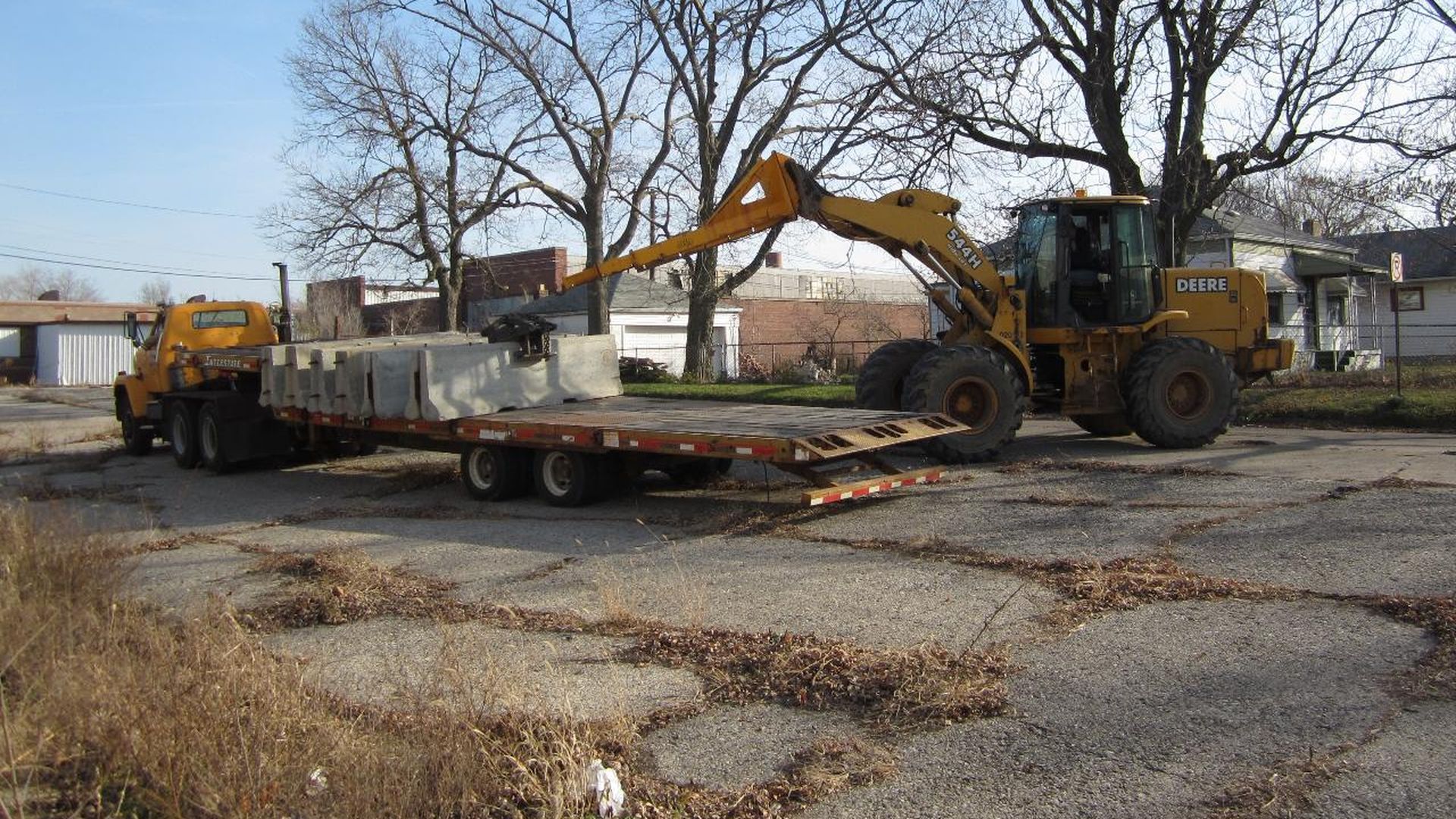
Crews clean contamination from the former Carrier-Bryant site in late 2012. Photo: Courtesy of the U.S. Economic Development Administration
Beyond its stint as an illegal dumping site, the home of the former Carrier-Bryant plant has sat unused for two decades in a historically Black neighborhood northwest of downtown.
Why it matters: A new redevelopment proposal for the remediated brownfield, released this month for public comment, provides the most detailed roadmap yet for what it could become.
Yes, but: The city's pitch comes with a built-in trust problem. Previous promises to revitalize the space never materialized, and planners have been warned that history has contributed to widespread community skepticism about the site's future.
Threat level: Abandoned or underutilized sites, known as brownfields, are among several environmental factors contributing to housing inequities in Indianapolis.
Zoom in: The draft is the product of a nine-month process led by the city, Kansas State University's brownfields technical assistance program and consulting firm Stantec and built on a site visit, market study and community feedback.
- Residents in the neighborhood deemed a food desert consistently identified grocery access, affordable housing, trails, and protection against displacement as their priorities.
- They said no to data centers, heavy manufacturing and low-density single-family sprawl that would limit amenities.
What they're saying: "There is sensitivity around displacement, student housing encroachment and loss of legacy ownership," KSU officials wrote in the report.
- "Projects that prioritize community access, job creation and advocacy-driven engagement are more likely to gain local support and public-sector alignment."
Flashback: Carrier merged with the Bryant Heater Company in 1955, and the HVAC manufacturer ran the site until 1983.
- It survived as a warehouse until 2004, then sat empty while buildings were demolished and officials addressed contamination.
Between the lines: The only thing left of the old plant at 1100 W. 21st St. is the smokestack, which planners envision becoming the centerpiece of a public plaza.
- Development would happen in two phases with housing coming first, and commercial and light-industrial development to follow.
Reality check: This is still a draft. Funding for infrastructure, sewer relocation and vapor mitigation isn't secured, and zoning changes still need Metropolitan Development Commission approval.
State of play: Like Old City Hall and the former Indiana Women's Prison and other historic Indy locales marked for redevelopment, Carrier-Bryant's story post-remediation is one of starts, stops and stalls.
- IndyGo struck a deal in 2019 to redevelop 6.5 acres of the site as a training and contingency facility, but the deal fizzled after bids came in millions over budget.
- In 2021-22, Indianapolis led a coalition that became a finalist in the U.S. Economic Development Administration's $1 billion "Build Back Better Regional Challenge." The idea they submitted, in hopes of securing up to $75 million, was a food-processing hub and manufacturing plant that would employ hundreds.
- When the EPA named its winners, Indy wasn't on the list, and the brownfield went back to the drawing board.
What's next: Indy DMD is collecting public feedback on the plan through July 31.