Big opportunities, real obstacles define historic Indiana Women's Prison site

Add Axios as your preferred source to
see more of our stories on Google.
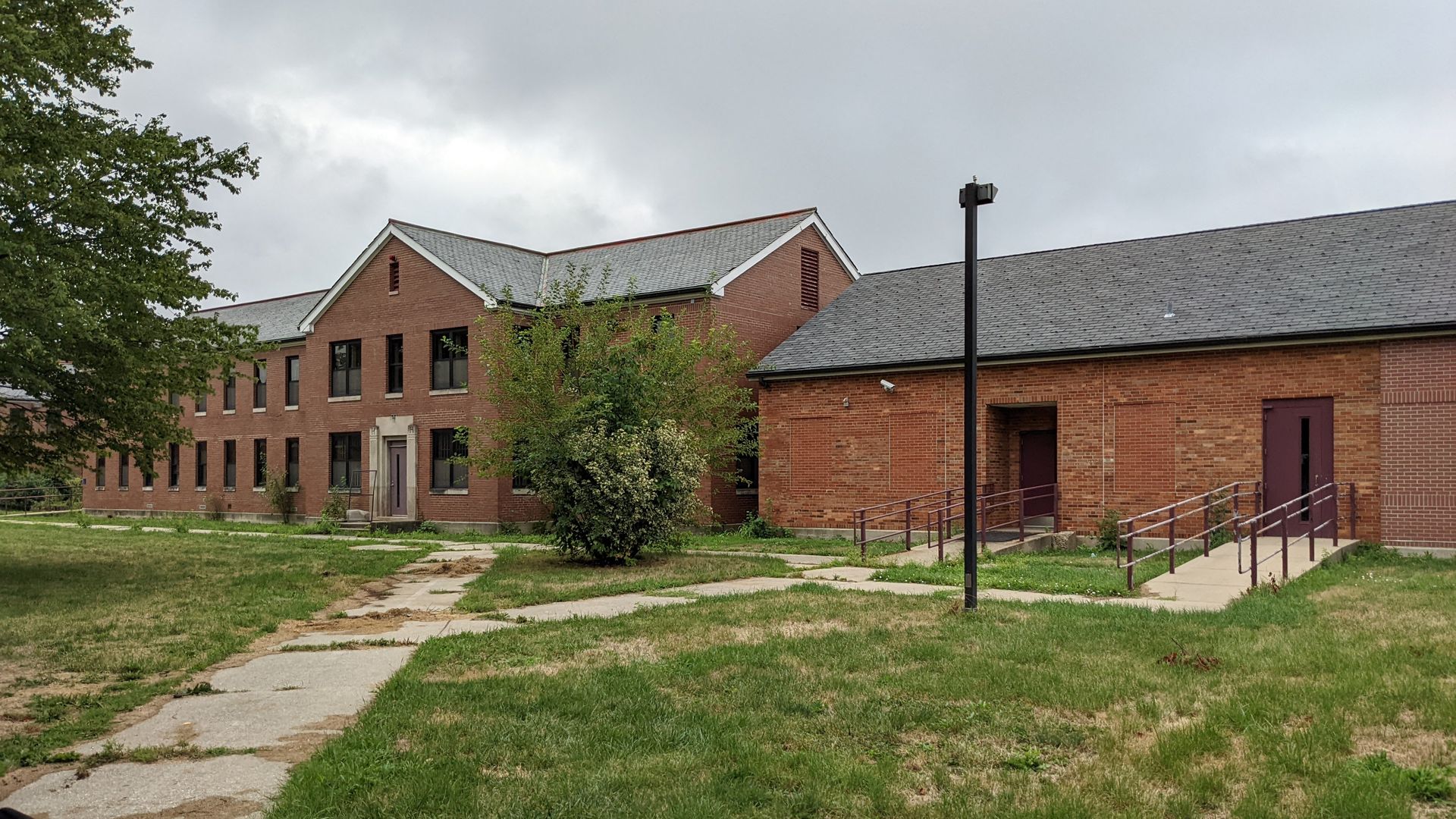
The infirmary is one of structures still standing on the former Indiana Women's Prison campus. Photo: Courtesy of the Indianapolis Department of Metropolitan Development
Whether it becomes a walkable retail destination or a hub for affordable housing, near east side residents want the future of the former Indiana Women's Prison campus to honor its past.
Why it matters: The 15-acre site is one of the larger redevelopment opportunities within close proximity to downtown Indy, and it carries rare national significance.
Driving the news: The public's ideas for how to utilize the space after nearly a decade of inactivity were shared by Department of Metropolitan Development officials Tuesday night during an information session at Spades Park Library.
Catch up quick: When it opened in 1873, the Indiana Women's Prison was the first separate correctional institution for women in the U.S.
- It served as a national model for gender-specific correctional care, emphasizing rehabilitation over punishment.
- The prison relocated to the west side in 2009 after 136 years on North Randolph Street. A men's re-entry program operated there until 2017, when the campus was shuttered.
- The site sat vacant and deteriorating until ownership transferred from the state to the city of Indianapolis in December 2024, kicking off the DMD's planning process.
Zoom in: According to DMD engagement administrator Nikeshia Fomby, a structural assessment of the campus found no major structural deficiencies and no risk of imminent collapse.
Yes, but: All eight remaining buildings need substantial rehabilitation due to years of weathering and deferred maintenance.
- A March 2026 environmental review resulted in a comfort letter and restrictive covenant from Indiana's Brownfields Program — including a prohibition on potable water wells and required indoor air quality testing.
- Historic preservation covenants attached to the property's deed mean certain buildings cannot be altered or demolished without state review and approval.
- Seven developers surveyed at a roundtable also raised concerns about the site's underground tunnel system and structural conditions, and recommended a multi-year, phased redevelopment strategy.
Zoom in: If those hurdles can be cleared, here is what the community wants most, based on DMD surveys and a developer roundtable:
- Walkable mixed-income and mixed-use developments.
- Affordable housing at multiple income levels, including townhomes, fourplexes and multifamily options. Residents specifically called for homeownership opportunities and accommodations for seniors.
- Public green space anchored by gardens, destination playgrounds and public art. Many residents want to preserve features built by incarcerated women — including an onsite labyrinth, pond and amphitheater.
Plus: Residents were emphatic that reinvestment should benefit current near east side neighbors, not displace them.
What's next: Fomby said the DMD will issue a Request for Expression of Interest (RFEI) on Wednesday.
- The request is a non-binding document to gauge developer interest before any formal bidding process begins.
- A new community preference survey is expected in either late this year or early next year, followed by another public feedback session.