Cultural Trail considers how to thrive into its next 20 years

Add Axios as your preferred source to
see more of our stories on Google.
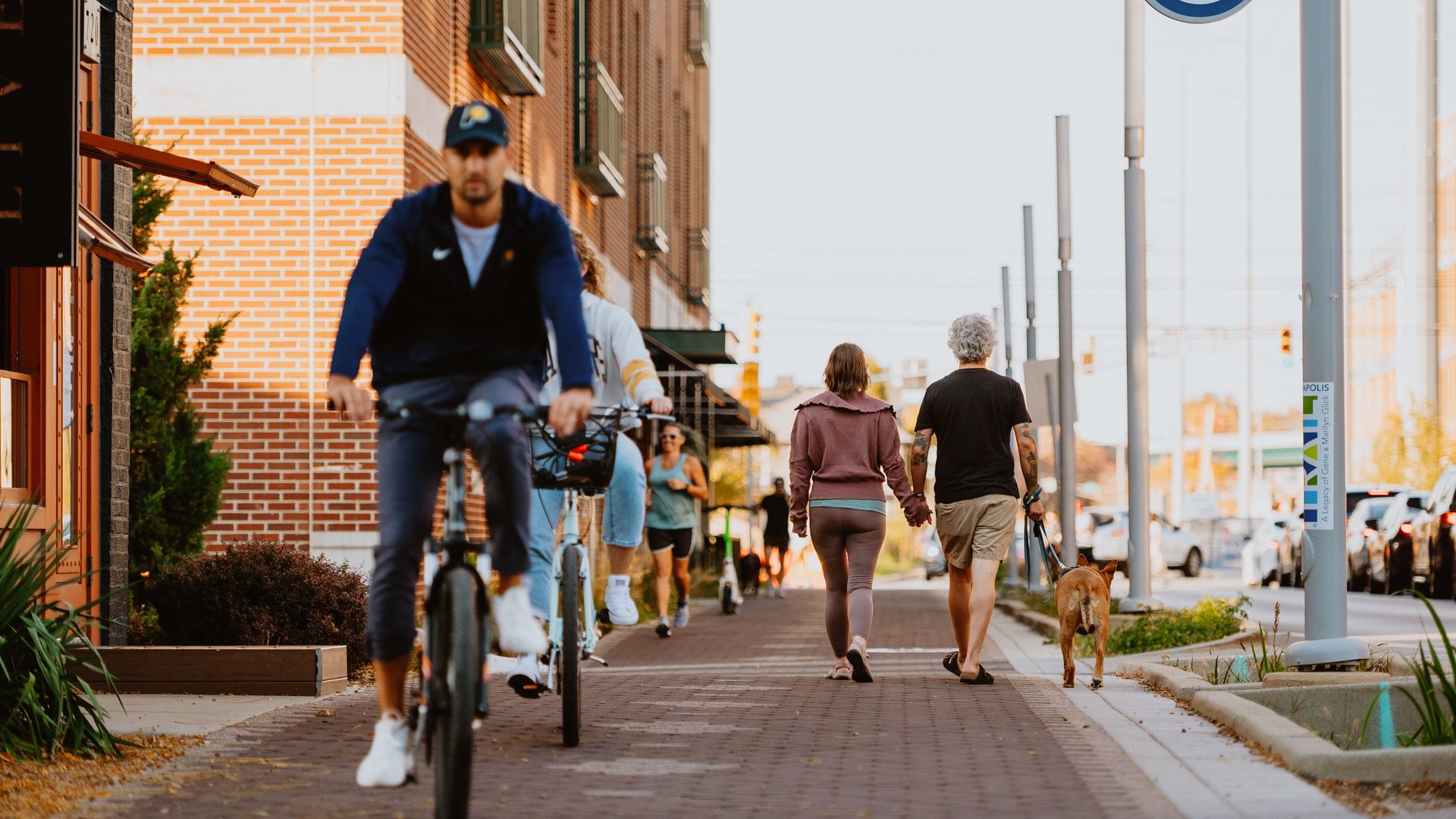
Photo: Courtesy of the Indianapolis Cultural Trail
The Indianapolis Cultural Trail is growing up.
Why it matters: Annually, more than 1 million people use at least a portion of the 10-mile trail that connects downtown's cultural districts, institutions and destinations.
Driving the news: As the trail prepares to turn 20, a new report from real estate, planning and economic development advisers JLP+D found the trail has created $3 billion in assessed property value along its path.
- Retail space next to the trail has increased by 39% since 2008, and food and beverage sales along the trail are nearly double the city's average per square foot.
What they're saying: "The Indianapolis Cultural Trail has grown to become Indy's crown jewel," says Kären Haley, executive director of the Indianapolis Cultural Trail Inc., the nonprofit responsible for the trail.
- "It has helped to fuel business, development, residential and population growth and elevate the quality of life for residents and visitors alike."
- The trail also manages the popular Pacers Bikeshare program, which has set a new ridership record just about every month since adding e-bikes and making those free for Marion County residents to use in 2024, Haley told Axios.
State of play: The trail is looking to move into a new phase of life, focusing more on maintaining and improving the existing trail than on expansion.
- That includes reminding people the trail is a nonprofit that still depends on the generosity of donors and volunteers to support it.
- "We're really thinking about how we can be set up for success over the next 20 years," Haley says, adding that maintenance needs change as the trail ages.
- The trail is also poised to hire its first director of public art and chief curator to steward its public art collection, which includes "Ann Dancing," and add to it.
Flashback: When the Cultural Trail was first conceived in the early 2000s, it was designed to both connect the relatively new cultural districts and serve as the downtown hub for the region's wider trail system.
- While it's hard to attribute downtown's growth and development over the last two decades to any one factor, the change along the Cultural Trail corridors is undeniable.
- Empty parking lots and abandoned buildings have been replaced with apartment towers, restaurants and shops. The JLP+D report found that property values adjacent to the trail have grown at more than twice the rate of the rest of the city.
What's next: The trail is heading across the White River, over the new Henry Street bridge to The Valley neighborhood, with hopes it will bring at least a bit of the development seen in neighborhoods like Fountain Square.
- "It kind of brings a promise of what's possible," Haley says.