Indiana researchers study the potential of AI-powered health care

Add Axios as your preferred source to
see more of our stories on Google.
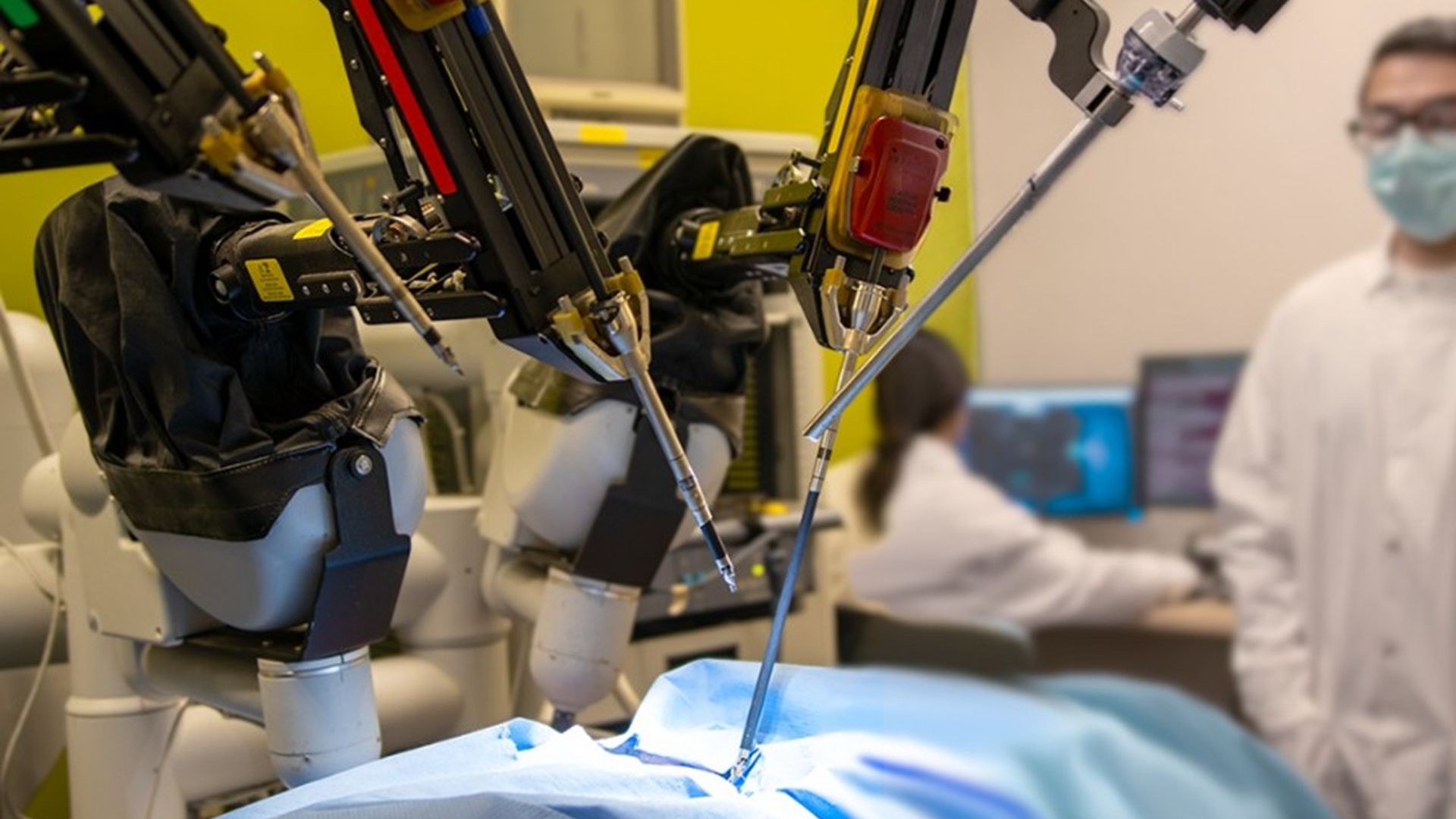
Graduate students demonstrate the use of the da Vinci Surgical System. Photo: Courtesy of Purdue University
A new Indianapolis-based center is bringing together top researchers to test whether AI and robotics can transform medical care.
Why it matters: AI-powered care could make medicine safer, faster and more accessible — but only if researchers can solve major technical, ethical and cost challenges.
The big picture: With the launch of downtown's Center for AI and Robotic Excellence in Medicine (CARE) in January, Central Indiana is shaping the standards, tools and ethics of AI-driven medicine locally before the technology scales nationally.
State of play: CARE is a collaboration between Purdue's Edwardson School of Industrial Engineering, the Indiana University School of Medicine and Indiana's Clinical and Translational Sciences Institute.
- CARE's roots trace back to a December workshop in Indy that convened more than 100 researchers, clinicians, industry leaders and federal stakeholders.
- The workshop's final report was released in mid-March, providing a look at the potential and pitfalls of medical automation.
What they're saying: CARE director Juan Wachs, a Purdue engineering professor and IU School of Medicine adjunct, told Axios the center exists because Indiana's world-class research institutions had been operating in silos.
- CARE bridges Purdue's strengths in AI, computing and engineering with IU's clinical expertise.
- "The thought process is ... if we connect these two pieces together, we have the potential to create something really impactful and not commonly seen across the country," Wachs said.
Zoom in: CARE's research has four pillars.
🤖 AI-assisted robots that work alongside surgeons as a team.
🧑🤝🧑 Digital twins that simulate patients to test treatments without risk.
🔬 Autonomous smart laboratories.
🪖 AI-powered care for remote and combat settings, such as medical drones that can carry blood and instruments across long distances.
Yes, but: Major hurdles remain, including opaque "black box" AI decisions, bias in training data, unclear liability when systems fail and regulations that haven't caught up.
- Robotic systems can cost millions, limiting access to large urban hospitals.
Plus: The report emphasizes the unpredictability of soft tissue as a key technical challenge that robotic AI has not yet mastered, which means the most complex surgeries are still the least automated.
The other side: Wachs said that cracking the code could benefit rural hospitals in the future by making surgical expertise, usually limited to big cities, more accessible through physical AI and robotics.
What's next: CARE will continue its free seminar series on Wednesday afternoon, when Harvard Medical School professor of surgery Jacques Kpodonu discusses the use of predictive AI and robotics in cardiac surgery at IU Indianapolis' Lilly Auditorium.
The bottom line: Indianapolis isn't just watching the evolution of AI in health care. It's in the room where the ground rules are being written.
Go deeper: Dr. Oz: AI and robots can already provide medical care