How AI therapies are changing health care

Add Axios as your preferred source to
see more of our stories on Google.
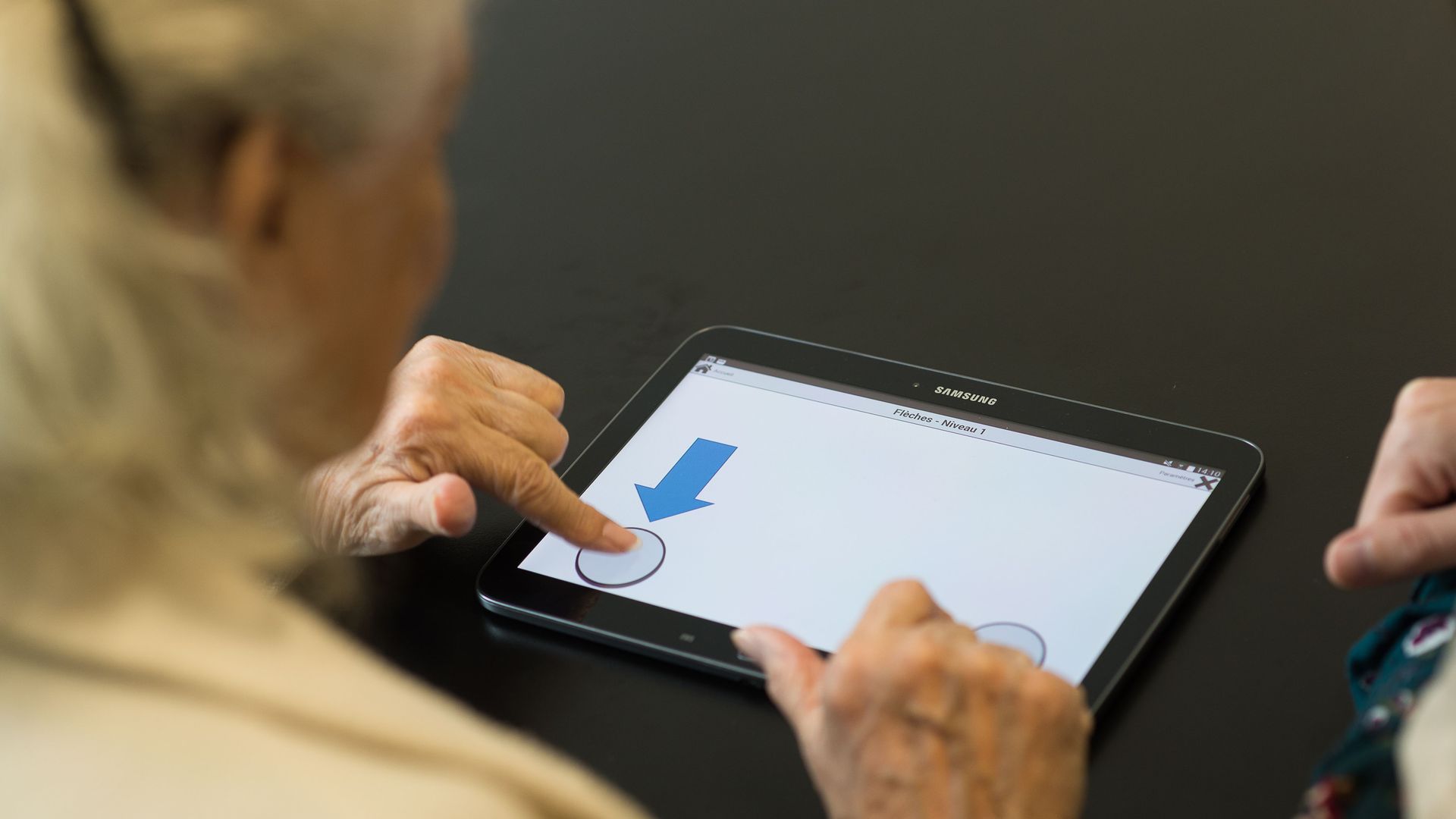
A digital therapy session for an Alzheimer's patient in France. Photo: BSIP/Universal Images Group via Getty Images
AI is increasingly being combined with prescription drugs and other therapies in the push to personalize medicine.
- But that's making it harder to define whether a compound or an algorithm is actually doing the healing.
The big picture: Optimism over new ways to deliver customized, real-time care in patients' homes is being tempered by legal and regulatory questions about how to treat hybrid products that learn and evolve from their interactions with patients.
- One concern is whether the technology can overtake the treatment and make a drug useless without the accompanying data.
The latest: AI-powered apps, wearables and Bluetooth-connected devices are being deployed to manage chronic conditions like diabetes, help people recover from surgery and treat depression and addiction.
- The technology could help close critical gaps in care, like the nation's shortage of behavioral health professionals.
- It also can eliminate clinicians' near-total reliance on patients to report how they feel and whether they're really following their doctor's instructions.
Driving the news: Software-based treatments have been around for more than 15 years, but now they're proliferating, with new applications for conditions including Alzheimer's.
- The Food and Drug Administration just greenlit an AI virtual care assistant for patients recovering from joint replacement surgery. It performs regular check-ins and can contact the physician if there are complications.
- There's also a smartphone app the agency cleared in 2024 for treating depression. It supplements antidepressants with exercises to help the brain process emotions and lessons to help manage depression symptoms.
Last year, Cleveland Clinic researchers found benefits from using wearable sensors and Bluetooth devices to manage Type 2 diabetes by recommending food choices and coaching people on how to control their blood sugar.
Yes, but: Insurers aren't convinced it's all worth the extra cost. And calculating the actual benefit to a patient can be tricky when a treatment lives on a phone in someone's pocket and relies on the person's willingness to engage.
- Medicare only has limited coverage of software-based disease treatments, and private insurers have a patchwork of payment policies, largely because the technologies are so new.
- "Whether or not they continue to be developed will really turn on whether they can convince payers they're worth it," said Brigid Bondoc, a partner specializing in drugs and devices at law firm Morrison Foerster.
How it works: "Prescription digital therapeutics" use a combination of reminders, personalized feedback and rewards such as badges or points to get patients to hit targets and stay engaged.
- One app for alcohol use disorder provides real-time coping suggestions when patients report high craving, along with education modules and GPS-based alerts when the person nears high-risk locations.
What's ahead: Drugmakers like Pfizer and Roche also are developing drug-AI hybrids that use wearables and other sensors to personalize treatments and predict side effects, dosing timelines and optimal dosages, researchers wrote last week in Nature Biotechnology.
- While that could lead to breakthroughs in cancer treatments and other areas, the hybrids raise new issues — in part because the treatment is constantly being refined based on the data it receives.
- That could lead to a drug effectively becoming unusable without the AI. And competitors wouldn't be able to make a generic digital medicine that works as well unless they can access all of the training data.
What they're saying: "[Intellectual property] law was originally built for fixed products. AI products are really moving the boundaries," said co-author Timo Minssen, director of the Center for Advanced Studies in Biomedical Innovation Law at the University of Copenhagen.
- "The policy challenge is to reward innovation without allowing it to become permanent market domination."
- "We have biosimilars. Now, we have 'datasimilars' because it's the data that's important, not the chemistry," said Andreas Panagopoulos, a professor in the Department of Economics at the University of Crete.
What's ahead: Lawmakers in the House and Senate have proposed legislation that would expand Medicare and Medicaid coverage of prescription digital therapeutics and direct the Centers for Medicare and Medicaid Services to establish payment methodologies.
- An earlier version introduced in 2022 didn't gain traction due to cost concerns.
- "We have to get these tools in the hands of patients, and the only way is if they're reimbursed," said Lani Reilly, vice president of industry affairs at the American Telemedicine Association, which backs the bill.
- There also could be court battles over questions like whether the data collected from a patient is a trade secret.
