Indianapolis air pollution among worst in U.S., report finds


Add Axios as your preferred source to
see more of our stories on Google.
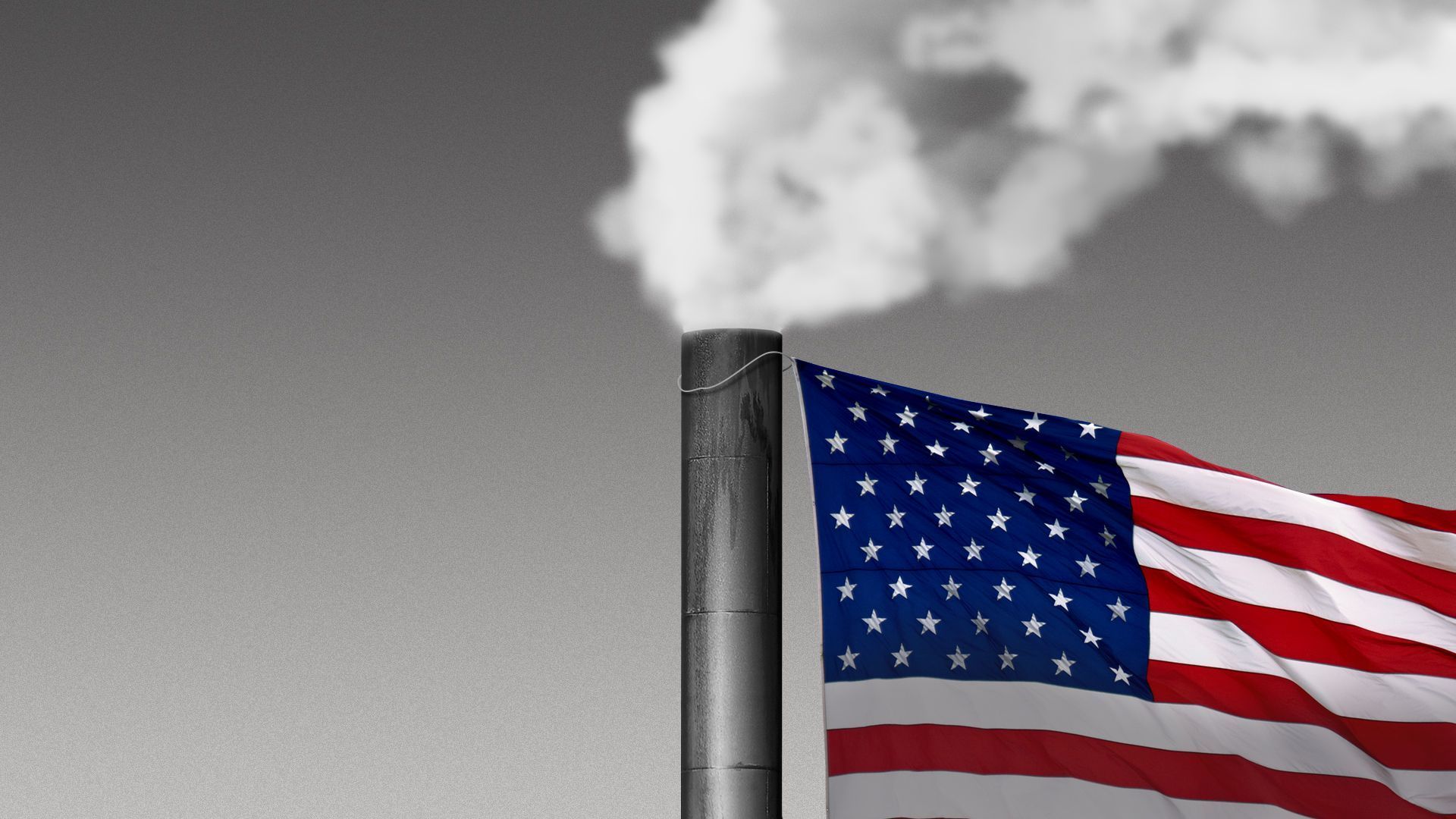
Illustration: Sarah Grillo/Axios
Indianapolis' air quality is among the worst in the nation for year-round particle pollution, according to a new report.
Why it matters: Air pollution is associated with an array of health conditions, from wheezing and coughing to asthma and premature death.
- The findings come as the White House is reconsidering EPA rules and regulations meant to curb pollution and promote cleaner air.
Driving the news: Nearly half of Americans are now exposed to potentially dangerous levels of ozone or particle pollution, per the American Lung Association's 2025 State of the Air report.
- That's almost 25 million more compared with last year's report, and the highest number in the past decade of the report's history.
How it works: The report used local air quality data to grade and rank locations based on ozone pollution, daily particle pollution and annual particle pollution.
- This latest report includes data from 2021-2023, "the most recent three years of quality-assured nationwide air pollution data publicly available."
- Ozone is a gas that, at ground level, is a harmful irritant. Particle pollution involves tiny airborne particles from wildfires, fossil fuel burning and more.
Zoom in: The Indianapolis-Carmel-Muncie area ranked No. 11 nationally for worst annual particle pollution out of 208 U.S. metros.
- It ranked No. 21 worst for 24-hour particle pollution and No. 54 worst for ozone pollution.
- Marion County received an "F" grade for both ozone and daily particle pollution and failed for annual particle pollution.
- Hamilton County got a "C" for ozone, a "D" for daily particle pollution and failed annual particle pollution.
Threat level: Climate-related factors— including extreme heat, wildfires and drought — are also degrading air quality nationwide, the Lung Association says.
Yes, but: Year-over-year EPA data shows that Indy's air quality is getting slightly better over time, with fine particle pollution dropping nearly 3% in the last decade.
- The average percentage of fine particle pollution in the Indianapolis metro area decreased from 10.44 micrograms per cubic meter in 2014-16 to 10.1 micrograms in 2021-23, per the EPA.
Zoom out: Los Angeles, Visalia and Bakersfield — all in California — lead the rankings of U.S. metros most affected by ozone pollution.
- Bakersfield; Fairbanks, Alaska, and Eugene, Oregon, topped the list of those most affected by daily particle pollution.
- Bakersfield; Visalia and Fresno, California, were the most affected by annual particle pollution.
- Only one continental U.S. metro — Bangor, Maine — showed up on all three of the group's lists of cleanest cities.
Stunning stat: Hispanic people are almost three times more likely than white people to live somewhere with failing grades in all three categories.