Indiana's climate change anxiety


Add Axios as your preferred source to
see more of our stories on Google.
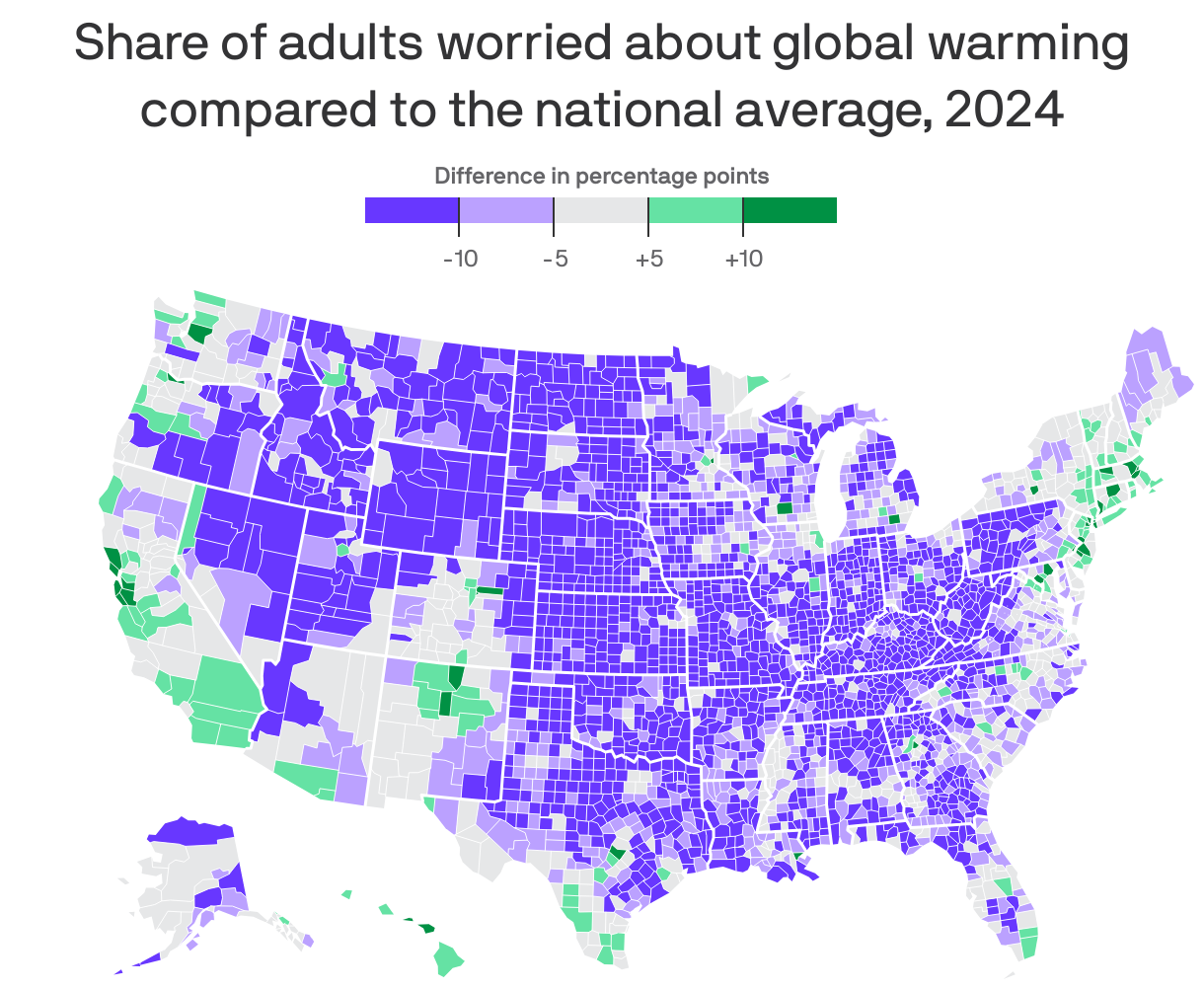
When it comes to climate change, a new study reveals that many Hoosiers outside of Indy aren't sweating it.
The big picture: Climate anxiety is concentrated in many large U.S. metros and some coastal regions.
- About 63.3% of U.S. adults overall are "somewhat" or "very" worried about global warming as of 2024, per survey data from Yale Program on Climate Change Communication.
- The findings paint a stark picture of how attitudes toward climate change vary by location.
Zoom in: Marion County residents are slightly more concerned about climate change than the national average, with a state-leading 66% of residents saying they are "somewhat" or "very" worried.
- Monroe is the only other Indiana county concerned about climate change at a rate higher than the national average at 65%. Residents in Boone (56%) and Hamilton (54%) counties are slightly less concerned.
- In 59 of Indiana's 92 counties, fewer than 50% of residents say they're worried about climate change.
Zoom out: Some of the U.S. counties with especially high shares of adults worried about global warming — like Queens, New York (79.8%) — are coastal areas vulnerable to climate-driven threats like flooding.
- They also tend to be relatively populous, with 4 of the 10 most-worried counties having at least 1 million residents.
- Many major metro areas, like Columbus, Ohio, and Salt Lake City, Utah, also show up on the map above as pockets of relatively higher climate concern compared to surrounding areas.
What they're saying: While the map above may look like a sea of purple, "it's crucial to remind people that the vast majority of the population exists in some of these green places," says Jennifer Marlon, executive director of the Yale Center for Geospatial Solutions and senior research scientist at the Yale School of the Environment.
Between the lines: Individual attitudes about climate change are not based entirely (or perhaps even primarily) on local risk, with politics, education, and other factors playing big roles.
- Many of the areas with relatively lower climate anxiety are vulnerable to various kinds of extreme weather that could be amplified by climate change, like hailstorms.
Threat level: In Indiana, studies show that human-driven climate change is making rainstorms in Indianapolis more intense.
- Climate change is also contributing to longer allergy seasons and altering the local homebuying market.
Go deeper: Yale's interactive page features an array of local climate opinion data, with questions ranging from whether global warming is happening at all to thoughts on drilling for oil in the Arctic National Wildlife Refuge.