Indy's work from home surge


Add Axios as your preferred source to
see more of our stories on Google.
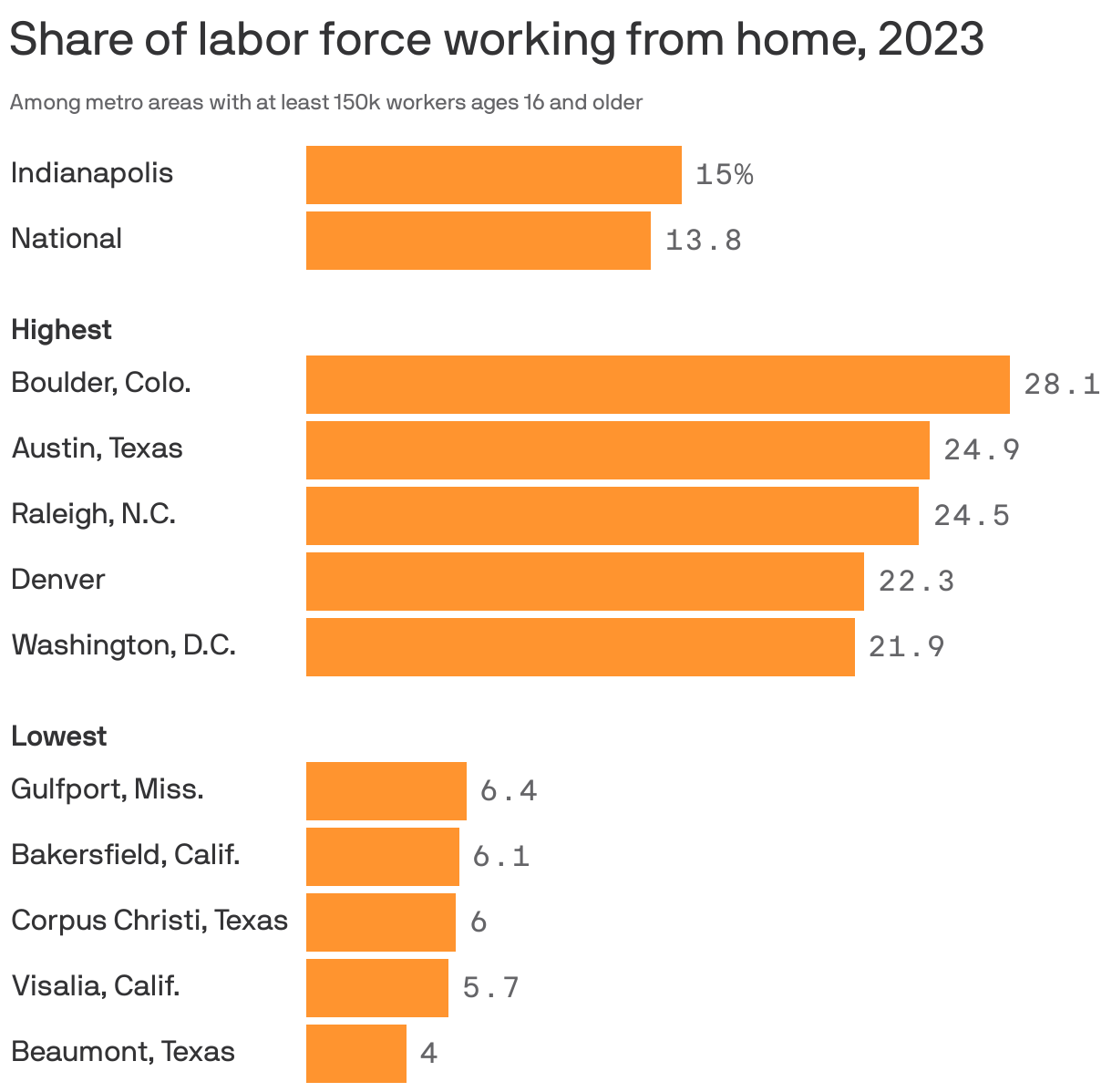
Indianapolis has experienced one of the nation's largest surges in remote work adoption over the past decade.
Why it matters: Even as U.S. companies call employees back to the office, the Circle City has maintained its position as one of the best places for remote workers to earn a living.
The big picture: Remote and hybrid schedules have made work versus life an easier equation for many Americans, like busy working parents — but those schedules were never enjoyed equally nationwide.
By the numbers: A recent CoworkingMag analysis of data from the U.S. Census Bureau's American Community Survey found that in Indianapolis, the number of employees working remotely climbed from just 3.8% in 2014 to 15% in 2023.
- The 2023 total represents a 295% change, tied with Richmond, Virginia, for the 10th highest increase in remote workers share from 2014-2023.
- Other Midwestern cities in the top 10 were Akron, Ohio, at No. 2; Detroit at No. 4; and Milwaukee at No. 9.
- Nationwide, the increase from 4.5% remote workers in 2014 to 13.8% in 2023 accounts for 207% growth with the biggest boosts in remote work happening in mid-sized areas.
Between the lines: CoworkingMag says midsized metros like Indy usually have a mix of large companies with offices across the country and small businesses that are likely to set their own work models.
- These cities are also attractive to freelancers and digital nomads who, given their flexible positions, have the freedom to relocate to smaller, more affordable places with better quality of life.
Zoom in: At the start of the year, the National Taxpayers Union Foundation released its second Remote Obligations And Mobility (ROAM) index, which analyzes each state's tax and regulatory policies to see how they treat remote workers.
- Indiana ranked the highest of any state with an income tax, moving up 17 spots in the analysis due to pro-worker reforms passed in 2023.
- Indiana passed 30-day filing and withholding thresholds, which the foundation called the "gold standard all states should aspire to" as it requires workers to spend an extended period in a state before they need to file.
- The index also attributes the ranking to Indiana having a more straightforward income tax and reciprocity agreements with states like Kentucky, Ohio, Pennsylvania, Wisconsin and Michigan.
What they're saying: "While Montana improved its rank on the ROAM Index the most this past year, Indiana stands apart as the only state having done essentially everything possible to improve its ROAM Index score," the analysis states.
Yes, but: There is room for improvement. The foundation said a reciprocity agreement with Illinois is the last major thing Indiana could do to improve its score.
- "Though this is made difficult by the fact that twice as many Hoosiers commute to Illinois as Illinoisans to Indiana," wrote the foundation in its analysis.
State of play: Companies' big return-to-office push is a sign that employers are gaining more leverage over workers, Axios' Emily Peck writes.
- And while plenty of people who work remotely enjoy the flexibility it allows, working from home appears to make people feel more alone.
- But requiring workers to be at the office in person won't necessarily solve the problem, experts say.
What's next: The incoming Trump administration is likely to push the country's federal workforce back into the office — largely as a way to trim headcount.