How Indianapolis is fighting crime with creativity

Add Axios as your preferred source to
see more of our stories on Google.
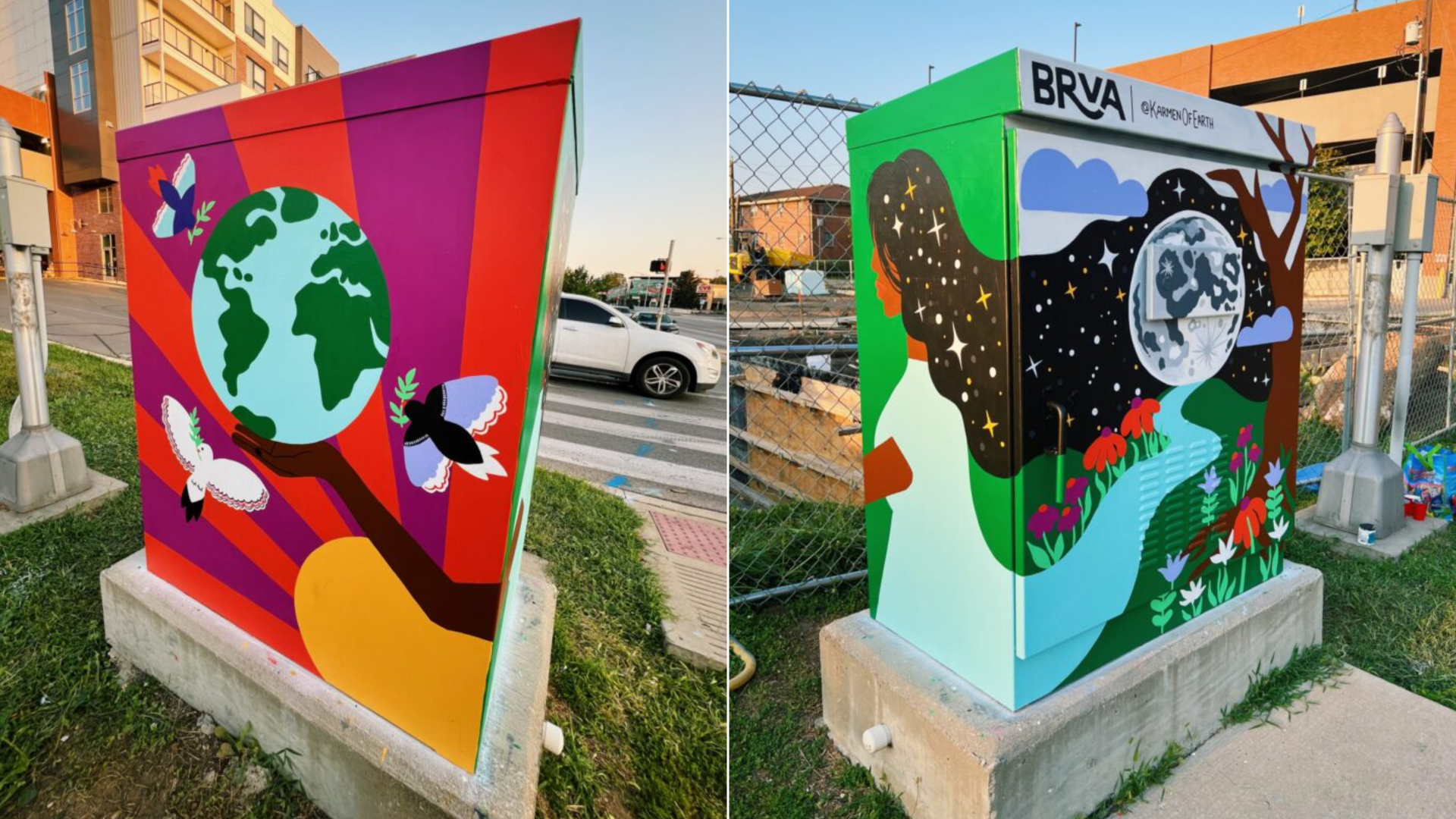
"Love The Earth" by artist Karmen Johnson is part of Broad Ripple's plan to create a safer community. Photos: Courtesy of Indy Arts Council
The murals and sculptures that contribute to Indy's artistic identity don't just beautify the city. They help protect it.
Why it matters: Crime is generally down in Indianapolis so far this year, but local leaders are seeking deeper collaborations between artists and neighborhoods as youth violence, road rage incidents and police shootings persist.
Driving the news: The Indy Arts Council, Department of Public Works and IMPD's North District this week led a community conversation about how public art can play a vital role in crime prevention.
How it works: IMPD Sgt. Shane Foley explained that local art made with safety in mind is developed under a principle known as "CPTED," or crime prevention through environmental design.
- The general concept is using environmental elements such as lighting, landscaping, fences and signs to reduce the likelihood of crime, or the idea that criminal activity may occur.
Zoom in: Foley said art can communicate that a neighborhood is cared for and protected, similar to how the broken windows theory suggests that visible signs of disorder encourage further disorder.
- Art can also support a crime prevention technique called territorial reinforcement. That is when the environment's design makes it clear when you've entered or exited a neighborhood's boundaries.
State of play: Julia Muney Moore, director of public art for Indy Arts Council, said the broken windows theory is starting to be replaced with the "busy streets theory," which is the idea that a vibrant community bursting with art is always under watch.
- Pieces that include faces, bright colors, culturally specific imagery, uplifting themes or a particular shade of pink that reduces aggression are best for curbing crime.
- Sculptures can help by incorporating lighting or blocking escape pathways criminals might use.
- Moore said one example of this concept is the city's Traffic Signal Box Art Program established in 2015 that transforms bland traffic boxes into curbside murals.
What they're saying: Lisa Huse of the Broad Ripple Village Association has helped the neighborhood get three traffic box projects.
- Huse said paperwork complications and working with adjacent business owners who may not be local are pain points, but the pros of the program far outweigh the cons.
- "The juice is worth the squeeze," she said while sharing images of "Love The Earth," Broad Ripple's latest traffic box project, completed last month by local artist Karmen Johnson, aka Karmen of Earth.
Reality check: These projects cost money, and not every neighborhood has the means to pursue public art.
- Moore said that efforts like the traffic boxes and the city's Art in the Right-of-Way program originally required communities to raise money, which proved to be a barrier.
- Funding sources that can help are crowdfunding platforms like Patronicity, ioby or GoFundMe.
- She also suggests working with local businesses or hosting fundraising events.
Yes, but: New ideas to address the funding disparity are on the way.
- Indy Arts Council is launching a program in early October to help bring traffic box projects to neighborhoods in need.
- The city is also rolling out a cost-share program in late fall or early winter to help pay for new Art in the Right-of-Way, Tactical Urbanism and Indianapolis Neighborhood Infrastructure projects.
- "When this first launched and all of the cost was on the community groups, that felt like a really huge burden for entry into this program," said DPW Administrator Dan Stevenson. "We're hoping to be able to essentially see a bunch of these projects happen at $0 to very little dollars."