Medical debt erased for more than 112,000 Hoosiers

Add Axios as your preferred source to
see more of our stories on Google.
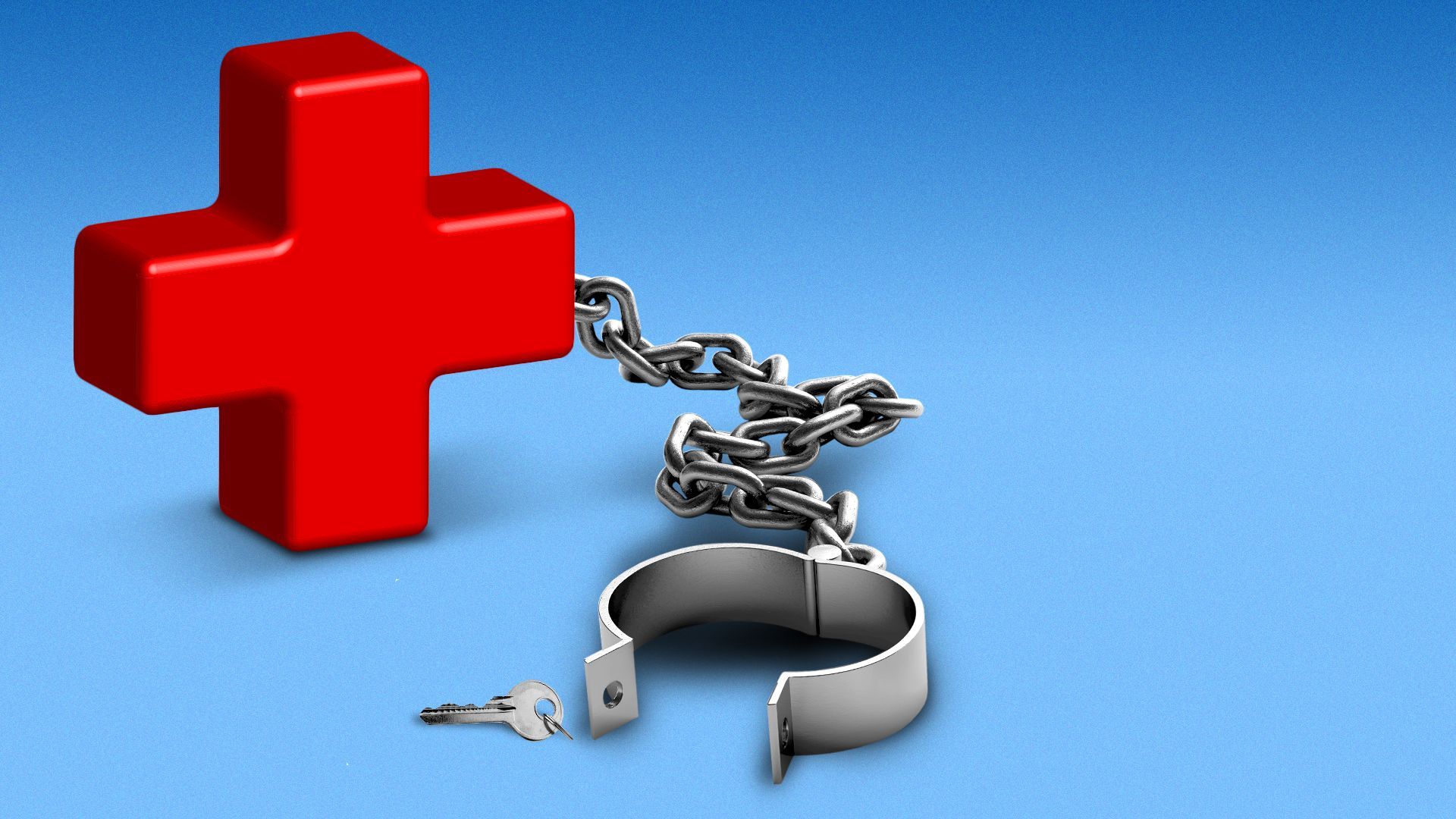
Illustration: Annelise Capossela/Axios
More than 100,000 Hoosiers in central Indiana are having their medical debt erased.
Why it matters: Medical debt is a leading cause of personal bankruptcy and a threat to people's health.
Driving the news: The United Way of Central Indiana and United Neighborhood Centers of Indianapolis announced Monday the abolishment of nearly $240 million in medical debt for 112,018 Hoosiers living in Marion and surrounding counties.
- Those having their medical debt erased are at or below 400% of the federal poverty level — an annual income of under $125,000 for a family of four — or those with a medical debt burden of 5% or more of their annual income.
How it works: An anonymous donor partnered with the United Neighborhood Centers of Indianapolis, giving $1.2 million to the national nonprofit Undue Medical Debt to erase debt for eligible Marion County residents.
- The United Way of Central Indiana chipped in an additional $500,000, part of a donation the organization received from philanthropist MacKenzie Scott in 2021.
- Undue Medical Debt used the $1.7 million to purchase medical debt from collections, where it is often packaged together and sold at a significant discount.
Stunning stat: A recent report estimated that Americans owed at least $220 billion in medical debt at the end of 2021.
By the numbers: The majority of beneficiaries from Monday's announcement reside in Marion County, where more than $234 million of debt will be relieved for 108,699 people.
- In Boone County, more than $437,000 of debt was relieved for 262 people.
- In Hamilton County, more than $1.2 million of debt was relieved for 737 people.
- In Hancock County, more than $466,600 of debt was relieved for 313 people.
- In Hendricks County, more than $2.2 million of debt was relieved for 1,286 people.
- In Morgan County, more than $710,200 of debt was relieved for 496 people.
- In Putnam County, more than $272,100 of debt was relieved for 225 people.
What they're saying: "While this one-time investment will have a ripple effect for families and communities, it doesn't address the root causes of medical debt or financial hardship," said Sam Snideman, United Way's vice president of government relations.
- Medical debt can perpetuate cycles of poverty and hinder the economic growth of communities, said Peggy Frame, executive director of Southeast Community Services and spokesperson for the United Neighborhood Centers.
Zoom out: The move follows similar efforts around the country, including some sponsored by local governments such as in Cleveland, New Orleans and New York City.
What's next: The agencies involved and the anonymous donor are urging policymakers to look for ways to curb the systemic issues that create burdensome medical debt.
- They want providers to better control cost and strengthen their charity care policies to prevent individuals who need care from incurring debt to start, and they want the government to pass legislation limiting the impact medical debt has on credit scores.