Most of Indiana isn't adopting electric vehicles


Add Axios as your preferred source to
see more of our stories on Google.
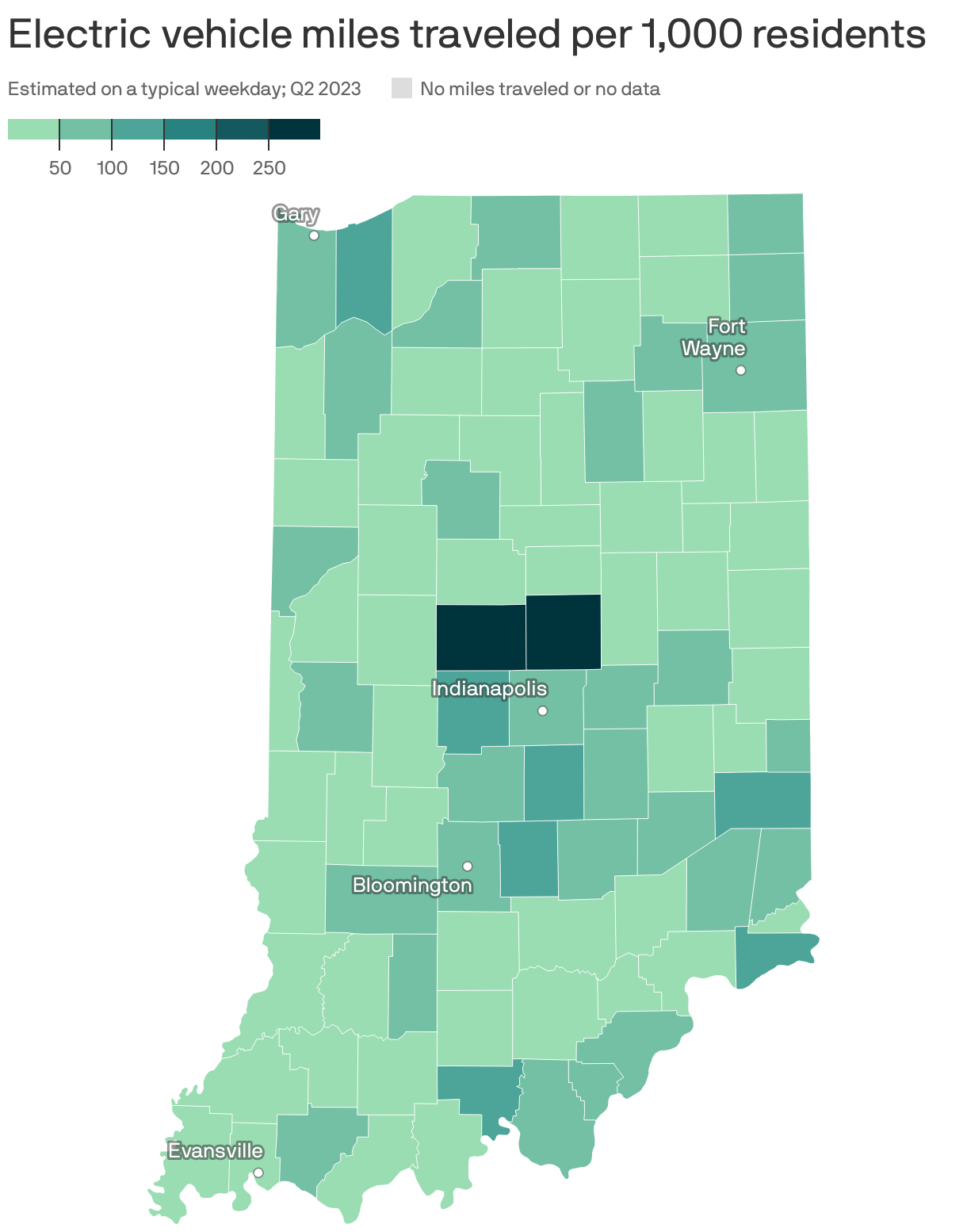
Despite the hype surrounding electric vehicles, only the wealthiest counties in Indiana are buying in.
Why it matters: Democratic elected officials and regulators want to nudge drivers out of gas-guzzling vehicles and into EVs to meet climate goals, but most consumers either aren't interested or can't afford them.
Driving the news: Hamilton County saw an estimated 298 electric vehicle miles driven per 1,000 residents on a typical weekday in the second quarter, per data shared with Axios.
- Boone County was right behind at 268.
- Those are by far Indiana's two richest counties — and no other place in the state came within half of Hamilton County's electric vehicle (EV) activity.
Of note: The data, from mobility analytics platform Replica, is based on anonymized mobile device info, roadside sensors, transit agencies and more.
Between the lines: At an average cost of $50,000, EVs at this stage amount to novelty purchases or status symbols more than practical daily transportation.
Yes, but: Used EV prices are dropping fast.
- That's bad news for early adopters who hoped to skirt the law of depreciation, but a win for those looking to go electric on a tighter budget.
The big picture: The areas with the most EV activity are generally those with better-developed charging infrastructure, as well as higher-income households that can more easily afford the electric car premium.
- Much of U.S. electric vehicle use is concentrated in the "four corners" —of California, the Pacific Northwest, the Northeast and the Southeast.
Zoom in: You can almost always find Teslas parked at the Meijer Supercharger station in Carmel.
- You're far less likely to stumble upon EVs or charging stations in Marion County shopping centers.
The intrigue: Whatever consumer desire exists for fuel efficiency has led to a renaissance for hybrids, which are cheaper, get great gas mileage and can travel cross country without drivers having to worry about dying batteries, Axios' Joann Muller writes.
Meanwhile, several major automakers, including Ford, General Motors and others, are recalibrating their electric car ambitions after lower-than-expected sales.
The bottom line: The EV future is far away in 90 of Indiana's 92 counties.