Why Texas doesn't have the cheapest gas — despite producing so much

Add Axios as your preferred source to
see more of our stories on Google.
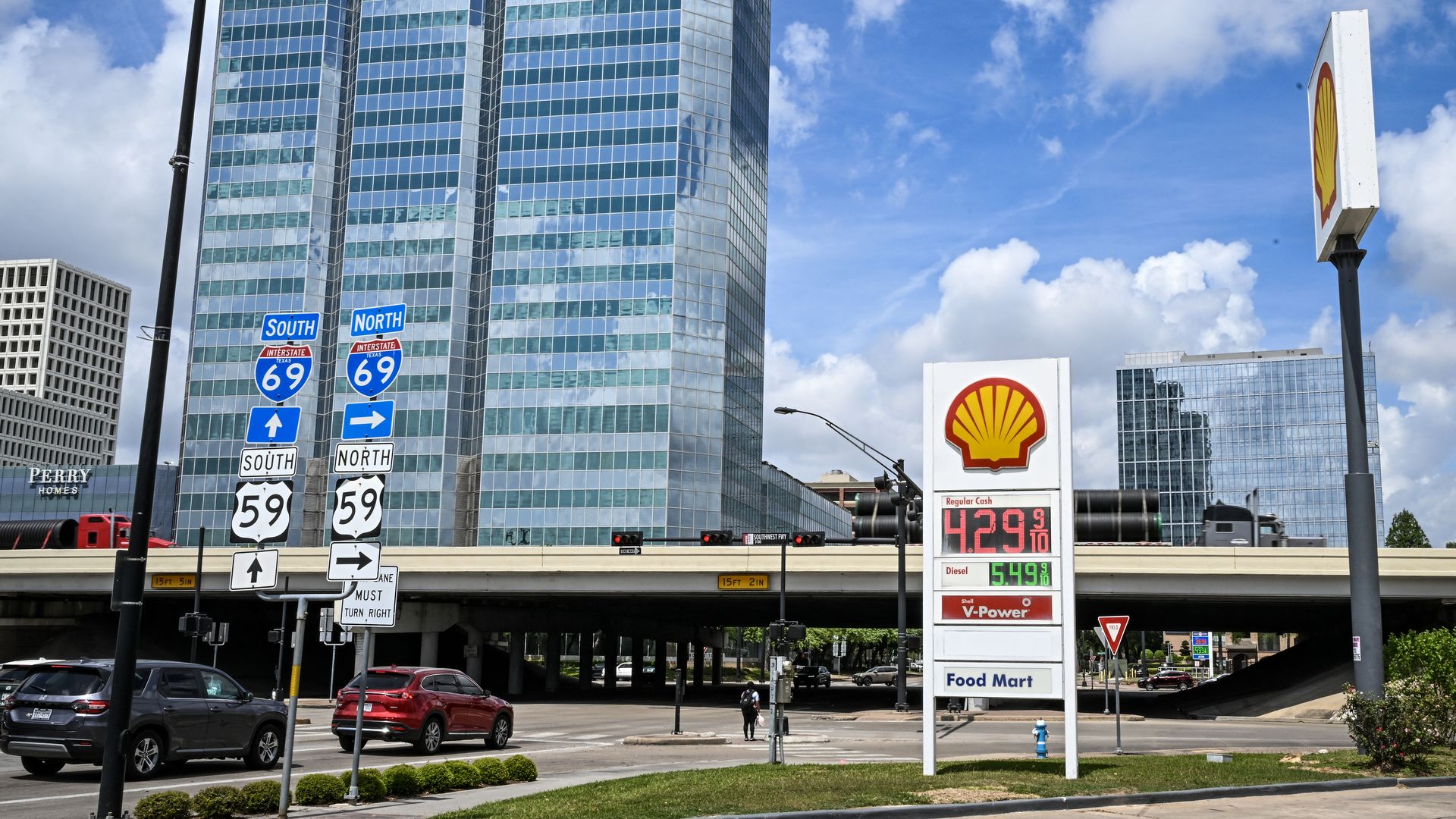
Gas prices in Houston. Photo: Ronaldo Schemidt/AFP via Getty Images
Texas produces a lot of gasoline, but the state doesn't have the lowest gas prices in the country. We asked an expert why.
Why it matters: We're all feeling the effects of soaring gas prices, which are contributing to the biggest monthly inflation spike in four years in March.
State of play: For the first time in four years, the national average has topped $4 per gallon, per AAA.
- Plus: The worst of the inflation surge in other categories, including airfares and groceries, may still be ahead, Axios' Courtenay Brown reports.
By the numbers: The national average for gas is $4.13 per gallon, while Texas' is $3.80, with Houston at $3.83, per AAA as of Monday afternoon.
- Despite Texas having the most refineries, Southern and Midwest states have the cheapest gas, with Oklahoma at $3.44.
What they're saying: "That's because of logistics," Kenneth Medlock, energy and resource economist at Rice's Baker Institute, tells Axios. There are many different factors at play, including the type of gas that certain regions require.
Zoom in: Parts of Texas, including Houston, require lower-emission gasoline blends — and that extra processing raises costs. "The more stuff I have to do to it, the more expensive it gets," Medlock says.
- Gas moves from refineries to storage hubs (called "racks") and then by truck to stations. "The farther away from the rack you are, the higher the price," Medlock says. And Texas is big.
- Texas is the largest gasoline consumer in the country, which keeps prices from dropping too low.
Zoom out: States like Nebraska and Oklahoma often have cheaper gas because they don't require special cleaner blends and they're closer to cheaper ethanol used in gasoline.
- Medlock notes that being near "a place that has a lot of really cheap ethanol… means the cost of your blending components for what goes into the gasoline is lower."
- Compare that to places like California, where stricter environmental rules raise costs even more.
Fun fact: Big-name gas stations can cost more because they pay for guaranteed supply and additives. Smaller unbranded stations are usually cheaper — but can run out first during disruptions.
What we're watching: Oil prices are expected to stay elevated as tensions with Iran remain unresolved, which could keep pressure on gas prices as we transition to more expensive summer-blend gasoline.
The bottom line: The squeeze on Americans' budgets is just starting, with uncertainty about whether price increases will lead to less spending and an economic slowdown.