Christmas Bird Count tradition returns to Texas

Add Axios as your preferred source to
see more of our stories on Google.
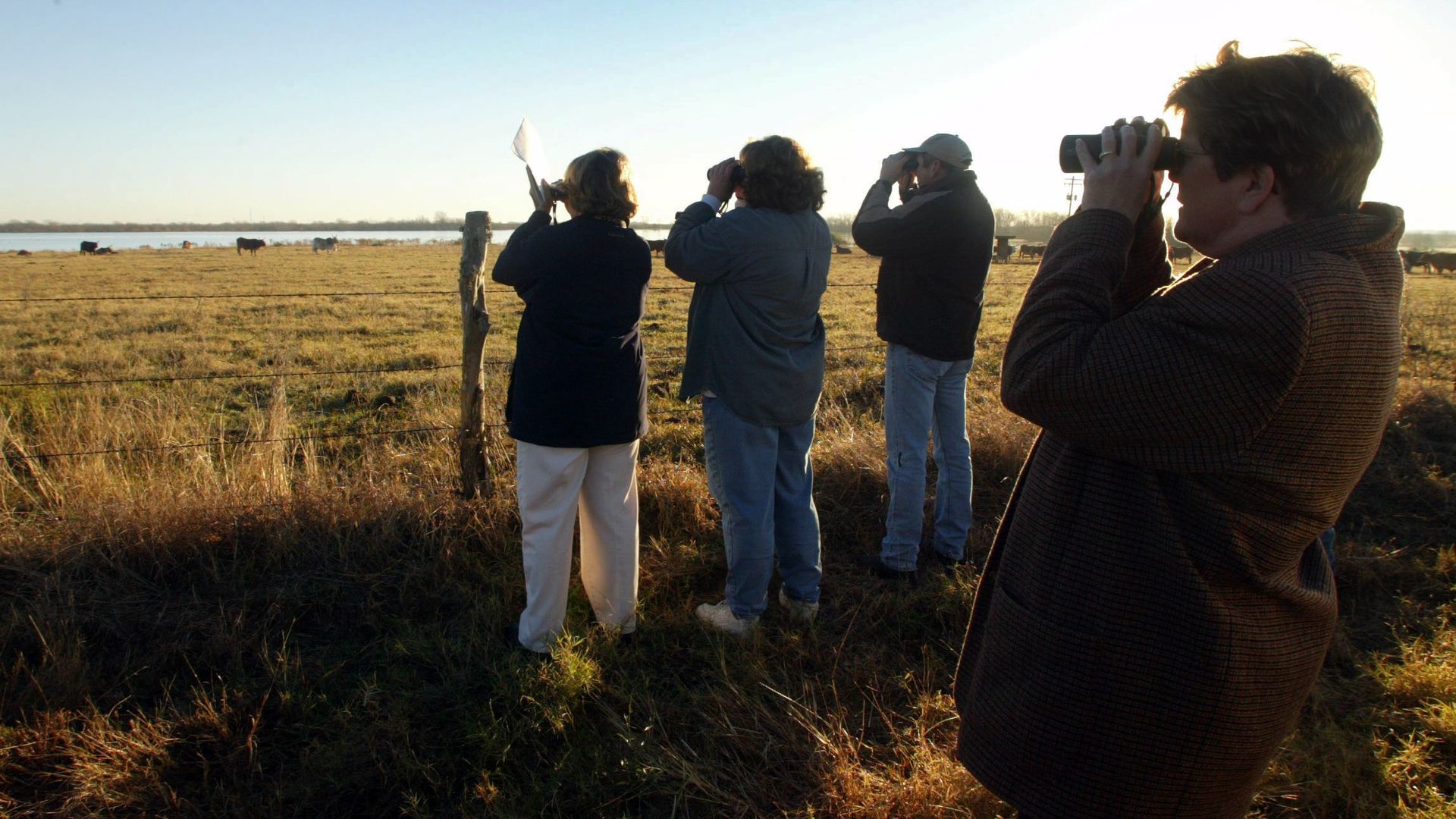
Bird enthusiasts in action. Photo: James Nielsen/Houston Chronicle via Getty Images
Birders are flocking together for the annual Christmas Bird Count, a nationwide project created over a century ago to replace hunting traditions with birding.
Why it matters: The annual Christmas Bird Count is one of the longest-running collaborative citizen science data sets in North America. It helps track bird populations, reveals trends and provides a historical record.
The big picture: Though newer tools like Cornell Lab's eBird also monitor bird populations, Wyatt Egelhoff with Houston Audubon tells Axios that the Christmas Bird Count offers consistency and a long-term data set that highlights "landscape-level changes."
- Beyond its scientific value, the count is a cherished tradition for birders. It's a good entry activity for beginners to learn the skill by teaming up with seasoned experts.
How it works: Volunteers return yearly on selected days to designated 15-mile-diameter areas between Dec. 14 and Jan. 5 to conduct a point-in-time census of the birds they can identify and count.
- In the Houston-Upper Texas Coast area, the region is divided into sections, with groups — including some granted access to private ranches — reporting their findings to a central compiler to send to the National Audubon Society.
What they found: The bird count have revealed changes in waterfowl patterns over the past few decades. Along the Texas coast, numbers have decreased, while northern states have seen an uptick — probably because milder winters mean less freezing and ample food up north, per Egelhoff.
- Locally, small birds like eastern phoebes, blue-gray gnatcatchers and ruby-crowned kinglets were hit hard by Winter Storm Uri, with noticeable declines in the two winters following the freeze. However, there are signs of the population potentially rebounding this year, Egelhoff says.
What they're saying: "A lot of birders have gotten into birding because of Christmas Bird Counts. … It's an easy way and a convenient way to explore interesting places to go birding," Egelhoff says.
- "There's a lot of joy in discovery … and it's just a tradition."
Flashback: The Christmas Bird Count began in 1900 in 25 North American locations, gradually expanding across the U.S. and Canada. The Freeport count, one of the oldest in Texas, started about 50 years ago and is consistently one of the top 10 in the state to find the largest number of species — regularly identifying nearly 200.
Fun fact: The count often leads to rare sightings, because participants visit areas they wouldn't usually explore. Just a few days ago, a group in the Galveston area spotted a yellow-headed caracara — the first recorded sighting of the species in Texas, Egelhoff says.
If you go: Events are happening statewide over the next couple of weeks, including Saturday's dawn-to-dusk count at Armand Bayou.