Dockworkers strike at Port of Houston


Add Axios as your preferred source to
see more of our stories on Google.
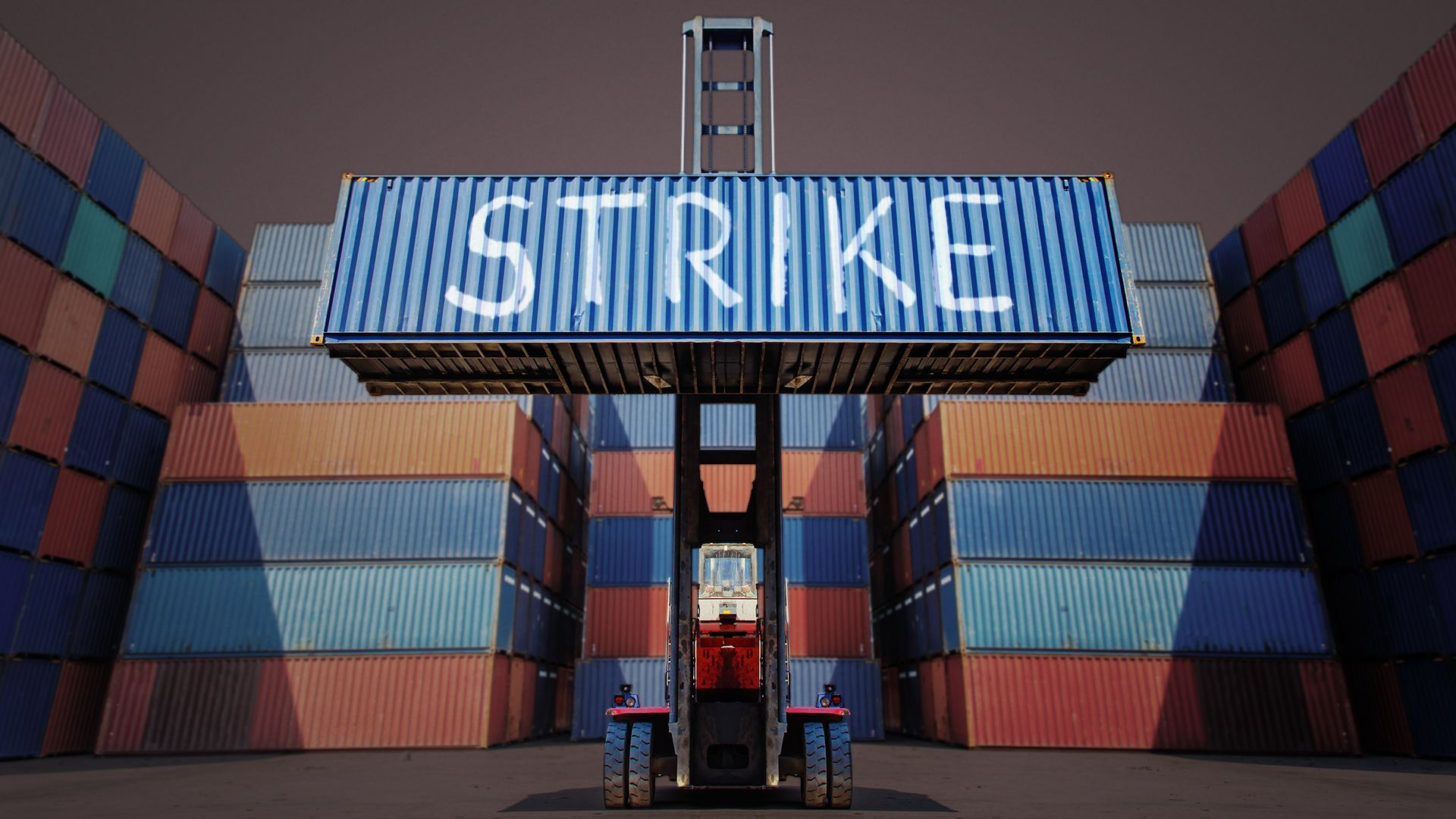
Illustration: Megan Robinson/Axios
Port of Houston dockworkers are on strike, joining thousands of unionized longshoremen along the Gulf and Atlantic coasts after the U.S. Maritime Alliance (USMX) failed to reach a new labor contract agreement with the union.
Why it matters: Longshoremen are critical to port operations, and a prolonged work stoppage could snarl supply chains, leading to higher prices and shortages of goods like auto parts, bananas and other foreign goods.
- The Port of Houston is the fifth-largest container port in the county and the largest on the Gulf Coast.
Driving the news: The International Longshoremen's Association (ILA) rejected the USMX's final proposal, made on Monday.
- About 45,000 dockworkers are on strike. Workers at more than a dozen ports walked off work just after midnight on Tuesday after their six-year contract expired, with no indication of how long the halt on activity will last.
Friction point: Negotiations started more than a year ago between the union and the USMX, which represents ocean carriers and port operators. But they stalled in June over labor-saving technology.
- The two sides are far apart on pay and automation provisions, as the union wants more protections from automated technology replacing human workers.
Flashback: The walkout is the first of its kind since 1977, well before the rise in global trade that's made shipping even more critical for the country's supply chain.
By the numbers: In Houston, the impact of the strike on exports could reach as high as $51 million per day, while imports could be affected by up to $41.5 million per day, according to a report by Mitre Corp., a public interest nonprofit.
- A strike could cost the U.S. economy between $3.8 billion and $4.5 billion per day, according to a JPMorgan analysis.
- JPMorgan estimated that for each day the ports are shut down, it will take roughly six days to clear the backlog.
State of play: Major importers, including large retail chains, have been preparing for a strike for months, so there won't be an immediate shortage or price hike. But University of Houston supply chain and logistics technology program director Margaret Kidd told KHOU that if there's an extended strike, it could impact what we pay at the grocery store because a lot of our perishables come by ship from South and Central America.
- H-E-B confirmed with ABC 13 that it does not expect the strike to impact customers right now.
What they're saying: "If we have to be out here a month or two months, this world will collapse," ILA president Harold Daggett tells CNN. "Go blame them. Don't blame me, blame them."
The other side: The USMX said in a statement Monday that it had "traded counteroffers related to wages" ahead of the strike action.