Michigan weighs kratom ban as cases rise

Add Axios as your preferred source to
see more of our stories on Google.
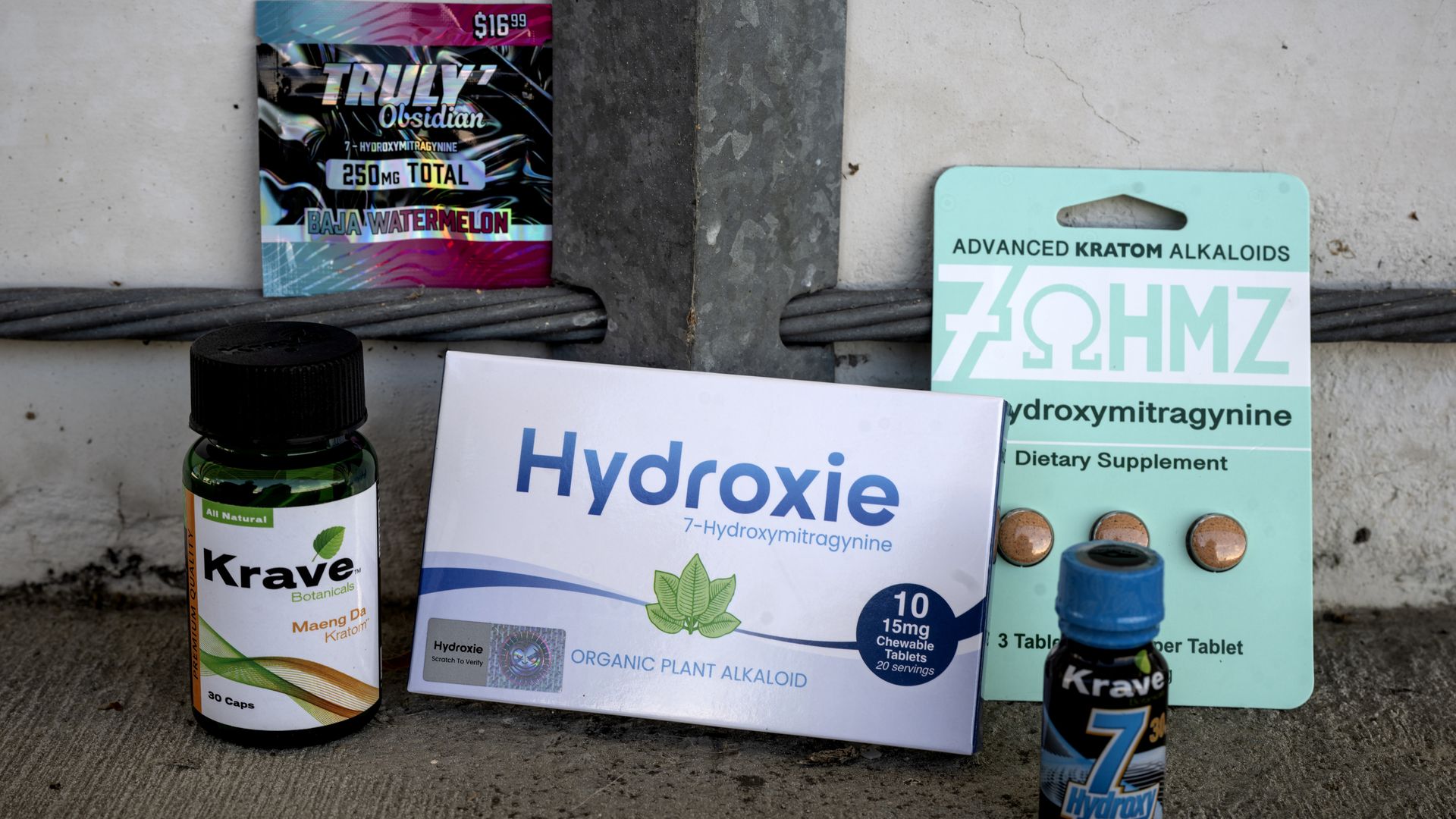
Kratom derivative products. Photo: Mindy Schauer/MediaNewsGroup/Orange County Register via Getty Images
Michigan's debate over kratom has ramped up after related compounds were found near two University of Mississippi students who died last month.
Why it matters: The increasingly popular substances aren't regulated in Michigan. State lawmakers are weighing whether to ban kratom outright, or control how it's sold.
State of play: A state House bill seeks to ban kratom and its highly potent, synthetic derivatives like 7-hydroxymitragynine, or 7-OH.
- A Senate bill would regulate the products by requiring warnings and dosage information on them and banning highly potent derivatives.
- Detroit City Council members said this week they want to learn more about kratom before supporting the statewide ban, BridgeDetroit reported.
- U-M and MSU spokespeople told Axios their data don't indicate significant use on campus, but they're watching out for it.
The big picture: Kratom comes from a Southeast Asian tree whose leaves naturally carry trace amounts of 7-OH — a compound with opioid-like effects.
- Companies make concentrated or semi-synthetic versions sold as tablets, gummies and drinks in gas stations and smoke shops.
- Kratom advocates say the natural plant helps with pain, and that the problem comes from potent derivatives that can confuse or mislead consumers.
By the numbers: The Michigan Poison and Drug Information Center at Wayne State recorded 347 cases involving kratom, 7-OH or other similar synthetics in 2021-25, according to Varun Vohra, a clinical toxicologist and the center's senior director.
- It recorded 87 cases in 2025, an 81% increase from 2024.
- Vohra says 7-OH exposures were associated with more severe withdrawal symptoms and greater intensive care needs than other kratom exposures.
What they're saying: "People are going to procure these items in some shape or form or another," Vohra says.
- "We think [the regulation] should be based on a science-informed framework, so working alongside lawmakers, policymakers for more clear, consistent regulation as opposed to a full-on, blanket ban."
- State Rep. Cam Cavitt (R-Cheboygan) said after the ban passed the House in March that "What we are experiencing with kratom is a crisis … These products are being marketed towards our kids, and many parents aren't even aware that it's happening. Our children are being poisoned by products that they can easily purchase at gas stations."