U.S.-Canada tensions hit Metro Detroit tourism

Add Axios as your preferred source to
see more of our stories on Google.
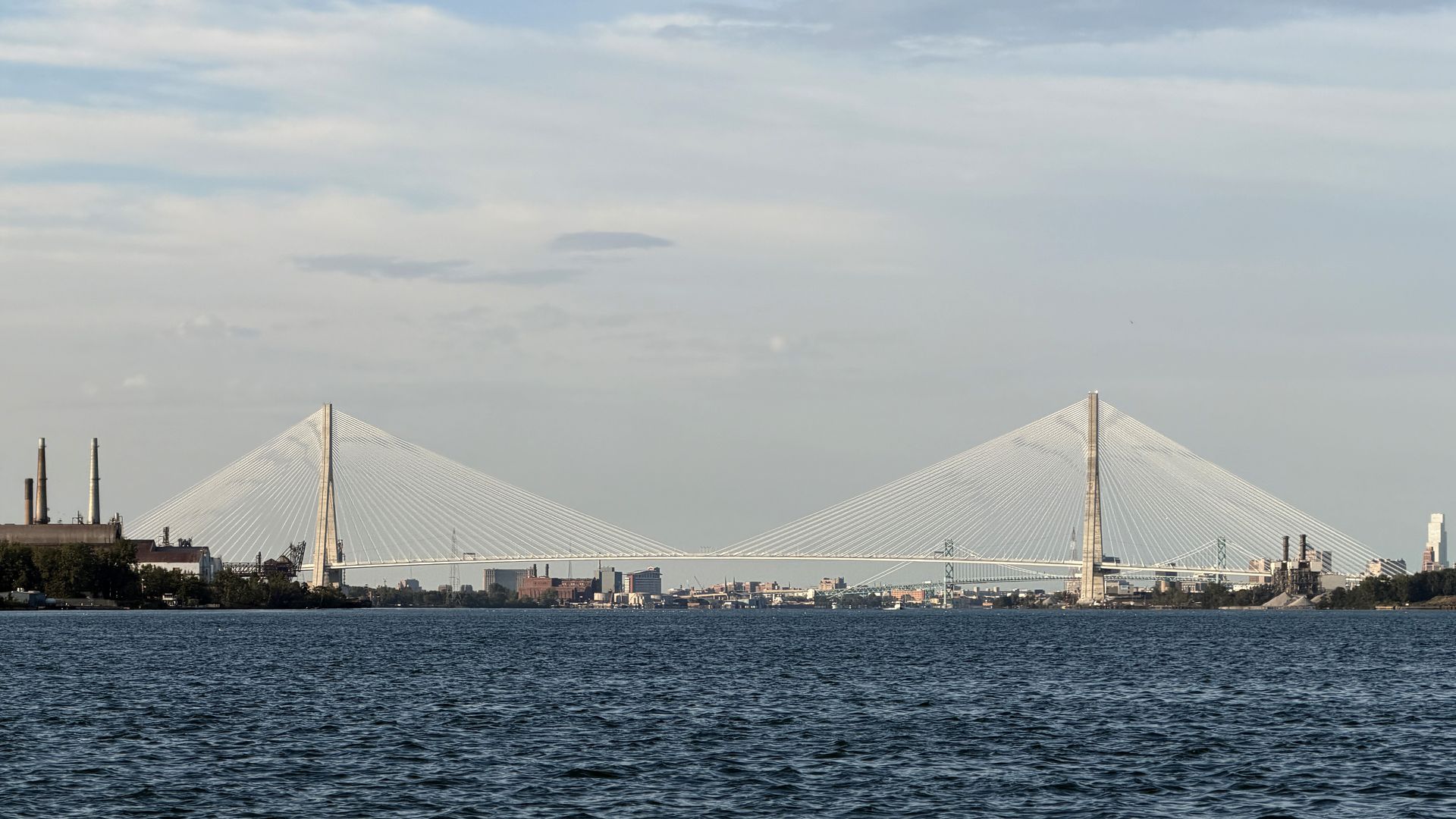
The Gordie Howe International Bridge between Detroit and Windsor. Photo: Gregory Shamus/Getty Images
Visit Detroit, the region's tourism bureau, isn't advertising to Canadian tourists as renewed U.S.-Canada trade tensions continue to lead visitors to other destinations.
Why it matters: Last year's tariff dispute, and the current one, greatly impact Metro Detroit. Tourism from Canada is significant here, considering our busy Detroit-Windsor crossings.
- Canadian trips to the U.S. were already down before the most recent tariff battle, falling nearly 11% year over year in the first quarter.
Catch up quick: President Trump's administration announced an additional 50% tariff on certain Canadian goods on July 20.
- Trade talks fell apart late last month, an unprecedented breakdown in the two countries' relations.
- Canadian Prime Minister Mark Carney said Tuesday that U.S. officials need to "start being serious."
- Canada plans to impose retaliatory tariffs Sept. 8.
What they're saying: "I'm somewhat disappointed that there's such negative interactions going on between our two federal governments, because … while [the tourism industry is] not the intended target … it has definitely been an unintended victim," Claude Molinari, president and CEO of Visit Detroit, tells Axios.
Context: Before the latest U.S.-Canada tensions, Canadians were Southeast Michigan's largest international visitor market, Molinari says.
- "And we've seen that a lot of Canadians are now boycotting the United States and doing domestic travel."
State of play: Starting in July 2025, the bureau halted its tourism advertising to Canadians "because we just think it would come off as tone-deaf, it wouldn't be well received," Molinari told Axios late last week. "I think that it would be, you know, antagonistic, frankly, even if we meant it the nicest way."
- The pause included laying off its Canadian marketing agency.
- For now, those marketing dollars are redirected toward Europeans and other international visitors.
- The organization is still engaged with Canada, collaborating with its tourism counterparts, he says.
Zoom out: Visit Detroit's move echoes decisions also made by some other tourism organizations since tensions began driving down travel.
Flashback: Even before the latest tariff conflict, last year's trade tensions, tariffs and Trump's rhetoric led many Canadians to vacation elsewhere.
- Canadian-resident return border crossings from the U.S. fell more than 25% in 2025, with travel spending falling $3.3 billion, according to a Canadian government report released in July.
- Then, in the first quarter of 2026, Canadians took nearly 11% fewer trips to the U.S. than a year earlier — a trend that may continue if this summer's tariff battle lasts past the midterms.
Yes, but: At the same time, Detroit and Windsor are also seeing new cross-border energy from the Gordie Howe International Bridge.
- Its pedestrian crossing recorded 3,400 walkers and cyclists on its first day, Aug. 5, and is expected to become a huge green tourism draw.
The bottom line: "As things improve in the future … we'll be ready to welcome Canadians back," Molinari says.
- "I think that's going to be the nexus of our campaign, is going to be to really just taking a very humble and thought-provoking view, of being able to say: 'We hope that you're going to be happy to come visit us again because we miss you.'"