Detroit sees drop in visitors from Canada


Add Axios as your preferred source to
see more of our stories on Google.
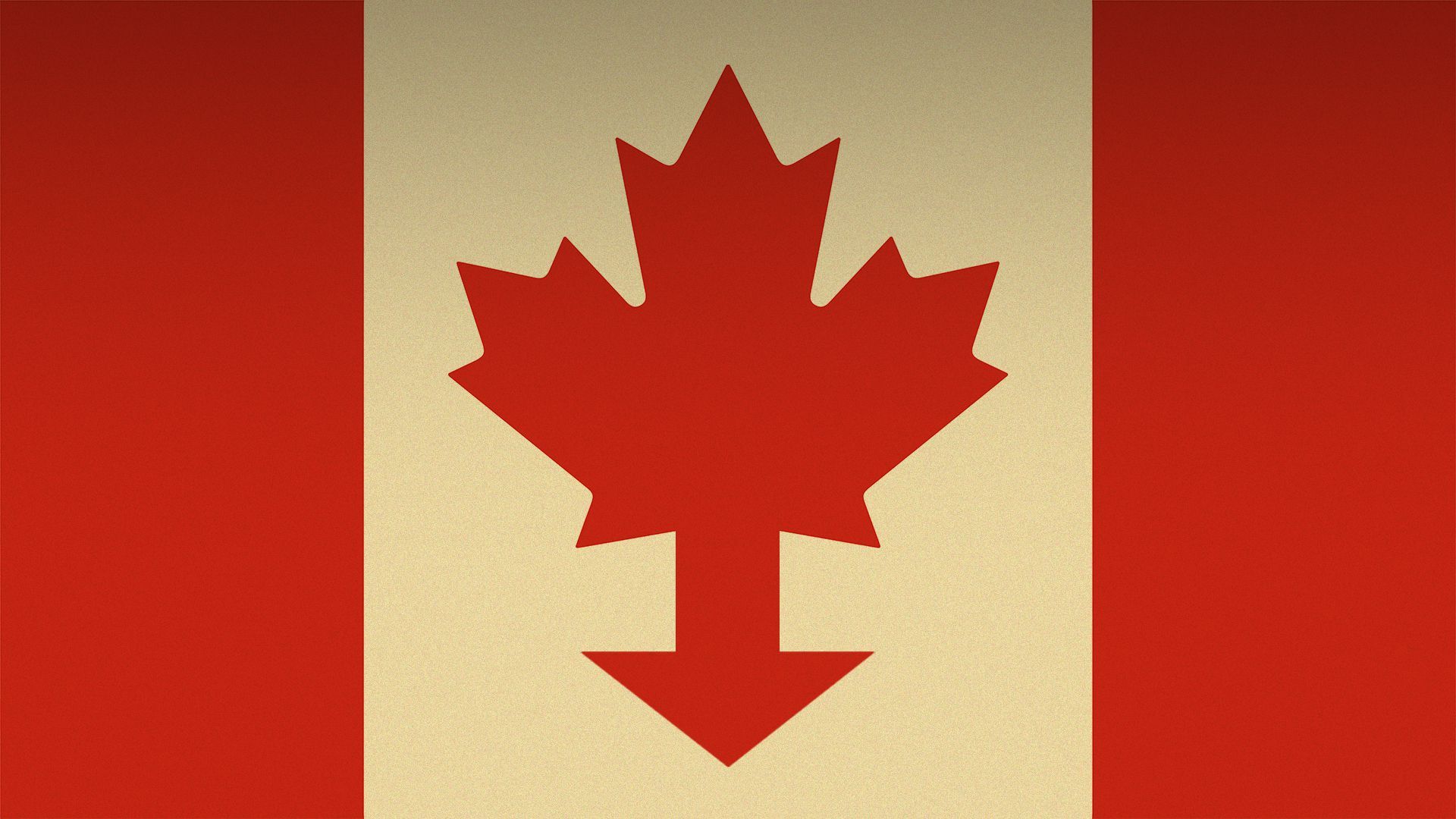
Illustration: Annelise Capossela/Axios
Trump-era tariffs and political rhetoric are dampening travel — and costing Michigan.
Why it matters: About 10% of Detroit's tourism comes from Canada. Rising political tensions and new tariffs are driving a noticeable drop in visitors — and threatening the region's tourism economy just as the busy summer season approaches.
The big picture: President Trump's recent rhetoric — including talk of making Canada the "51st state" — has triggered a rally-around-the-flag effect across the border.
- Travel warnings, economic uncertainty and a push to "buy Canadian" are weakening interest in U.S. destinations.
Zoom in: Detroit border crossings are already down about 13% in February and March compared to last year, U.S. Customs and Border Protection data shows.
- Typically, more than 40,000 people — commuters, truck drivers and tourists — cross the Detroit-Windsor border daily.
Meanwhile, bookings for Canada-U.S. flights in April-September are down over 70%, per aviation data firm OAG.
Threat level: A mere 10% drop in Canadian visitors could cost U.S. businesses as much as $2.1 billion in revenue, according to The Points Guy.
State of play: From Mackinac Island to Detroit, officials are monitoring the tariff situation and hoping for clarity by summer.
- Canadian travelers represent a small fraction of the state's approximately 128 million tourists annually. But Detroit, Port Huron and other border destinations face heightened impacts, Bridge Michigan reports.
The latest: Earlier this month, a Canadian travel advisory warned residents to "expect scrutiny" when entering the U.S.
- U.S. border agents don't need to give a reason for requesting a password to open your phone or electronic device. "If you refuse, they may seize your device," the advisory says.
Behind the scenes: Axios Detroit reporters faced some scrutiny last week when crossing the border into Windsor. After driving through the tunnel, we were asked to pull over and get out of our car to answer some questions from the authorities about the nature of our work.
- We were allowed in after about a 15-minute stop.
What they're saying: Visit Detroit president and CEO Claude Molinari said the organization prioritizes "seamless cross-border travel," adding that long-term tariffs create unnecessary barriers to tourism and trade.
- "Maintaining a strong, cooperative relationship with Canada is essential to the economic and cultural vitality of our region," Molinari said in a statement to Axios.
The view from Canada
Axios Detroit reporters ventured into Windsor last week to see how Trump's policies and statements toward Canada are landing across the border.
- The interviews were conducted after crossing the Detroit-Windsor Tunnel.
Paul Rigelhof, a retired resident of Lakeshore, Ontario, next to Windsor, said the tariffs have been a "little bit of a problem" for folks.
- Rigelhof said he and others are concerned about the health of retirement funds and pensions. He's not too worried overall and believes the economy will bounce back.
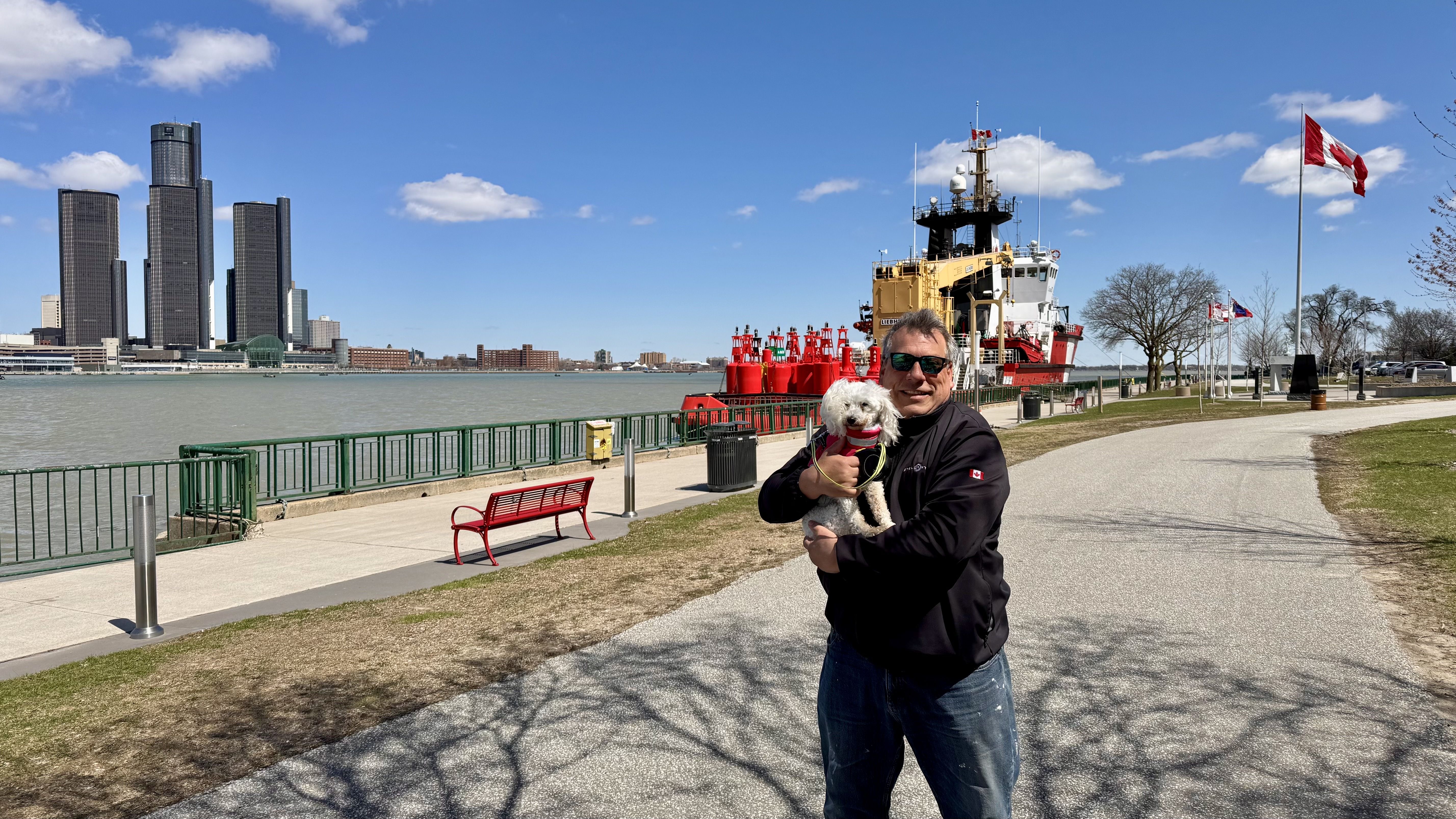
Robin Cross, who works at Rogues Gallery Comics in Windsor, said he feels like Detroit and Windsor still have a pretty good relationship.
- "I think for the most part, us here in Canada, we still love the American people. We don't love the country right now. We know it's not the people who are choosing to do this. We try to keep that in mind. It's tough to have as friendly an outlook on America as we always have."

Joanne Paradis, 83, said that her views of Trump are separate from her opinions of Americans in general.
- "We realize what that idiot's doing shouldn't reflect on everybody," Paradis said last week while waiting for a bus in downtown Windsor.
- "When I'm buying products, it's got to be not made in the United States," she said. "We've got to stand up for our country."