Michigan kids fall behind in new well-being report


Add Axios as your preferred source to
see more of our stories on Google.

Illustration: Aïda Amer/Axios
Children's well-being has gotten worse in Michigan and dozens of other states in the last several years, according to a new report measuring economic, health and community data.
Why it matters: Kids' ability to thrive affects future workforce participation and economic growth — a point Mayor Mary Sheffield recently made to Michigan business leaders to convince them to help alleviate childhood poverty.
- National researchers also warn rising costs and safety net reductions could further strain families.
How it works: The Annie E. Casey Foundation's 2026 Kids Count Data Book, released this month, measured children's well-being using data from 2019 to 2024.
- The report used those metrics to generate an overall wellness score for each state.
What they found: Children's well-being declined in 29 states since the pandemic. The overall U.S. score fell from 553 to 547.
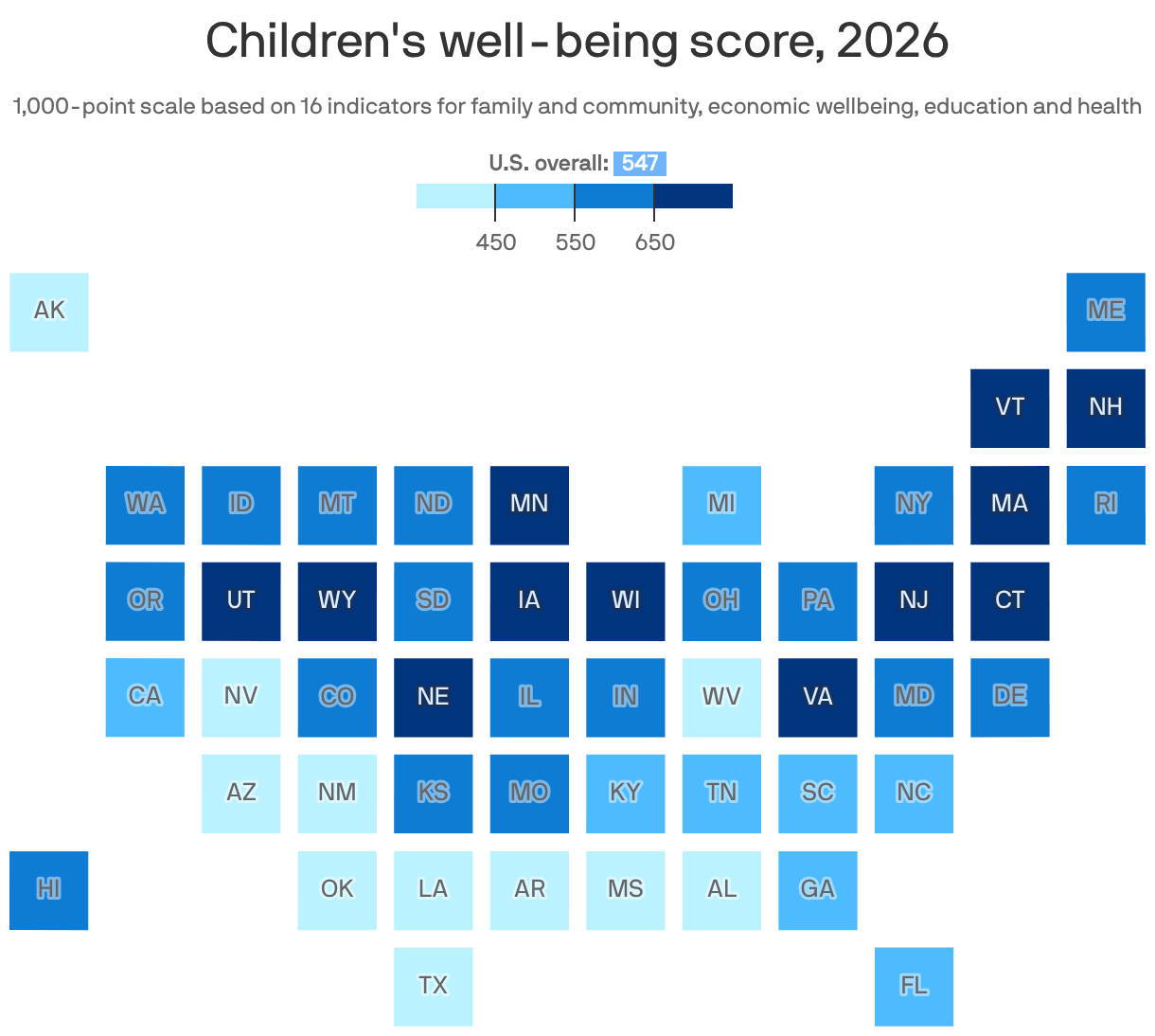
Zoom in: Michigan ranked 34th, with a score of 527.
- Our state was near the bottom of the pack in education — a big flash point in the governor's race — with a ranking of 42.
- The share of fourth graders not proficient in reading worsened from 68% in 2019 to 75% in 2024.
By the numbers: The state had 373,000 children in poverty, or 18%, according to the report, which cited 2024 American Community Survey data. The national rate was 15%.
- The report also noted 536,000 Michigan children had parents who lacked secure employment. That's a rate of 26%, compared with 25% nationally.
Yes, but: Michigan's clearest bright spot was health, where it ranked 21st nationally. The state's child and teen death rate was 24 per 100,000 in 2024, better than the national rate of 27.
Between the lines: The report highlights how government policies directly impact the lives of young people. For example, as a result of widespread investment over decades to lower the teen pregnancy rate, it fell 24% nationally over the study period and is down 80% since 1990.
- Michigan's rate also fell significantly in the study period, about 33%.
The reports' scores are only state-level. But in Detroit, with a census-estimated child poverty rate of 51%, the new anti-poverty chief has made improving youth well-being a central goal.
The bottom line: There's a "direct correlation" between "how states invest in children and how kids are doing," says Leslie Boissiere, Annie E. Casey Foundation vice president of external affairs.