Experts offer insight on tackling local poverty

Add Axios as your preferred source to
see more of our stories on Google.

Illustration: Sarah Grillo/Axios
When the next mayor takes office in January, they'll need all kinds of expertise to try and improve Detroiters' finances.
Why it matters: Poverty is a critical and complex issue here. While it's crucial to draw on longtime local experts, it can also be worthwhile to cast a wider net and see what has worked elsewhere.
State of play: Detroit residents' incomes have made significant gains, but the poverty rate still climbed recently.
- As the previous story in our poverty series showed, mayoral candidates City Council President Mary Sheffield and the Rev. Solomon Kinloch Jr. want to incentivize employers to pay living wages, among other strategies.
Caveat: It can be tough for Detroit's mayor to make change because Michigan cities are barred from instituting their own minimum wages, and national forces affect the local economy.
Between the lines: Poverty is a massive, but abstract problem. To see it as solvable, policymakers can divide it up into stages, according to Tonantzin Carmona, who studies wealth and inequality at Brookings Metro, a research program for local-level policy.
An example of stages:
🚰 Immediate relief: Eviction prevention, utility support or cash assistance — like guaranteed basic income, which has been piloted around the country and discussed in Detroit.
👶 Medium-term stability: Child care and smaller-scale assistance programs supporting a certain number of residents.
🎒 Long-term mobility: Improving educational outcomes; state-level advocacy to raise wages and funding for cities; large-scale efforts to increase homeownership; and workforce readiness.
Plus: Raising revenue to support safety net-like programs is also important, Carmona says, but that revenue shouldn't come from those who can least afford it.
- "How do we stop making poverty worse?"
- She points to work in San Francisco and Chicago to reform towing fees and fines for parking and speeding tickets, which disproportionately impact Black and brown residents.
Zoom out: Getting local funding for health and food assistance programs is as important as ever. Sweeping federal changes have put more of those costs on states and localities, says Kamolika Das, local policy director for the Institute on Taxation and Economic Policy.
- "It's going to be a ton of money to raise just to keep current local services at the existing level, and to really be able to do anything even more beneficial … you just have to think very ambitiously about what can be done," Das says.
Looking back at Duggan's efforts
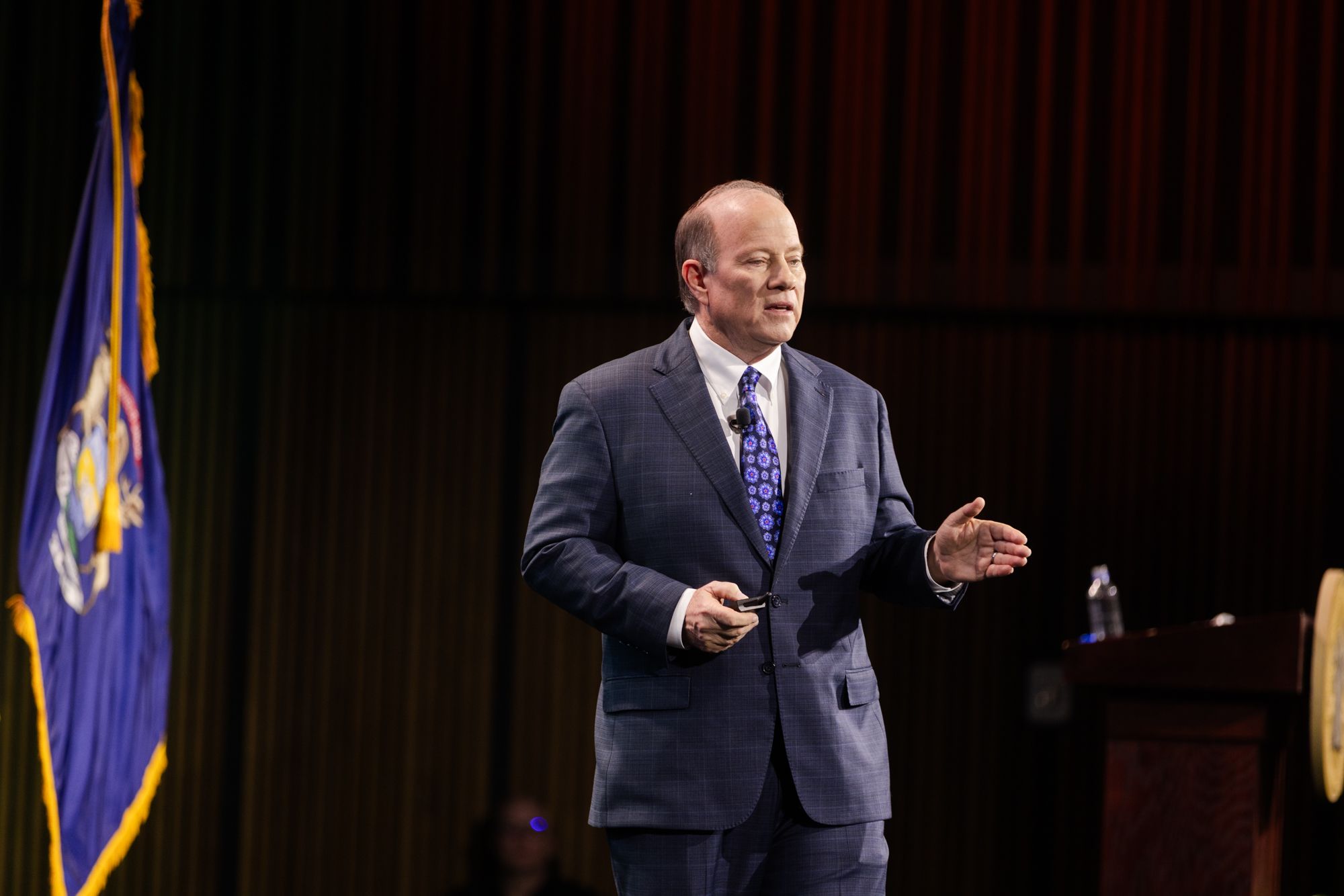
In his 12-year tenure, Mayor Mike Duggan sought to make job creation a crucial piece of his legacy.
Why it matters: As Detroit looks toward new leadership, with goals to improve wages for the lowest-income residents, it's critical to record past strategies.
- Economists have praised progress made in growing incomes, but poverty remains pervasive.
State of play: Duggan's strategies have included attracting new businesses and development, and targeting specific neighborhoods for growth.
- One cornerstone has been Detroit at Work, launched in 2017 as an all-encompassing hub to link residents with jobs. It offers 70 training programs.
Zoom in: In an interview with Axios, deputy mayor Melia Howard pointed to a "critical" jobs access strategy first used at Stellantis' east-side plant in 2019, and then replicated when other companies like Amazon came to town hiring.
- With workforce readiness assistance through Detroit at Work, employers agreed to give city residents first priority for applying to jobs before the larger public.
Between the lines: The city also spent pandemic recovery dollars on programs including Skills for Life, paying participants to work for the city while getting training, high school diplomas or GEDs; other earn-while-learning opportunities; home repair; and homelessness and foreclosure prevention.
What they're saying: "The programs that we have instituted, I don't believe show that we are a tale of two cities," Howard says. "You can see Detroiters helping each other every single solitary day with program[s] and opportunities."
The other side: Critics like Detroit People's Platform argue Duggan's overall strategy embraced a "status quo" that privileged the powerful with tax incentives.
- The group says Detroit has perpetuated an uneven recovery across neighborhoods and hasn't done enough at a larger scale for Black Detroiters living outside the downtown core.