Charted: The pay gap for Detroit residents vs. commuters

Add Axios as your preferred source to
see more of our stories on Google.
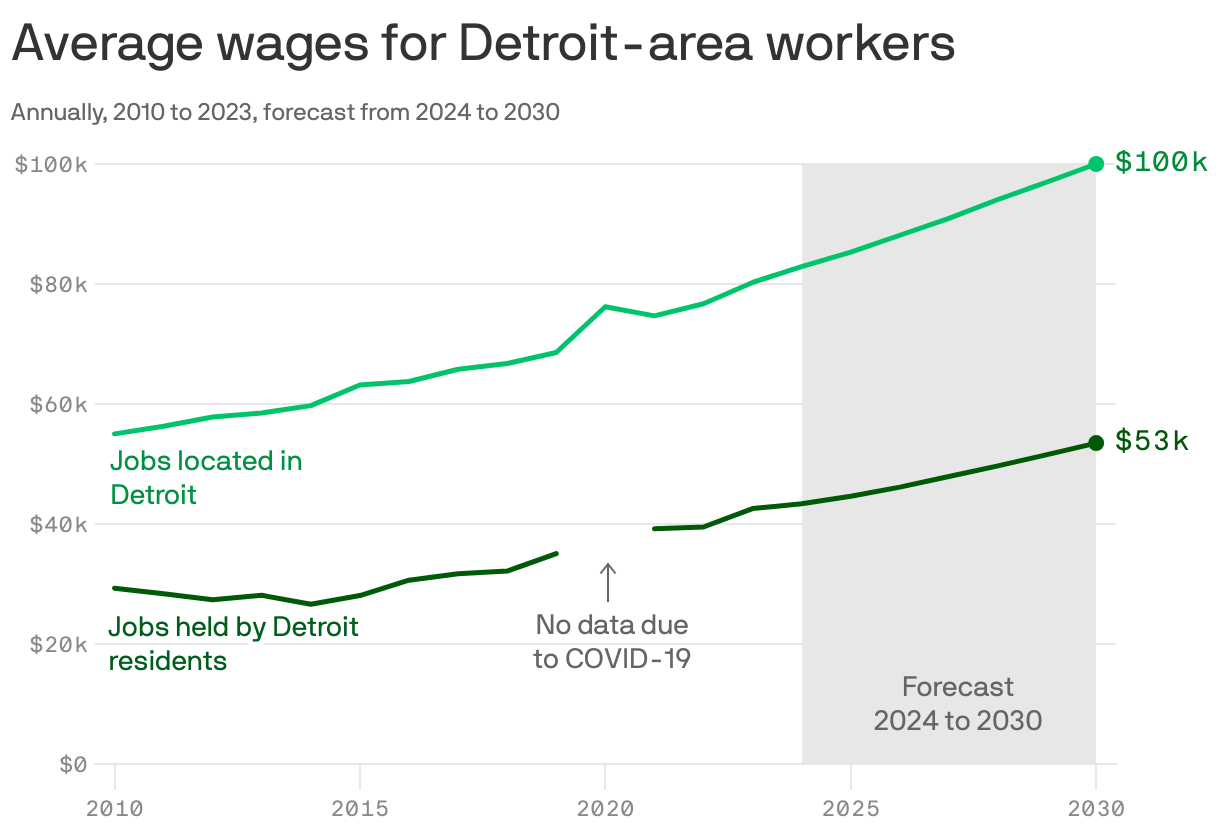
As poverty remains a major local issue, another way of measuring pay inequity is to look at the salaries of commuters vs. Detroit residents.
Why it matters: Well-paying jobs are often held by people who live in the suburbs and commute into Detroit — while the salaries of Detroit residents, regardless of where they work, are lower.
- This reality isn't new, but rather is an ongoing theme caused by longtime economic, discriminatory and educational disparities.
By the numbers: More than three-quarters of workers employed in Detroit as of 2021 lived outside the city, per census data cited by the Workforce Intelligence Network.
- Meanwhile, nearly 70% of Detroit-resident workers traveled outside the city for jobs.
What they're saying: "There's a big difference between the wages earned by employed residents of Detroit and the wages that people who work in the city earn," U of M economic forecaster Gabriel Ehrlich tells Axios.
- But the most recent forecast projects a faster rate of income growth in 2025-30 for city residents (3.6% annually on average) than for jobs located in the city (3.2%).