Detroit mayoral hopefuls tackle property tax relief

Add Axios as your preferred source to
see more of our stories on Google.
Illustration: Maura Losch/Axios
Most Detroit mayoral candidates see providing residents relief from burdensome property taxes as a priority — but they differ on how to do it.
Why it matters: Detroit's disproportionately high property taxes are seen as a barrier to housing affordability, building wealth through homeownership and attracting new residents.
- They stem from historical challenges with low property values, poverty and population loss.
Zoom in: As of last year, Detroit homeowners pay 67 mills in property taxes, versus 33-37 in Grand Rapids, 53 in Dearborn and 38 in Royal Oak, per the state.
Case in point: A home in Detroit with a taxable value of $100,000 pays an estimated $6,900 as of 2023, per the state's property tax estimator.
State of play: Decreasing the weight of property taxes while maintaining or growing the city's revenue is a complex puzzle.
- We asked mayoral hopefuls about their plans. Here are some of the plans of those who responded.
Caveat: Big changes to Detroit's taxes proposed by candidates mostly require state legislative approval — a substantial, though not impossible, barrier.
Creating new revenue
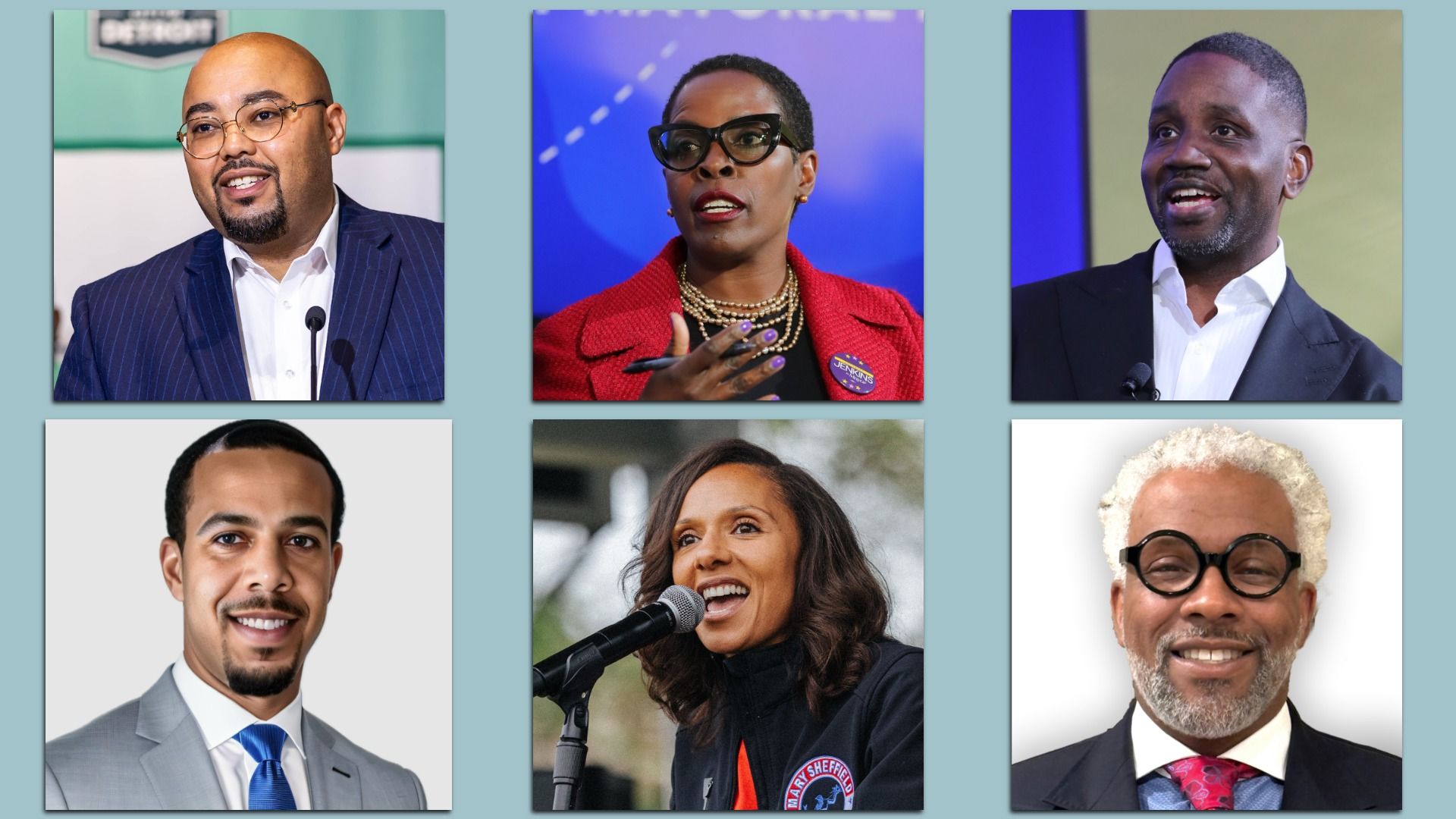
City Council President Mary Sheffield advocates for studying potential new taxes, including on sales or entertainment events. As Detroit's pandemic relief dollars end, the importance of bringing in new funding "cannot be overstated," Sheffield's campaign writes.
- Former nonprofit CEO Saunteel Jenkins proposes exploring "all options" to increase revenue while reducing property taxes, including potentially a 1% local sales tax — while Sheffield has brought up a 0.5% one.
- City Council member Fred Durhal III would explore various new streams of revenue.
Nearly all candidates in the race aim to increase tax revenue through attracting new businesses, creating more jobs, growing the population and/or encouraging new development.
- Sheffield would add two permanent jobs focused on growth, one on population and one on city revenue, while Jenkins would hire a chief growth officer focused on those issues.
- Durhal notes that the city should diversify its industries, including emerging ones such as green energy and tech.
- However, the Rev. Solomon Kinloch Jr. cautioned in a recent statement that while growing the tax base can help reduce taxes a bit, it's not enough for "meaningful relief."
Changing property taxes
After a previous property tax reform idea stalled at the state level, some candidates still want to lower taxes on homeowners and active developers while discouraging speculators sitting on vacant land.
- Durhal's Homeowner and Business Property Tax Relief Plan would tax idle land at higher rates, with reductions for homeowners and properties getting redeveloped. He'd also look to institute a tax on blighted properties and accumulate a fund to help lower property taxes stemming from city debt.
- Businessman Jonathan Barlow's plan also says he would advocate for land value tax reform.
Sheffield would look to offset losses from property tax decreases with more penalties for blighted property and speculators, but wants more investigation before advocating for any big changes that require state legislation.
- Candidates including Sheffield, Kinloch, Durhal and attorney Todd Perkins also want to work on the city's often-criticized property assessment process.
Perkins' main goal on property taxes is to lower the burden for residents and small businesses "while ensuring that corporations contribute their fair share to the city's future."
Kinloch's campaign said in a statement that he would advocate for state-level legislative changes while focusing on individual-level relief through tax credits for first-time homebuyers, for those who lost homes due to being overtaxed and/or for making repairs to old homes.
Durhal and Kinloch have both proposed working with the state to relieve the city of its school debt millage, which is "like an anchor around the city's ankles," as Citizens Research Council of Michigan president Eric Lupher put it to Axios.
The bottom line: Most candidates see providing property tax relief as a top priority — the issue is whom voters see as the best choice to get it done.