Detroit mayor's race sit-down: Fred Durhal

Add Axios as your preferred source to
see more of our stories on Google.
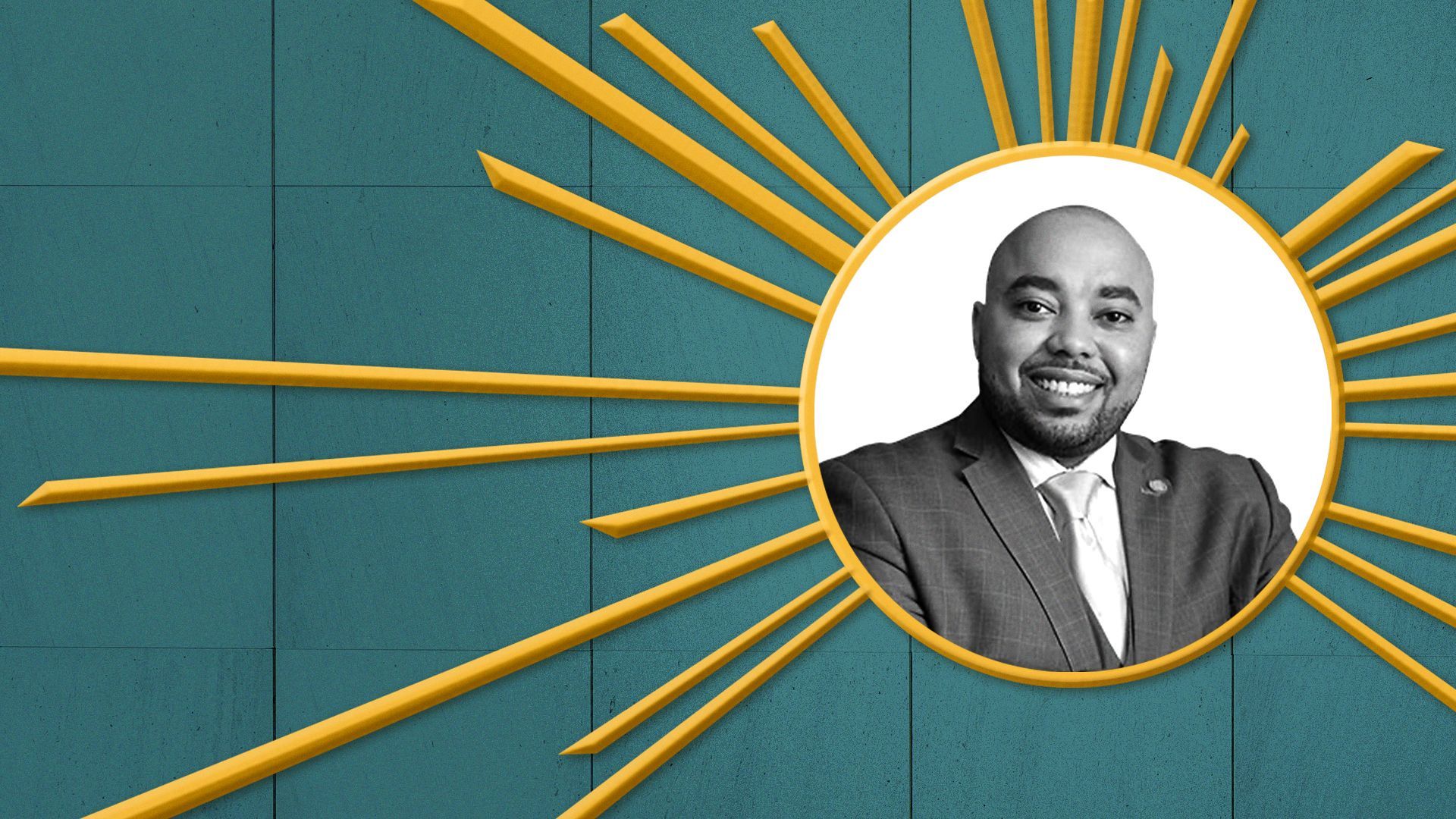
Photo illustration: Axios Visuals. Photo: Courtesy of City of Detroit
If City Council member Fred Durhal III becomes mayor, he wants a "Main Street" in every district.
The big picture: This is the third in our series of interviews looking at announced mayoral candidates' policy priorities. First came Mary Sheffield and Saunteel Jenkins.
- It's still early in the race to succeed three-term mayor Mike Duggan, meaning any candidate can still make a difference in attracting donors and capturing voters' minds.
- The nonpartisan race has its primary in August and general election in November.
Flashback: Durhal and his supporters see the Detroit native's history in Lansing as a steppingstone to deliver state-level law changes and funding opportunities for his city.
- Durhal was a state representative from 2015-2019, when he dealt with budgetary issues in the House Appropriations Committee, before running for City Council in 2021.
- His father, Fred Durhal Jr., is also a former state representative and ran for mayor in 2013.
Driving the news: Durhal talked with Axios Detroit about his policy goals, including tax reform, rebuilding neighborhoods and regional transit.
- He wants to see "comprehensive tax reform," he says, offsetting the considerable property tax burdens for residents and businesses without forcing the city to lessen its revenue. He also would aim to streamline permitting and other processes to make doing business easier.
- One of his top goals is expanding main commercial corridors in each of the city's districts to make neighborhoods more dense, desirable and walkable. That density also involves affordable housing and pathways to homeownership.
Zoom in: "We want to increase walkability in our communities, where folks have access to fresh groceries, have access to a pharmacy within 1 mile of their home, but those commercial corridors will also create an environment for small businesses," he says. "Small businesses are catalysts to creating generational wealth."
- To help fund corridor growth, he would aim to expand the Downtown Development Authority, which collects taxes to support development and business growth, "by changing the definition and its boundaries to feed out into our commercial corridors."
Working with county-level governments to push regional transit plans forward is a priority for making Detroit a world-class city, according to Durhal.
- "We want to make sure we increase the efficiency of DDOT, make sure that the buses are running on time, improve the rider experience," as well as putting more buses on the road and increasing driver pay, he says.
He says his administration would dive into public safety, seeking a sustainable funding solution for the city's community violence intervention efforts.
State of play: One theme of the mayor's race is going to be big business and community — balancing the varied interests and needs of those affecting and affected by how Detroit's landscape is evolving.
- On this, Durhal says: "You've got to be sensitive to the business community and our community as a whole. … I've been unapologetic about supporting tax incentives, because my core belief is job creation. Folks put a narrative out there that it is downtown versus the neighborhoods, when in fact, we're all one Detroit, and we need both to thrive.
- "But we want folks to feel like this city is for them as well, that they can visit downtown and also still afford to stay in safe, clean neighborhoods."
The bottom line: Asked about a quality he brings to the table that makes him unique from the other candidates, Durhal says:
- "I'll be the only candidate in this race that can say I served on City Council and in the state Legislature, and that comes with a lot of coalition building." He emphasized working with both Democrats and Republicans.
- "Last, but not least, we'll bring a more familial feel back to city government," adds the father of two.