Detroit mayor's race sit-down: James Craig

Add Axios as your preferred source to
see more of our stories on Google.
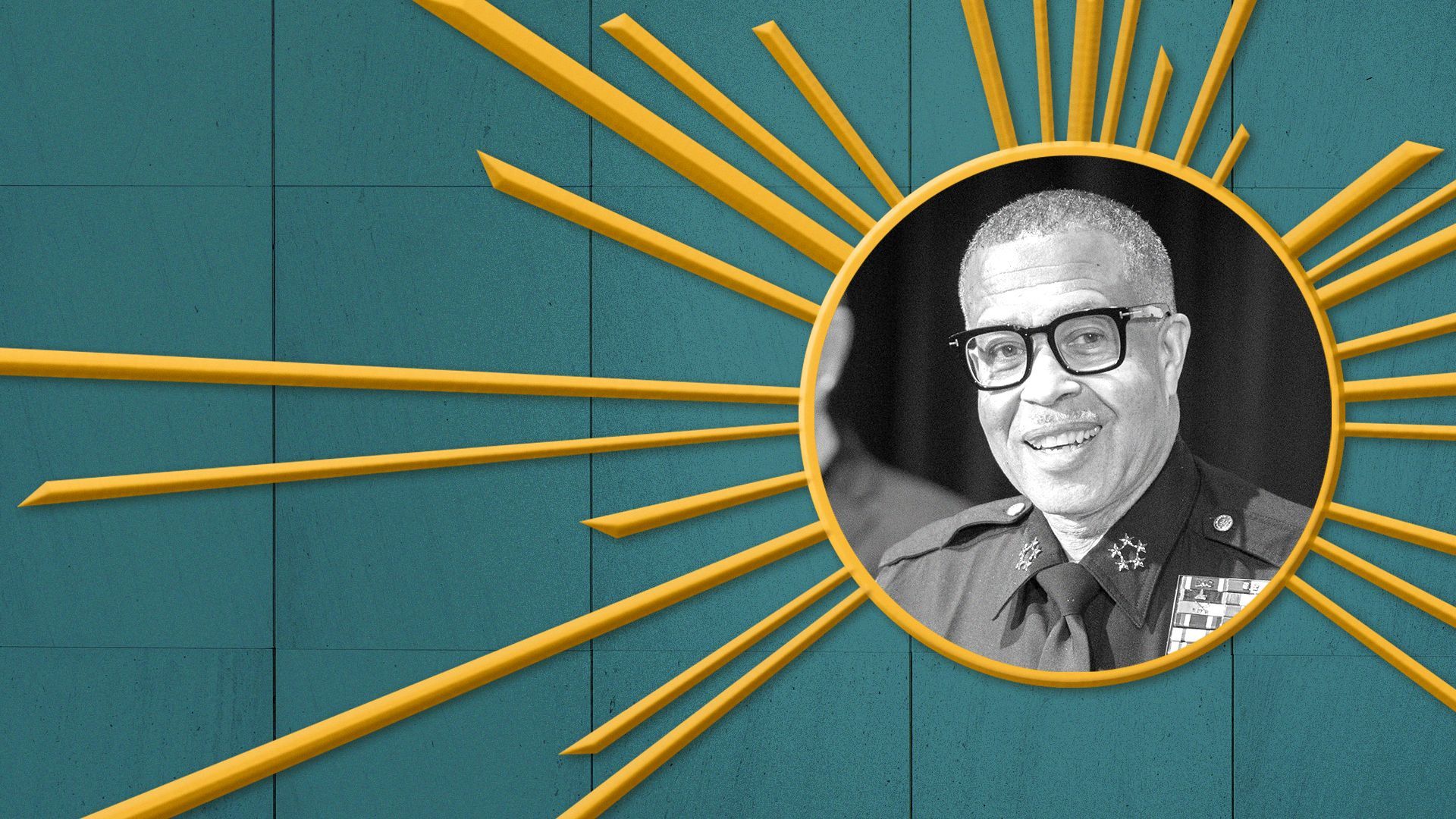
Photo illustration: Axios Visuals. Photo: Courtesy of the city of Detroit via Flickr
If elected mayor, former police chief James Craig would enlist an independent party to take a deep dive into the city's financial health.
The big picture: Axios' interview with Craig is the latest in our series interviewing mayoral candidates on their policy priorities.
- The race is heating up, with the April 22 candidate filing deadline nearing. The primary is in August.
Context: Craig is running as the only stated Republican in a Democratic stronghold, though the race is nonpartisan and Craig has name recognition. Plus, he says he's running as a native Detroiter and public servant and has experience working well across parties.
Flashback: He started his police career in the city in 1977 and served on other police forces for decades, including as chief, before returning to Detroit as chief from 2013-2021.
- Craig helmed the police department as it recovered from the bankruptcy, improved morale and sped up response times, he says.
- He ran for governor in 2022, an effort derailed by alleged fraudulently collected signatures on campaign paperwork. He dropped a bid for U.S. Senate last year.
State of play: Craig spoke with Axios about his leadership history and his plans for neighborhood policing, small businesses and federal funding.
- He says he wants to expand on the work Mayor Mike Duggan has done.
What he's saying: When it comes to finances, he would use his experience rooting out waste in government to increase efficiency and use resources better.
- "One of the first things I'd do as mayor is launch an independent forensic audit of the financial health of the city," he says, considering the city's past difficulties. "Bring in a firm that will not only report out on the health, but come back with recommendations and then … report that out to our community."
Zoom in: On public safety, he would start out with assessing the needs of the police department. He'd focus on trust and work to strengthen community-specific neighborhood policing.
- He also highlighted the creation of Project Green Light under his watch. The program protects customers and small businesses from crime and deters criminals, but it has been criticized for asking businesses to pay to receive services.
Between the lines: Craig hears residents say they feel left out of the city's momentum and says thriving requires focusing on overlooked neighborhoods.
- Though he wants to work with big developers like Dan Gilbert and Ford, he would also focus on small-scale developers and businesses that need help getting through bureaucracy, zoning and red tape.
Plus, Craig would take a strong stance on education and bring in his experience working with students while policing in Los Angeles and Cincinnati.
- He also emphasized his ability to work with President Trump's administration to help get the city federal funding. Craig endorsed Trump for 2024, and Trump praised him over his handling of 2020 Black Lives Matter protests.
- He called Trump an innovator and risk taker and said he likes that Trump has moved quickly to solve problems.
Context: One theme of the mayor's race is big business and community — balancing the varied interests and needs of those affecting and affected by how Detroit is evolving.
- "We have to bring people to the table … and have open discussions," Craig says. "The tension happens when a city makes decisions unilaterally and maybe just focuses on 'we want the development' and that's it. No, bring the community in. That's who we work for."
The bottom line: We asked Craig about a quality he would offer as mayor that is different from other candidates.
- "I bring executive-level leadership. I'm the candidate who can continue to bring stability to the city," he says, adding that people want to know who can continue the work of Duggan's administration and not regress.
Go deeper: Read our other sit-downs with candidates Fred Durhal III, Mary Sheffield, Saunteel Jenkins, Solomon Kinloch Jr., Todd Perkins, Jonathan Barlow and Rogelio Landin.