Mayor Mike Duggan presents his last budget

Add Axios as your preferred source to
see more of our stories on Google.
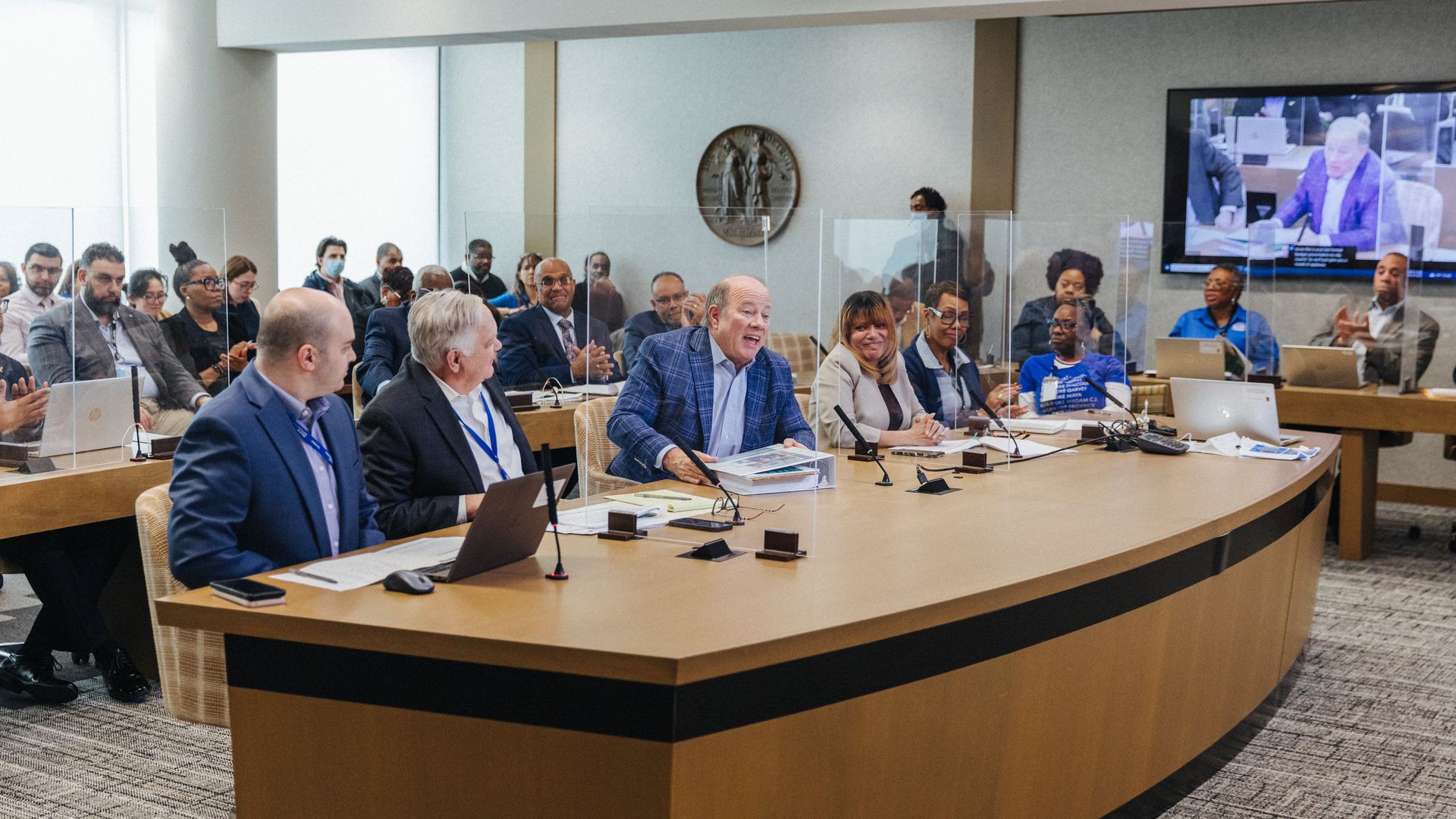
Mayor Mike Duggan presents the 2025-26 budget to Detroit City Council. Photo: Courtesy of the city of Detroit via Flickr
Mayor Mike Duggan presented Detroit's 12th balanced budget plan on Friday — his final as mayor as he sets up the city's finances for a yet-to-be-decided leader to take over next year.
Why it matters: Duggan's successor will take the helm as the city grapples with changing financial realities: the end of $827 million in pandemic rescue funds, plus continuing pension debt payments that began last year, as well as addressing poverty and high property taxes.
The big picture: Rating agencies have praised the city's conservative spending practices under Duggan as it has worked to fix its finances following the 2013-14 bankruptcy.
- How the next mayor will shape the city's previously fragile financial health is a big question mark.
The latest: Duggan's team presented its plans Friday for next fiscal year's budget (July 2025-June 2026), recommending increases in spending on buses and homelessness while reducing property taxes.
- City Council will dig into the particulars of the budget before voting on it in April.
Here are the top takeaways from Duggan's plan for how Detroit should spend its money over the next year, using its growing budget, as well as previous-year surplus:
Public transit: The administration's biggest targeted spending increase is bumping up its Detroit Department of Transportation spending by $20 million to a total of $210 million.
- Pressure from advocates and riders to improve ongoing problems with bus system performance continues.
- Duggan expects to ramp up from 178 buses on the road per day to 220 a day by January. He also wants to hire 63 more drivers, which would bring the total to 690.
Homelessness: After bumping up homelessness services funding by $6 million last year on top of $6 million in federal funding, he's proposing adding $2.4 million more. That would help add more shelter beds and hire more outreach workers.
- "As we have learned in the tragic circumstances this month, we need to do more," Duggan said, referencing the recent deaths of two children experiencing homelessness.
Community violence intervention: $4.4 million would keep Detroit's community violence intervention (CVI) program going. It started with American Rescue Plan Act funds, but those are ending.
- The program pays community-led groups to help reduce shootings and homicides by intercepting issues before they become violent, mediating conflicts, and mentoring people who may be at risk of getting involved with violence.
- Long-term CVI funding via the state Legislature hasn't come through yet, and Duggan asked members of council to help push for it.
Plus, Duggan proposes a 3-mill property tax cut that would lower the levy on a $100,000 home by $150.