Detroit wants solar proposal passed ahead of Trump inauguration

Add Axios as your preferred source to
see more of our stories on Google.
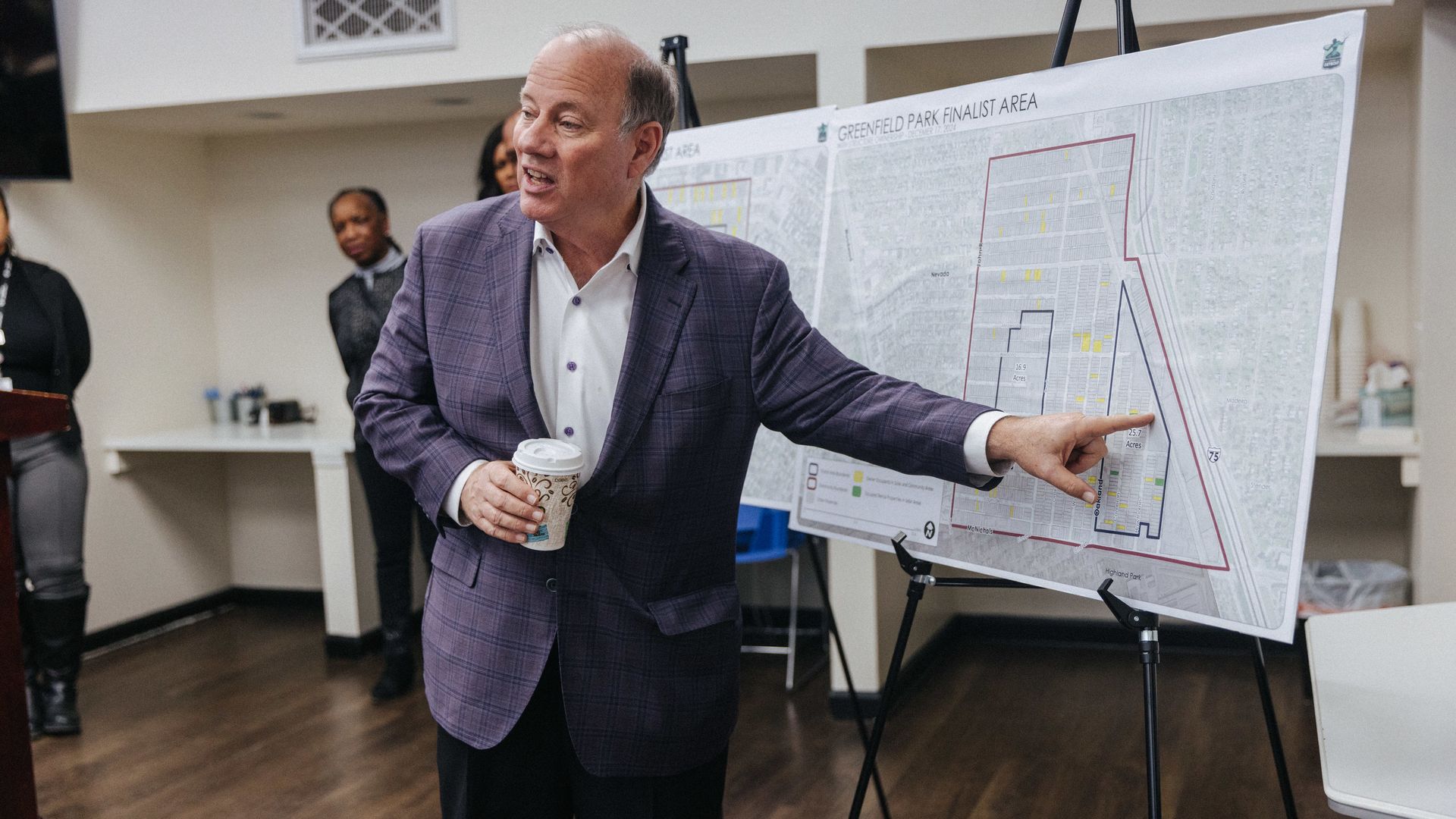
Mayor Mike Duggan speaks at a recent solar field announcement event. Photo: Courtesy of the City of Detroit via Flickr
With concerns about the new Trump administration potentially clawing back federal climate funding, City Council committee members want a solar field proposal to zoom through approvals before Trump takes office on Jan. 20.
The big picture: City Council could vote as soon as Tuesday on the second phase of the city's neighborhood solar field plan. Mayor Mike Duggan's administration says the proposal relies on federal tax credits that could be threatened if contracts aren't locked in as soon as possible.
State of play: Monday, a committee considered the plan to build more ground-mounted solar arrays in predominantly vacant sections of Detroit neighborhoods.
- Trisha Stein, Duggan's chief strategy officer, told the committee that Trump has said he may rescind unspent climate-related funding from President Biden's Inflation Reduction Act. That could include a 30% tax credit the solar fields' developers could use if their contracts with the city are approved, a city spokesperson tells Axios.
- "It is uncertain and uncharted," Stein said.
Based on the input, committee vice chair Scott Benson and member Mary Waters decided to fast-track the three solar-related measures for a potential vote Tuesday. The committee's chair, Gabriela Santiago-Romero, was absent.
Between the lines: Benson originally considered giving more than a week for council members to go over two complex 35-year contracts with companies developing the solar fields — DTE Energy and Boston-based Lightstar — and a resolution to move the project forward.
- But when Waters emphasized concern about the Trump clawbacks, Benson agreed and told Duggan's staff, "I will caution that there needs to be immediate outreach to colleagues to assure they're comfortable with making a vote on this tomorrow."
Catch up quick: City Council approved the plan's first phase this summer despite dissent from a couple members, including President Mary Sheffield. It included 104 acres in three areas — Gratiot/Findlay, State Fair and Van Dyke/Lynch.
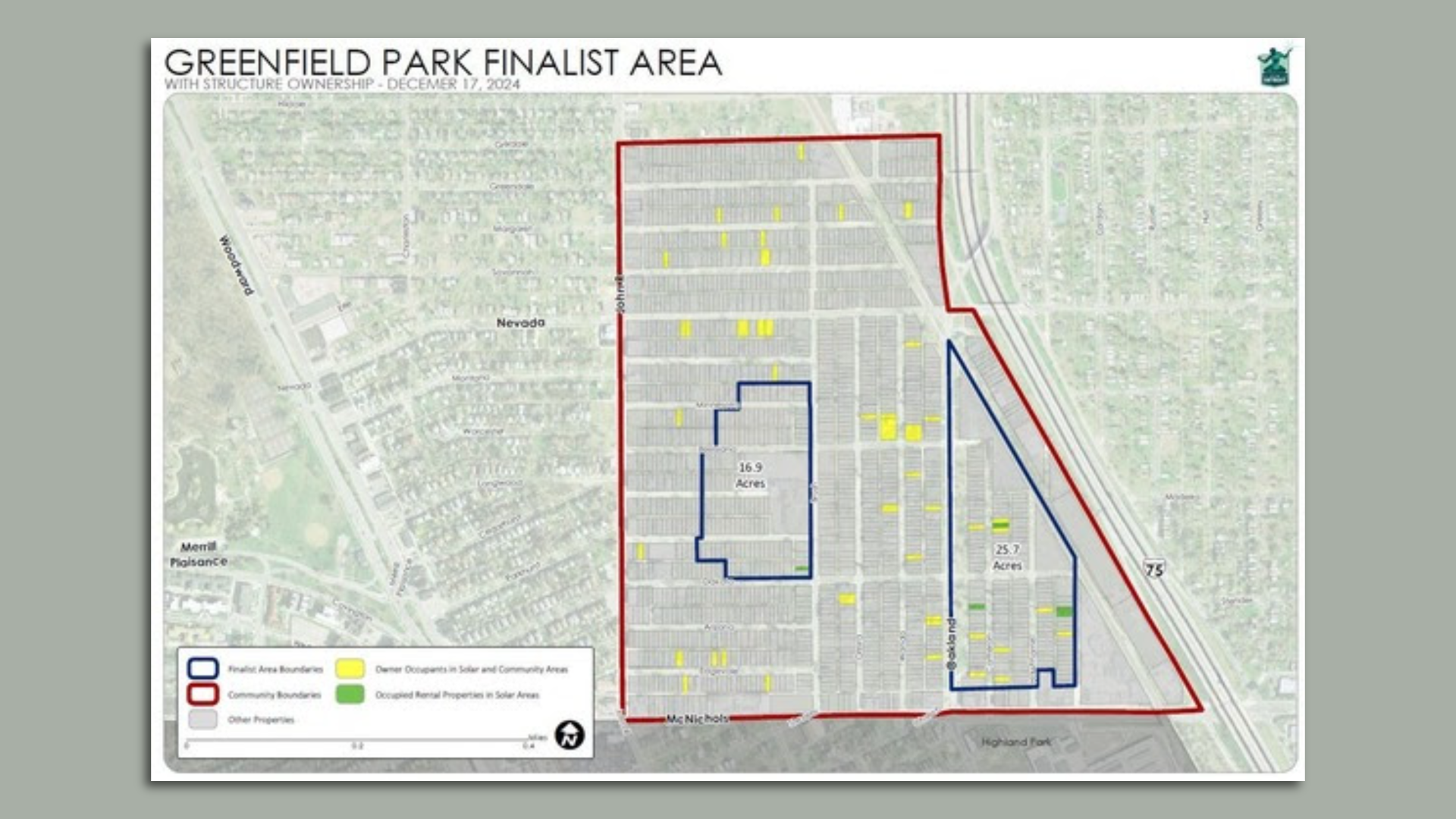
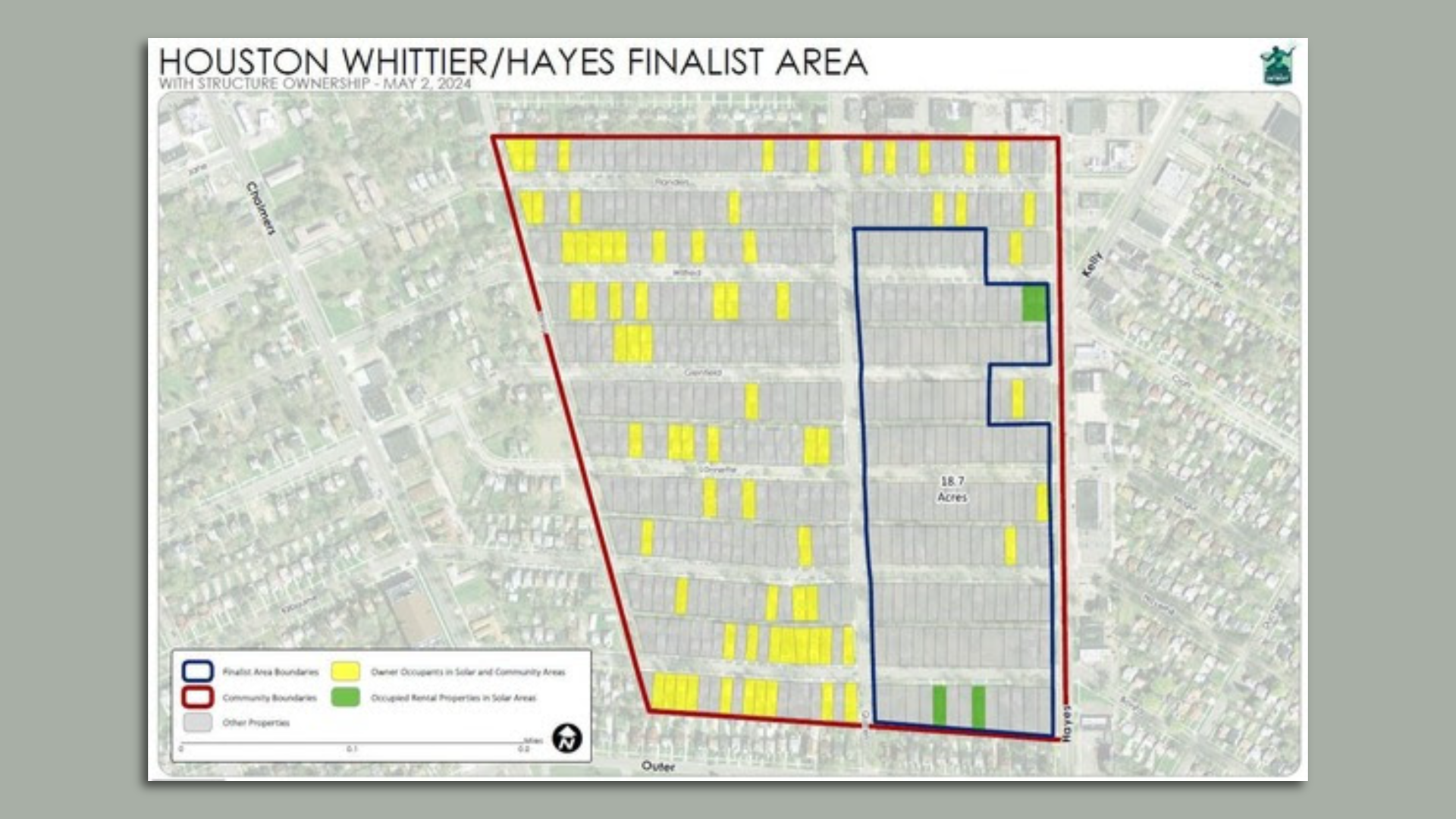
- City Council is now considering the second and final phase: 61 acres in two east-side areas, Houston-Whittier/Hayes and Greenfield Park.
How it works: The city says the solar arrays will generate enough clean energy to power 127 municipal buildings, with the city spending $20 million up front.
- Resident groups volunteered their areas to house the new solar development in exchange for community benefits, including $15,000 to $25,000 in energy-efficiency improvements per home for the 106 households clustered around the second-phase solar fields.
- The 11 owner-occupied homes inside the solar footprints signed voluntary buyouts. Duggan said recently that if homeowners didn't want to leave, their blocks were carved out to not be included in the solar fields so they could stay.
- The city is paying to relocate renters and using eminent domain for vacant and blighted properties.