Metro Detroit home sales fall 11% on rate cut expectations

Add Axios as your preferred source to
see more of our stories on Google.

Illustration: Shoshana Gordon/Axios
Metro Detroit home sales fell more than 11% in August compared with the same time last year, according to the latest housing report from RE/MAX of Southeastern Michigan.
Why it matters: The decline from the previous year is likely due partly to buyers and sellers adopting a wait-and-see approach on interest rates, Jeanette Schneider, president of RE/MAX of Southeastern Michigan, tells Axios.
State of play: The Federal Reserve is widely expected to lower interest rates at its meeting next week.
- Many buyers and sellers are waiting to see how a Fed cut would impact future mortgage interest rates, which the Fed can influence but doesn't set.
- The decline could also be attributed to the usual autumn slowdown coming a bit early, Schneider added.
Between the lines: Buyers who are not urgently in need of a house may postpone their moving plans to see if they can secure a lower rate.
- Homeowners who want to move but feel locked into low mortgage rates may hold out until they see enticing low rates.
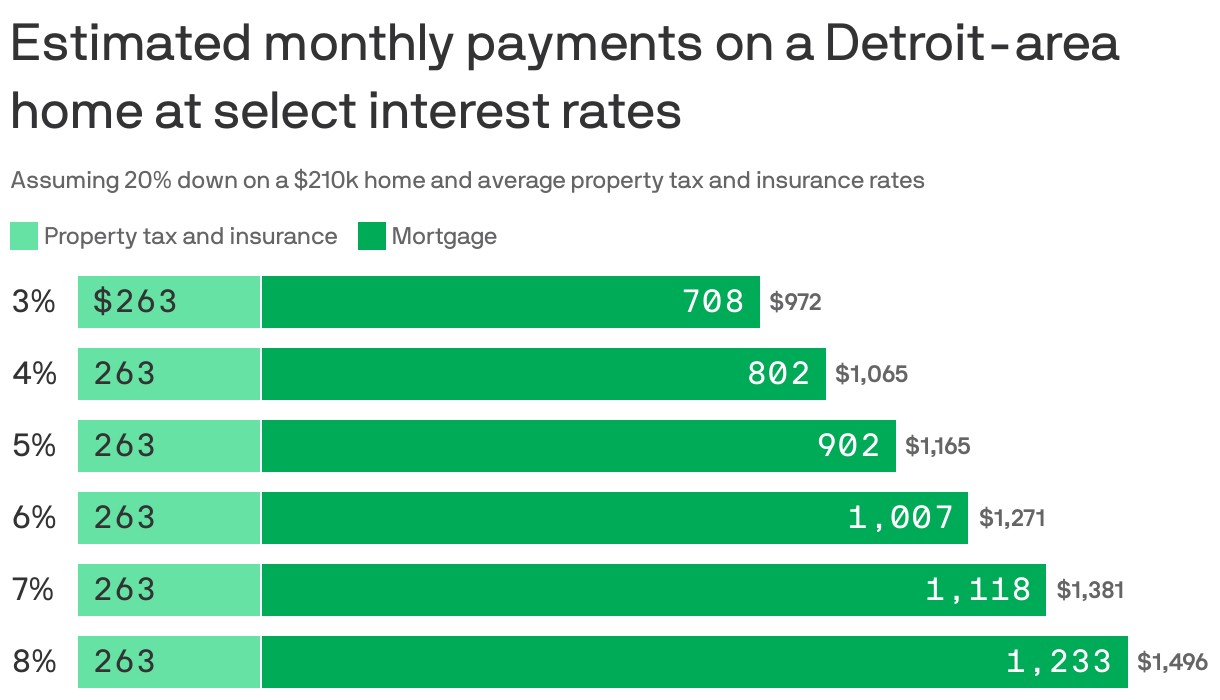
Context: The Fed's action likely won't result in any instant lowering of mortgage rates because the market has already baked in the expected change, but it's still likely to eventually lead to lower rates, according to CBS News.
- As of Monday, the average rate for a 30-year fixed mortgage was 6.74%, according to CNN.
By the numbers: In Metro Detroit, more than 3,500 homes were sold in August, down from nearly 4,000 the same month last year, according to RE/MAX.
- However, the region saw just eight fewer home sales in August than it did the previous month in July.
- The median sale price was up 5.5% from $317,500 last August to $335,000 last month.
What's next: Lack of home inventory continues to present a problem. Metro Detroit has a 1.9-month supply of homes, whereas a six-month supply would be considered balanced, per RE/MAX.
- "It's been leaning toward a sellers' market for quite some time," Schneider says.
- A dearth of new construction — especially affordable new construction — contributes to the problem, as do homeowners locked into lower interest rates refusing to sell and more people choosing to age in place instead of moving or downsizing, according to Schneider.