Highway project threatens historic Detroit recording studio

Add Axios as your preferred source to
see more of our stories on Google.
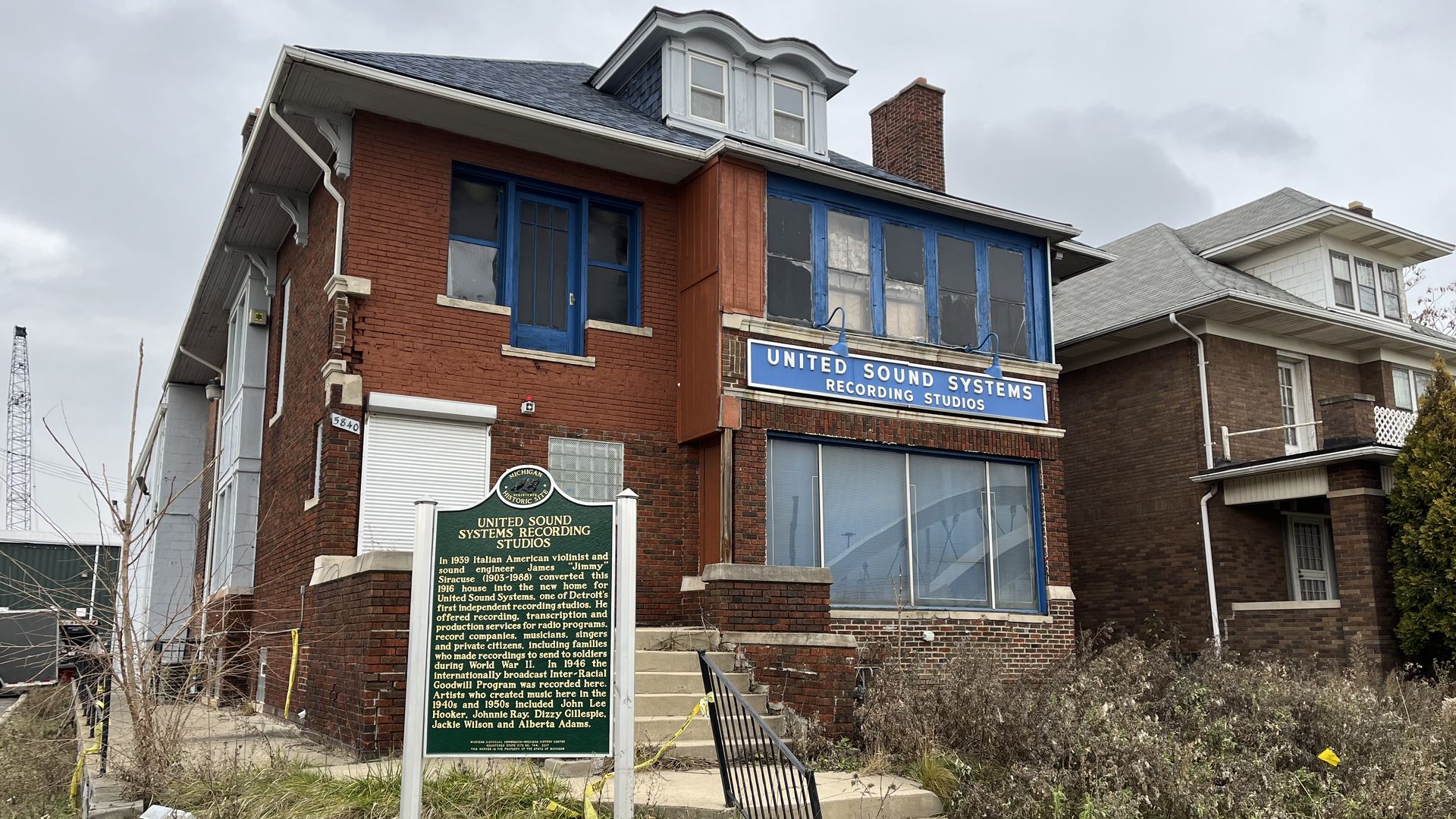
United Sound Systems Recording Studios on Second Avenue near the Cass Corridor and Wayne State. Photos: Joe Guillen/Axios
A historic recording studio that MDOT wants to commemorate with a new public sculpture remains endangered by the department's own highway modernization project.
Driving the news: United Sound Systems Recording Studios, one of the city's first independent recording studios, is a singular artifact of Detroit's music history.
- The roster of artists who recorded there includes John Lee Hooker, George Clinton, the Rolling Stones, Miles Davis and Marvin Gaye.
- The studio stands in the path of MDOT's ongoing I-94 modernization project.
Why it matters: While MDOT risks razing part of the city's cultural heritage near I-94, the department is simultaneously attempting to repair damage done decades ago when the Black Bottom neighborhood was wiped out for the construction of I-375.
- A growing chorus of critics is now questioning whether I-375's reconstruction will truly make up for sins of the past — and if tearing down another historic site is the right way to do it.
Catch up fast: Efforts to save the studio from the highway project go back more than a decade.
- MDOT bought the building, 5840 Second Ave., and an adjacent lot for $1.7 million in 2018.
- The purchase was announced as part of a preservation plan that would move the studio and put it up for public auction.
Yes, but: Five years later, local music history advocates say plans to save the studio remain murky.
What they're saying: "The real story is MDOT hasn't decided what they're going to do with United Sound Studios," Detroit Sound Conservancy board member Janis Hazel — who once watched her cousin, Eddie Hazel, record there with Parliament-Funkadelic — tells Axios.
Between the lines: Hazel said she participated in three MDOT community engagement meetings this year.
- At the August meeting, Hazel says she proposed integrating Detroit's music history into the Cass Avenue bridge sculpture. But ultimately the Sound Conservancy withdrew from the planning process because it felt MDOT's outreach was insincere.
- "I find their public engagement has been abysmal," she says, equating it to I-375 outreach.
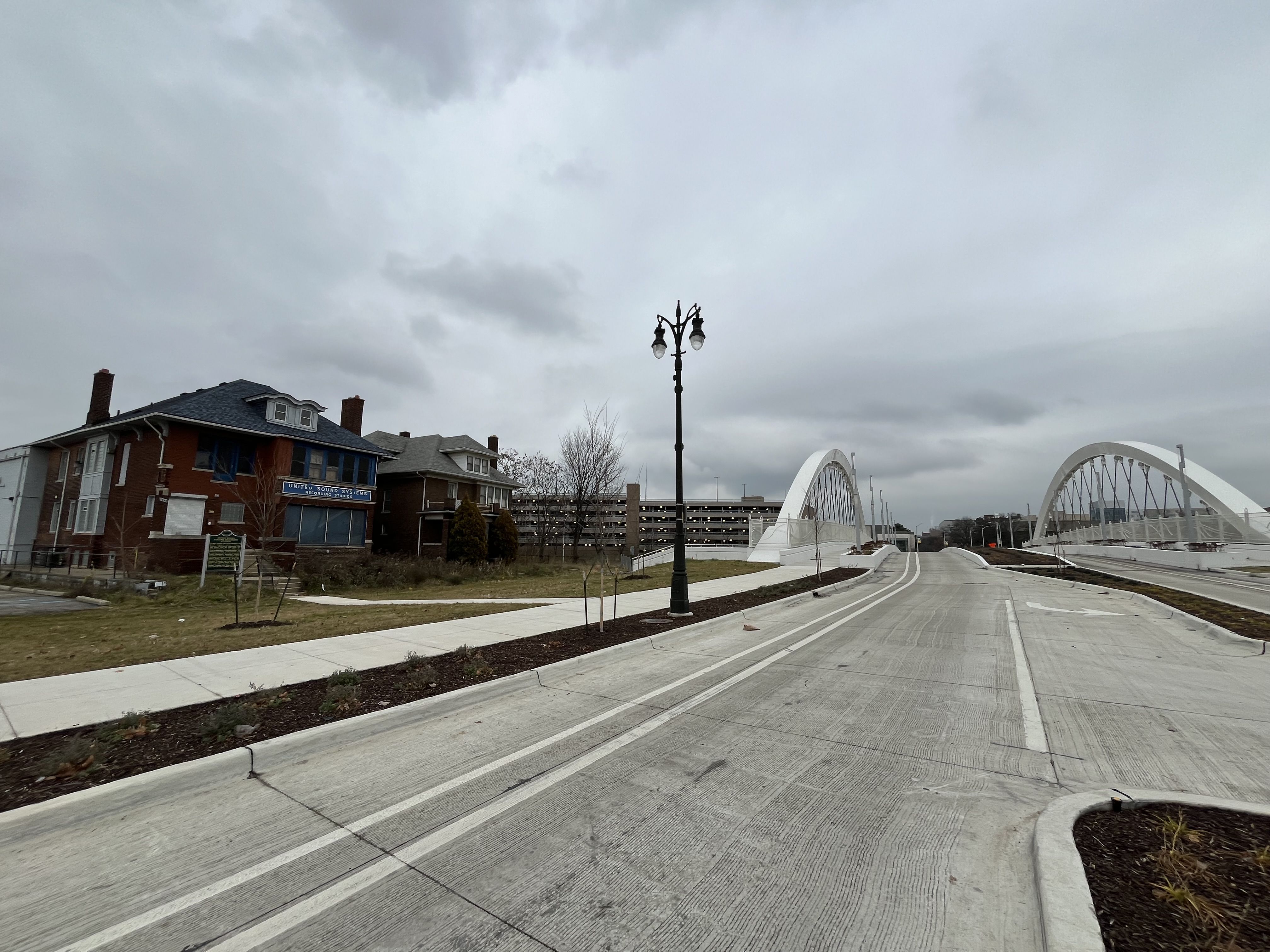
Meanwhile, MDOT just opened a new Second Avenue bridge right next to the building.
The other side: MDOT is working with the State Historic Preservation Office to find a new owner for the studio, spokesperson Rob Morosi tells Axios.
- The department has reached about 1,200 residents through more than 100 meetings with various community groups from 2017-22, Morosi says. The decision to buy the studio stems from feedback in those meetings.