Detroit's winters are warming up


Add Axios as your preferred source to
see more of our stories on Google.
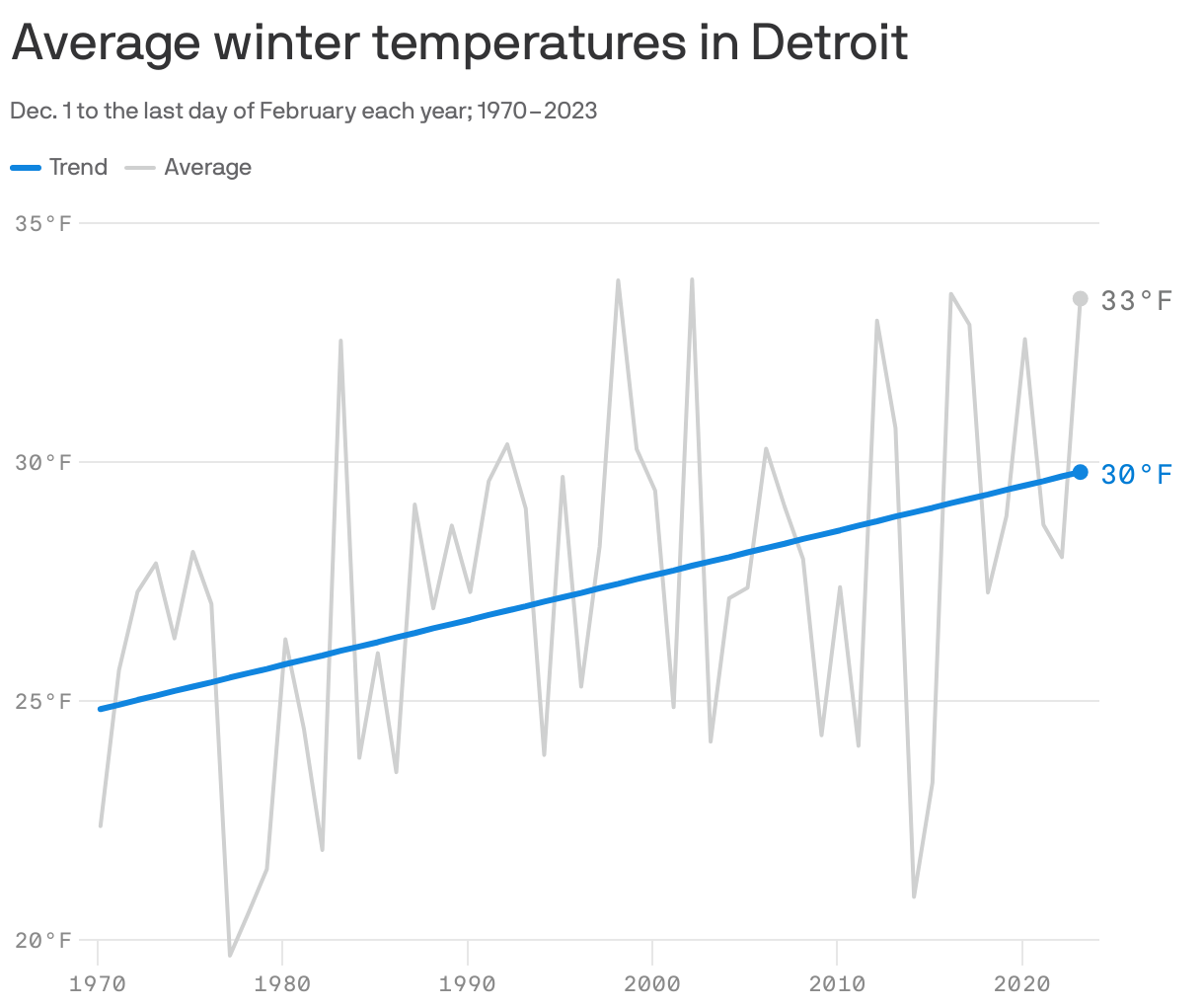
Friday's snowstorm notwithstanding, this winter has been historically mild.
- The 2022-23 winter has been Detroit's seventh-warmest on record, with average temperatures from December-February of 33°F — 11° warmer than those in 1970.
- That's according to a new analysis of National Oceanic and Atmospheric Administration numbers from Climate Central, a nonpartisan research and communications group.
Why it matters: Warm winters can exacerbate drought, wreak havoc on crops and gardens and spell disaster for towns built around snowy pursuits.
Zoom out: Winter is the fastest-warming season for much of the continental U.S.
- About 80% of the country now has at least seven more winter days with above-normal temperatures compared to 1970, per Climate Central.
- Seasonal snowfall is declining in many cities — though heavy snowstorms can still happen when temperatures are cold enough.
Driving the news: Not only are winters warming overall, but cold snaps are becoming less severe and shorter in duration, the latest research shows.
- That's partly because the Arctic is warming at three to four times the rate of the rest of the world.
- In other words, our global refrigerator is warming up, making it harder to get record-breaking cold for days on end.
🖼️ The big picture: Michigan could become a "climate haven" for newcomers looking to escape extreme weather near the coasts, MLive reports.
- Experts predict the Great Lakes region will avoid the worst outcomes of climate change, potentially making it an attractive locale for decades to come.
The bottom line: Over the coming years, most of us can expect to feel climate change's effects most acutely during the winter months.