Iowa pregnancy hypertension rate jumps 77%

Add Axios as your preferred source to
see more of our stories on Google.
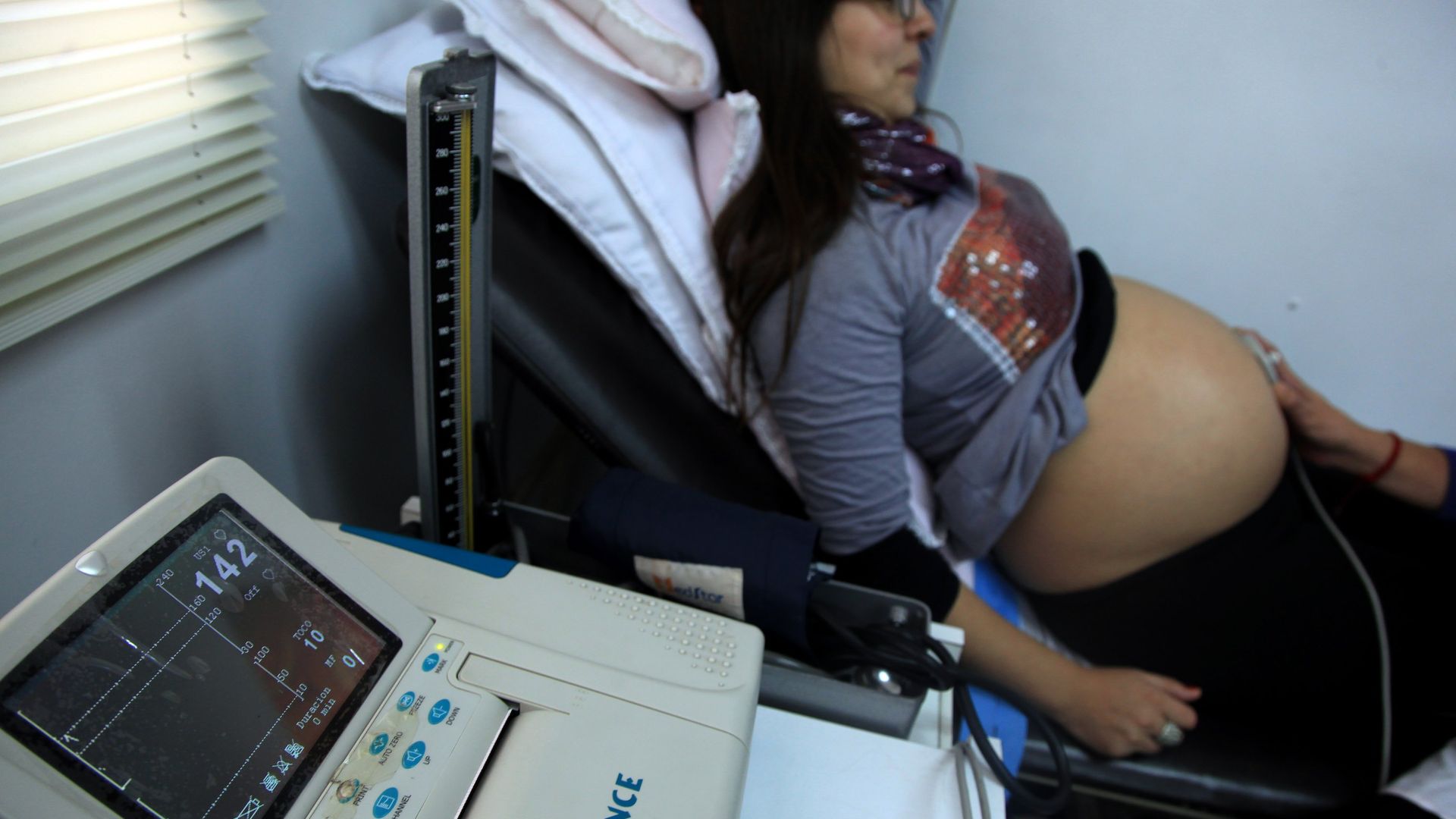
Photo: Claudio Santana/AFP/GettyImages
High blood pressure diagnoses during pregnancy surged 77% in Iowa between 2016 and 2024, exceeding the national increase, according to new CDC data.
Why it matters: Iowa’s sharp rise in gestational hypertension puts more mothers and babies at risk as access to maternity care shrinks.
By the numbers: About 11.7% of Iowans who gave birth in 2024 were diagnosed with gestational hypertension, up from 6.6% in 2016.
- The number of recorded cases climbed from 2,595 to 4,277, even as annual births fell from roughly 39,400 to 36,400.
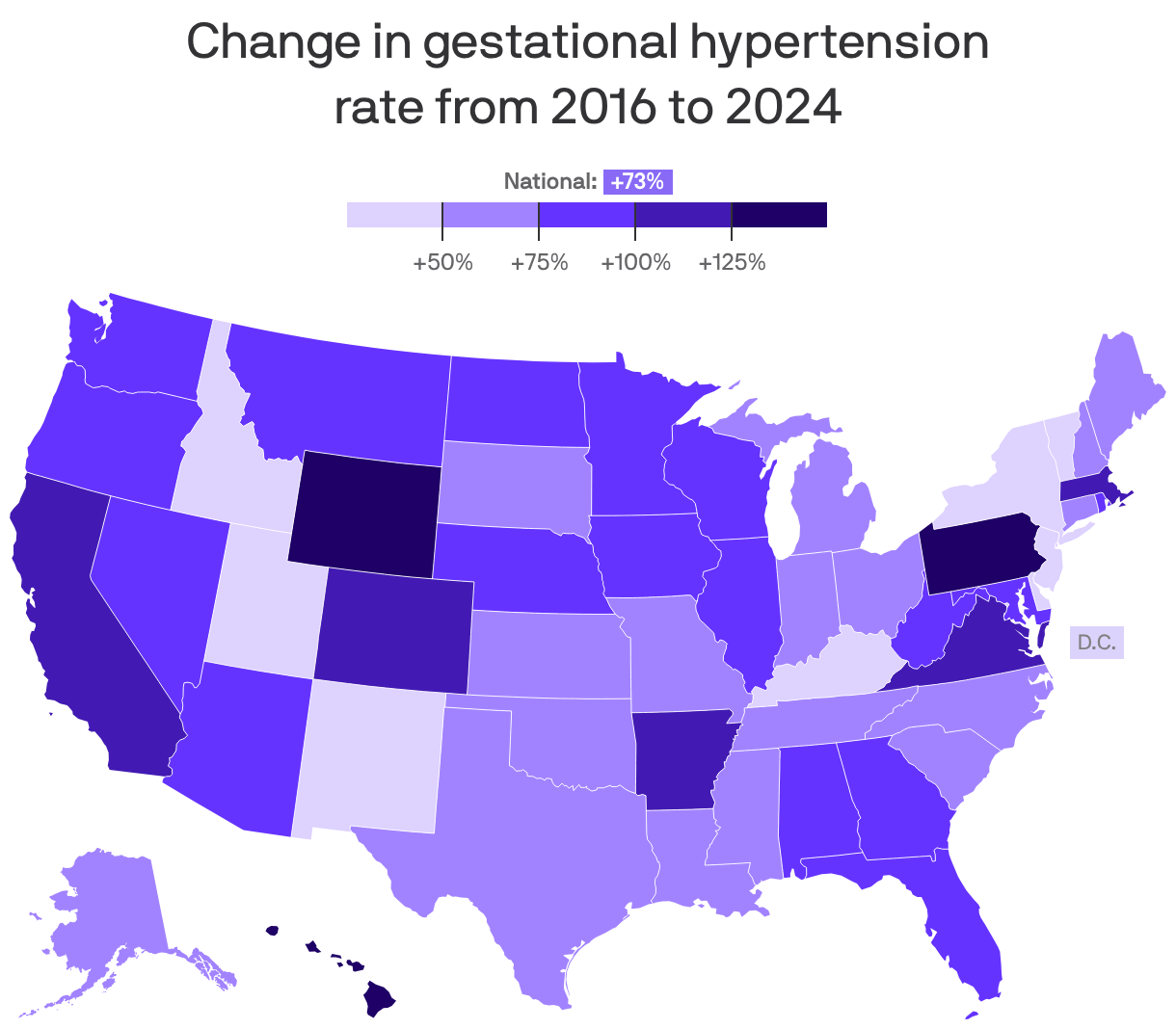
The big picture: Nationally, the rate went from 6% to 10.4% — an increase of 73% from 2016.
- Rates were highest among Native American and Alaska Native mothers, people 40 and older, those with obesity and those carrying multiples.
- Every state had increases and across all age and body mass index groups studied, suggesting that older maternal age and higher obesity rates alone do not explain the trend.
Reality check: The figures come from birth certificates, which can undercount pregnancy-related health conditions, meaning the actual rate may be higher.
State of play: All but one of Iowa’s 56 hospitals with labor and delivery units participated in the severe-hypertension initiative, according to a 2024 presentation published by Iowa HHS.
Yes, but: More than 40 Iowa obstetrical units have closed since 2000, making regular blood pressure monitoring and specialist care potentially harder to access in parts of the state.
Friction point: The increase comes as Iowa continues to confront broader maternal and infant health challenges.
- Iowa received a C- for its 2024 preterm birth rate, with 3,672 babies born prematurely, according to the latest March of Dimes report.
- Iowa's maternal death rate more than doubled between 1999 and 2019, according to earlier research.
What we’re watching: Whether Iowa lawmakers take additional steps to expand maternal care and prevent more hospital birthing units from closing.